Women's Dirndl Guide
The Alpine classic in four parts: fitted bodice, white blouse, full skirt and apron — plus the bow that says more than you might think.
Shop Dirndl Now
Shop on Amazon Shop on eBayThe Amazon and eBay links on this page are affiliate links. If you make a purchase through them, Apparel Search may earn a commission.
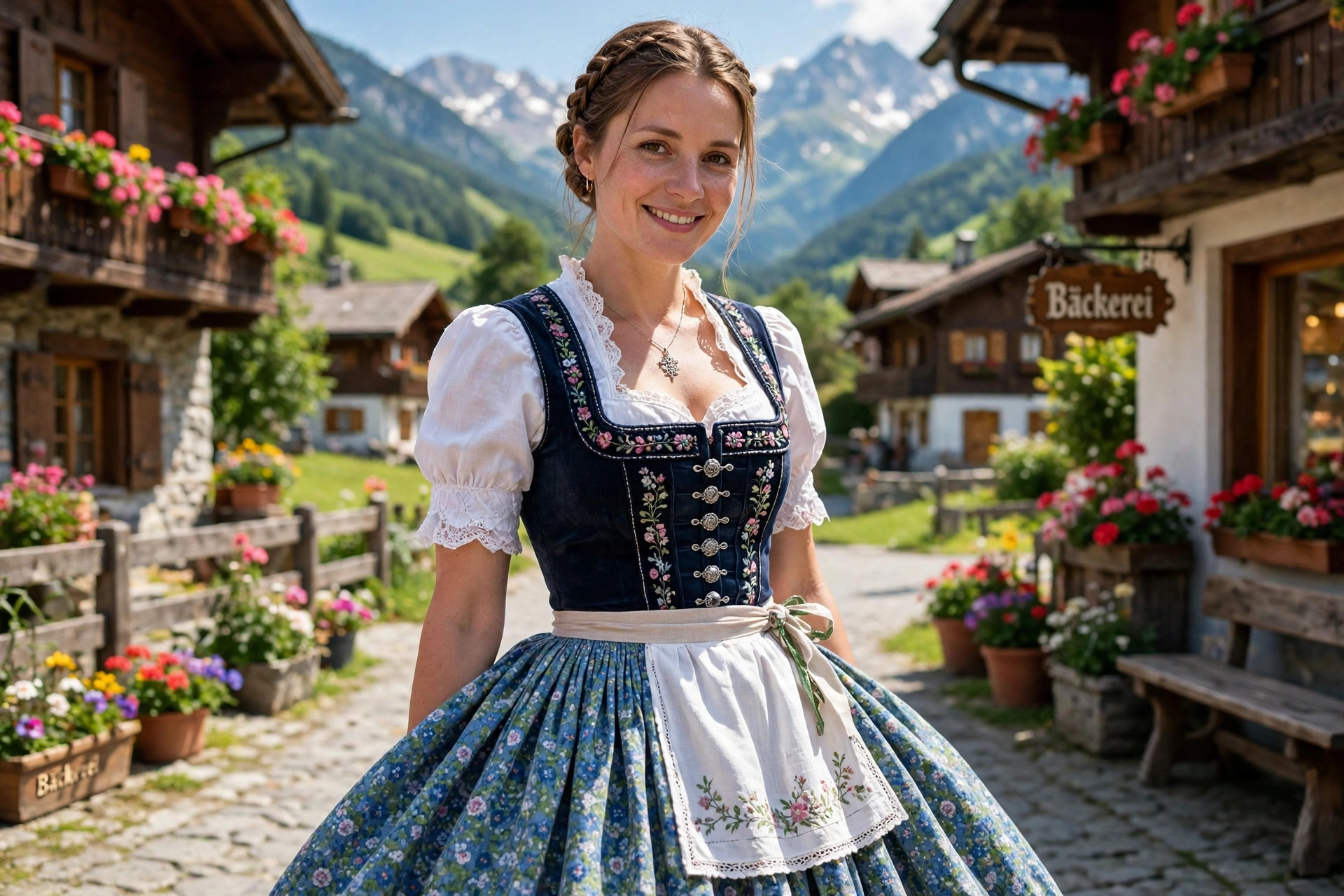
The dirndl is the traditional dress of the Alpine regions of Austria, Bavaria in southern Germany, and South Tyrol. What began as the practical work dress of rural women became, over the nineteenth and twentieth centuries, a celebrated form of Tracht — regional folk dress — worn with pride at festivals, weddings and church feasts. A dirndl is not a single garment but an outfit of coordinated parts, and learning how those parts fit together is the key to wearing one well.
The Four Parts: Bodice, Blouse, Skirt and Apron
The bodice is the structured heart of the dirndl: fitted, often boned or firmly lined, closing at the front with hooks, buttons or lacing, and cut to shape the waist and bust. Under it goes the dirndl blouse, usually white or cream cotton or lace, cropped to end beneath the bust so it never bunches under the bodice. The skirt is full and gathered or pleated at the waist, traditionally in a matching or coordinating fabric, and the apron — silk, cotton or lace for festive wear — ties over the skirt front and finishes the outfit.
The Apron Bow: Position and Meaning
Tradition gives the apron's bow a language of its own. Tied on the wearer's right, it signals she is married, engaged or in a relationship. Tied on the left, it signals she is single. Tied in the middle, it is associated with a young girl, and tied at the back, it traditionally marks a widow — or, in practical modern use, someone working in service. The custom is widely known and playfully observed at festivals, so bow placement is worth a moment's thought before you tie it. When in doubt, ask the wearer what she intends to say.
Fabrics, Lengths and Regional Style
Traditional dirndl fabrics are natural: cotton and linen for everyday and summer wear, wool and loden for cooler seasons, and silk with rich trims for festive and wedding outfits. Skirt length varies by region, age and fashion — mini, knee-length midi, and long traditional lengths all exist, with midi the most widely worn for festivals. Colours and details signal regional identity: the shape of the bodice, the trim, the jewellery — chokers, coin necklaces and edelweiss motifs are Alpine classics — and even the hat or hairstyle can place a Tracht to its valley.
Oktoberfest and Everyday Tracht
The dirndl is most visible at Oktoberfest in Munich and at folk festivals across the Alpine region, but it is not reserved for beer tents. Tracht is worn for weddings, christenings, harvest festivals, church holidays and family celebrations, and quality dirndl are bought to be worn for years. A well-made bodice should fit like it is tailored — snug enough to shape, never so tight it restricts breathing — and the blouse should sit smooth under it. Buy the best construction you can: a dirndl in good fabric, properly fitted, is a garment people keep, alter and hand down.
Choosing a Dirndl: Fit, Quality and Price
A dirndl rewards trying on in person. The bodice should close firmly — many wearers size it so it fits like a supportive bodice rather than a loose dress — with the blouse sitting smooth beneath and the skirt falling from the natural waist. Check that you can sit, eat and breathe comfortably through a long festival day; a bodice that is merely bearable standing in a shop will not survive an evening of dancing. Quality shows in natural fabrics, a lined and structured bodice, metal or horn-look fastenings rather than plastic, and an apron in real silk, cotton or lace rather than shiny synthetic. Prices follow construction honestly: simple festival dirndl are inexpensive, while hand-finished Tracht from regional makers — the kind altered, kept and handed down — costs accordingly and is bought deliberately. If you are between regions' styles, choose the one you will actually wear: a classic midi-length dirndl in a colour you love will serve at festivals, weddings and celebrations for years, while novelty versions date in a single season.
Common Questions
What does the position of the dirndl apron bow mean?
Traditionally: bow on the right means married, engaged or taken; on the left means single; in the middle is associated with a young girl; at the back marks a widow or, in modern practice, serving staff. It is a widely known custom at Alpine festivals.
What are the parts of a dirndl outfit?
Four parts: a fitted bodice, a cropped blouse worn underneath, a full gathered skirt, and an apron tied over the skirt. Jewellery, shoes and hairstyle complete the Tracht look, and details vary by region.
Can you wear a dirndl outside Oktoberfest?
Yes. Dirndl and Tracht are worn year-round in Alpine regions for weddings, church feasts, harvest festivals and family celebrations. A quality dirndl is a long-term garment, not a one-season novelty.
Traditional & Cultural Dress Guides
Traditional and cultural dress from around the world — every guide in this cluster:
More to Explore on Apparel Search
From Alpine aprons to West African embroidery: the dashiki's bold prints are next.
Next: Women's Dashiki Guide: West Africa's loose, joyful pullover »Looking for Women's Clothing Stores?
This guide helps you understand and choose dirndl styles with confidence. To browse where to buy, visit our womens clothing store directory, where you can find retailers that carry them.