Women's Yukata Guide
Japan's summer kimono: unlined cotton, bright patterns, and an obi tied in a bow — made for festivals and warm evenings.
Shop Yukata Now
Shop on Amazon Shop on eBayThe Amazon and eBay links on this page are affiliate links. If you make a purchase through them, Apparel Search may earn a commission.
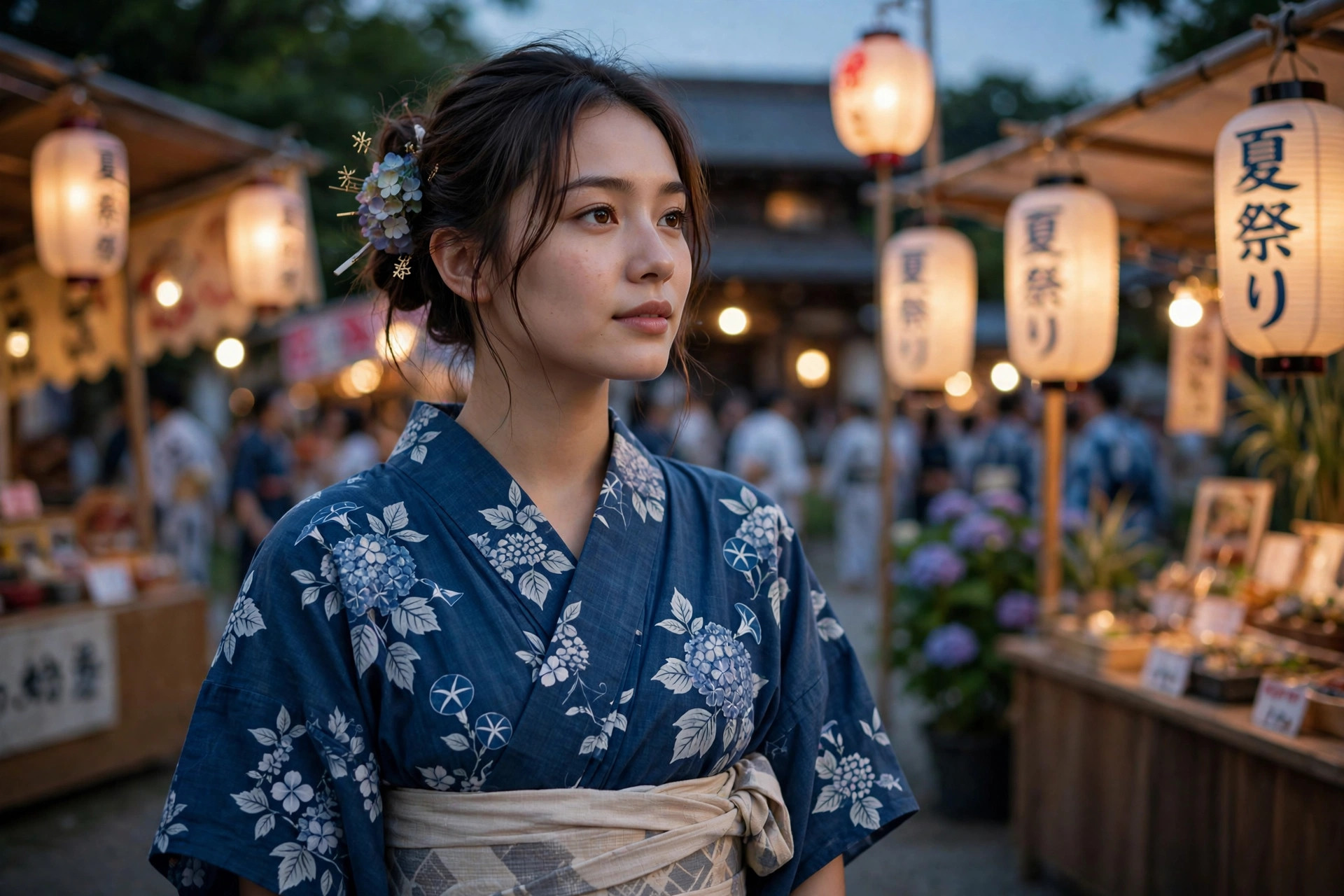
The yukata is Japan's casual summer kimono: an unlined, T-shaped cotton robe worn for summer festivals, fireworks evenings, strolls through historic districts, and as relaxing dress at Japanese inns after bathing. Where formal kimono is silk, layered and rule-bound, the yukata is deliberately lighter — one layer of breathable cotton, a simpler sash, and patterns as cheerful as the season. It is usually the first Japanese garment people learn to wear, and learning it properly is a pleasure: every step, from the wrap to the bow, has a reason.
Yukata and Kimono: What Is the Difference?
A yukata is a kind of kimono, but a specific one. Kimono for formal wear are silk, lined, worn over a separate under-kimono, and closed with a wide, structured obi and many accessories. A yukata is unlined cotton, worn directly over underwear or a light underlayer, with a narrower, softer obi and far fewer fittings. Yukata patterns are summery and bold — morning glories, hydrangeas, goldfish, fireworks and flowing water motifs recur — and the whole outfit, including wooden geta sandals worn with bare feet, is designed for heat. In short: yukata is kimono simplified for summer and leisure.
How to Wear a Yukata: Left Over Right
The wrapping rule is absolute and worth memorising: left side over right. Put the yukata on like a robe, centre the back seam, then wrap the right side across the body first and the left side over it, so the collar forms a neat V with the left panel on top. Right-over-left wrapping is reserved for dressing the deceased, which is why the correct direction matters culturally as well as visually. Adjust the length so the hem clears the ankles, keep the collar sitting slightly away from the back of the neck — a traditional point of elegance — and smooth the front flat before tying.
The Obi and Finishing Touches
The yukata obi, or hanhaba obi, is a half-width sash tied most often in a bunko bow — a neat bow at the back — though many bow styles exist, from simple ribbon knots to elaborate flower shapes for festivals. A thin cord belt underneath holds the wrap secure while dressing; a small flat board under the obi's front keeps it smooth. Accessories complete the summer picture: geta sandals, a small drawstring bag (kinchaku) for essentials, and a folding fan tucked into the obi. Hair is typically worn up, both for coolness and to show the collar line the outfit was designed around.
Buying, Fit and Care
Yukata are sold as sets — robe, obi, cords and sometimes geta — making a first outfit straightforward. Length is chosen by height so the hem falls correctly after the waist fold is made; the fold at the waist, hidden under the obi, is how one size adjusts to different heights. Cotton yukata are easy-care: gentle machine or hand washing, dried in shade to protect indigo and bright dyes, and stored folded along their seams, as Japanese garments traditionally are. A good yukata lasts many summers, softening with wear while its pattern stays vivid — which is exactly what it was designed to do.
Yukata Patterns and the Seasons of Summer
Yukata patterns are a calendar of the Japanese summer, and choosing one is part of the fun. Morning glories and hydrangeas belong to early summer and the rainy season; sunflowers, goldfish and flowing water patterns suit high summer; fireworks and festival motifs celebrate the great summer matsuri and firework displays of July and August. Indigo and navy grounds are the timeless classics — cool-looking, flattering and correct everywhere — while contemporary yukata add black, charcoal, pastels and bold graphic prints for fashion wear. Pattern scale follows the wearer: fine, scattered motifs suit smaller frames, and large dramatic blooms flatter taller wearers. Rental shops in Kyoto, Tokyo's Asakusa and other historic districts offer hundreds of patterns with dressing included, an ideal way to learn what suits you before buying. When you do buy, choose the pattern you would happily wear for five summers rather than this season's novelty: a yukata's charm deepens as it becomes your festival garment, recognised in photographs year after year.
Common Questions
Which way do you wrap a yukata?
Left over right — always. Wrap the right panel across your body first, then bring the left panel over it. Right-over-left is used only when dressing the deceased, so the direction is culturally important as well as correct.
Is a yukata the same as a kimono?
A yukata is a casual, unlined cotton summer kimono. Formal kimono are silk, lined, layered over an under-kimono and worn with a wide structured obi; yukata simplify all of that for summer festivals, travel and leisure.
What shoes are worn with a yukata?
Geta — raised wooden sandals — worn with bare feet. They are the traditional and practical partner to a yukata's ankle-length hem in summer weather.
Traditional & Cultural Dress Guides
Traditional and cultural dress from around the world — every guide in this cluster:
More to Explore on Apparel Search
From summer cotton to flowing silk: the kaftan's centuries of celebration dress.
Next: Women's Kaftan Guide: Also spelled caftan »Looking for Women's Clothing Stores?
This guide helps you understand and choose yukata styles with confidence. To browse where to buy, visit our womens clothing store directory, where you can find retailers that carry them.