Women's Kaftan Guide
Also spelled caftan: the long, flowing robe with wide sleeves that has dressed celebrations from Morocco to the Mediterranean for centuries.
Shop Kaftans & Caftans Now
Shop on Amazon Shop on eBayThe Amazon and eBay links on this page are affiliate links. If you make a purchase through them, Apparel Search may earn a commission.
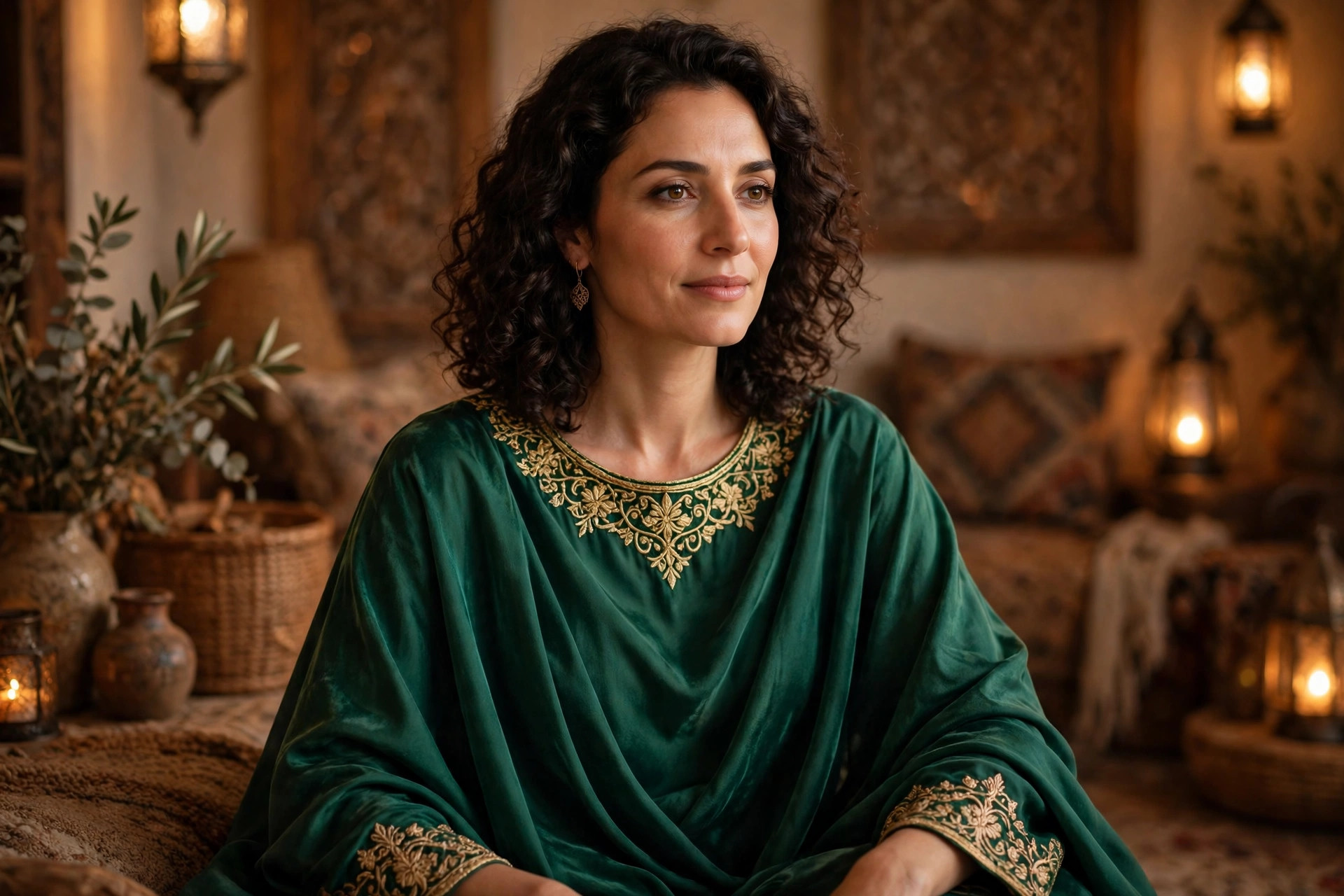
The kaftan — also spelled caftan — is one of the world's oldest and most travelled garments: a long, loose robe with wide sleeves, open or buttoned at the front, worn across the Middle East, North Africa, Central Asia and beyond for centuries. It has been court dress in the Ottoman world, festive dress in Morocco, and, since the twentieth century, a beloved form of elegant resort and evening wear internationally. Through every journey the essentials hold: generous cloth, a straight flowing cut, and decoration concentrated at the neckline, front and cuffs.
Form and Construction
A classic kaftan is cut from full lengths of fabric with minimal shaping: a T-shaped or gently A-line body falling to the ankles or floor, wide sleeves that widen the silhouette's sweep, and a front that may be fully open, buttoned with small loops, or closed to the waist. Moroccan kaftans add a decorated belt, the mdamma, that shapes the waist for formal wear, and are often worn layered over a plainer dress. Elsewhere the single flowing layer is the norm, sometimes cinched with a sash, sometimes left to fall in the unbroken column of cloth that makes the kaftan so comfortable in heat.
Fabrics and Embroidery
Kaftan fabrics follow the occasion. Silk, satin and brocade carry formal and wedding kaftans; velvet serves winter celebrations; chiffon and georgette give evening kaftans their float; and cotton and linen make the everyday and holiday versions that travel so well. Embroidery is the kaftan's signature craft: gold and silver thread work at the neckline, chest, cuffs and front opening — in Moroccan tradition, intricate sfifa braiding and hand-knotted buttons are marks of quality passed between generations of makers. Printed kaftans carry the same shapes in bolder, more casual colour for beach and resort wear.
Occasions: From Weddings to Resort Wear
In Morocco, the kaftan is premier festive dress: brides wear a succession of richly embroidered kaftans, and guests honour weddings, engagements and religious celebrations in their best. Across the Middle East and North Africa it serves equally for receiving guests at home in splendour. Internationally, designers adopted the kaftan for resort and evening dressing because it solves a real problem — how to look fully dressed and ceremonial while feeling completely at ease. A jewel-toned silk kaftan with flat sandals and gold jewellery is a complete formal outfit that packs flat and never wrinkles its wearer.
Wearing and Care
Wear a kaftan as the whole outfit: it needs only shoes, jewellery and a bag. Flat embellished sandals suit daytime and resort wear; a low heel lifts it for evenings. Keep jewellery at the ears and wrists so embroidery at the neckline holds the eye, and choose a belt only where the style intends one — Moroccan belts are part of the garment's design, while loose column kaftans are meant to flow unbelted. Care follows the cloth: embroidered silk and velvet kaftans go to specialist cleaners and store hanging in breathable covers; cotton and printed resort kaftans wash gently at home and travel folded.
Choosing a Kaftan: Reading Quality and Craft
The quality of a kaftan lives in its cloth and its handwork. Begin with the fabric's fall: a good kaftan fabric — silk, fine crepe, quality cotton — drapes in a continuous column without clinging or stiffness, and holds embroidery without puckering around the stitches. Examine the neckline and front work closely, because that is where makers invest: traditional hand embroidery and braided sfifa trim lie flat, dense and even, while machine work on formal pieces should still be tight and cleanly finished on the reverse. Check that sleeve and hem edges are finished to be seen, since a kaftan's hems are always on display in movement. For a first kaftan, a mid-weight fabric in a deep jewel tone with neckline embroidery is the most versatile choice — formal enough for celebrations, simple enough for receiving guests, and wearable across seasons. Keep the receipt of its craft in mind when you wear it: garments made this slowly, by these methods, are bought to be kept, lent to daughters and worn for decades of celebrations.
Common Questions
Are kaftan and caftan the same thing?
Yes — caftan is an alternative English spelling of kaftan. Both name the same long, loose robe with wide sleeves worn across the Middle East, North Africa and Central Asia, and adopted internationally for formal and resort wear.
How is a kaftan supposed to fit?
Generously. The kaftan's elegance is in its flow — a straight or gently A-line column of fabric to the ankles or floor. Some traditions, notably Moroccan formal wear, add a decorative belt to shape the waist; others are worn entirely loose.
What occasions suit a kaftan?
Weddings and celebrations in its home traditions, receiving guests, and internationally formal evenings, galas and resort dressing. Fabric sets the level: silk and embroidery for ceremonies, cotton and prints for holidays and daytime.
Traditional & Cultural Dress Guides
Traditional and cultural dress from around the world — every guide in this cluster:
More to Explore on Apparel Search
Next, the long, graceful robe at the heart of modest dressing in the Gulf.
Next: Women's Abaya Guide: The long, flowing robe at the heart of modest dressing in the Gulf and beyond »Looking for Women's Clothing Stores?
This guide helps you understand and choose kaftan styles with confidence. To browse where to buy, visit our womens clothing store directory, where you can find retailers that carry them.