Women's Hanbok Guide
Korea's traditional dress: a cropped jeogori jacket over a full, high-waisted chima skirt, in colours that carry meaning.
Shop Hanbok Now
Shop on Amazon Shop on eBayThe Amazon and eBay links on this page are affiliate links. If you make a purchase through them, Apparel Search may earn a commission.
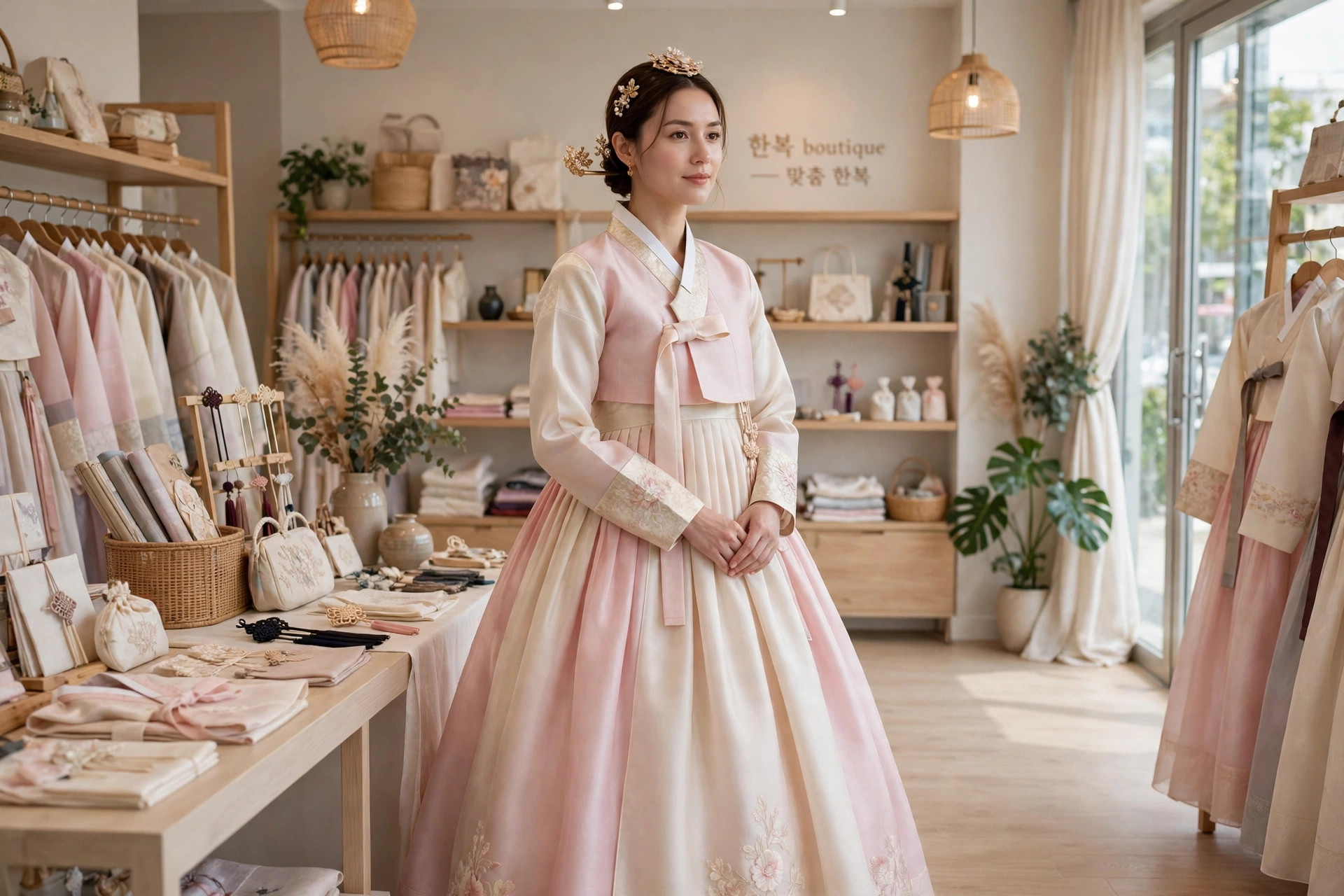
The hanbok is the traditional clothing of Korea, worn for centuries and still chosen today for holidays, weddings and formal family occasions. Its design is built on graceful lines and generous volume: the top wraps and ties rather than buttoning, the skirt falls in soft folds from a high waist, and the whole silhouette is shaped by how the fabric moves rather than by close tailoring. A woman's hanbok has two main parts — the jeogori and the chima — supported by layers and accessories that complete the look for the occasion.
The Jeogori Jacket and Chima Skirt
The jeogori is a short, cropped jacket that ends around the ribcage, with long sleeves that curve gently at the cuff and a wide ribbon, the goreum, tied in a bow at the front. Beneath it, the chima is a wrap skirt with a high waistband that sits above the natural waist, its fullness falling to the floor and creating the hanbok's characteristic bell shape. Underneath, wearers add a sokchima underskirt for volume and layers for warmth. Men's hanbok pairs a longer jeogori with baji, roomy trousers gathered at the ankle, often topped with a vest or overcoat for formal wear.
Fabrics and Colours
Traditional hanbok fabrics follow the season: silk and satin-weave fabrics with woven or embroidered patterns for celebrations and cooler months, and breathable ramie and hemp for summer. Colour carries meaning in Korean dress. Bright, clear colours are associated with youth and celebration, softer tones with maturity and dignity, and white has long been an everyday foundation colour. Wedding hanbok often pairs rich reds and deep blues or greens, colours tied to harmony between the couple, while mothers of the bride and groom traditionally wear colours that distinguish their two families at the ceremony.
When Hanbok Is Worn
Hanbok is living dress, not a relic. Families wear it for Seollal (Lunar New Year) and Chuseok, the harvest festival, when paying respects to elders and ancestors. It is worn for weddings by the couple and their parents, for a baby's first birthday celebration, and for milestone birthdays such as the sixtieth. Many people also rent or buy hanbok for palace visits and photographs in Korea, where modernised, everyday versions — with shorter skirts, simpler ties and washable fabrics — have made the garment part of contemporary street style as well.
Wearing and Caring for a Hanbok
A hanbok should sit high and smooth: the chima's waistband fastens firmly above the waist, the jeogori wraps left and right panels neatly across the chest, and the goreum ribbon is tied in a single looped bow that hangs at the front. Traditional socks, beoseon, and embroidered shoes complete formal outfits, and hair is usually worn neat and low, sometimes with a decorative pin. Care depends on fabric — silk hanbok is best professionally cleaned and stored folded with acid-free paper, while modern polyester and ramie versions may be gently hand-washed. Store colours away from direct light so the dyes stay true.
Choosing a Hanbok: Fit, Rental and Buying
When choosing a hanbok, start with the occasion: a wedding or first-birthday celebration calls for richer silk, fuller embroidery and more formal colours, while holiday wear for Seollal and Chuseok can be lighter and simpler. The chima should clear the floor gracefully when worn with traditional shoes, and the jeogori sleeves should reach the wrist without pulling across the shoulders. In Korea, hanbok rental shops near palaces and historic districts make trying the garment easy, offering modern and traditional styles by the hour or day, often with hairstyling included. For a purchase, a reputable maker will advise on fabric by season and adjust the wrap and ribbon placement to the wearer. Take photographs in natural light before an event if you can — hanbok colours are chosen to be seen together, top and skirt, and a mismatched pairing shows quickly. A well-chosen hanbok photographs beautifully and wears comfortably through a long day of bowing, eating and celebrating, which is exactly what it was designed for.
Common Questions
What are the two main parts of a woman's hanbok?
The jeogori, a short cropped jacket that wraps and ties with a long ribbon bow, and the chima, a high-waisted wrap skirt that falls in full folds to the floor. Together they create the hanbok's distinctive high, flowing silhouette.
When do people wear hanbok today?
For Seollal (Lunar New Year), Chuseok, weddings, first-birthday and sixtieth-birthday celebrations, and formal family ceremonies. Modernised everyday hanbok is also worn casually, and visitors often wear hanbok for palace tours and photographs in Korea.
What do men wear with a hanbok?
Men wear a jeogori jacket with baji, loose trousers gathered at the ankle, and for formal occasions a vest (jokki) or a long overcoat (durumagi). The same principles apply: wrapped closures, seasonal fabrics and colours suited to the occasion.
Traditional & Cultural Dress Guides
Traditional and cultural dress from around the world — every guide in this cluster:
Continue the tour of traditional dress with Vietnam's flowing silk tunic and trousers.
Next: Women's Ao Dai Guide: Vietnam's graceful long tunic »Looking for Women's Clothing Stores?
This guide helps you understand and choose hanbok styles with confidence. To browse where to buy, visit our womens clothing store directory, where you can find retailers that carry them.