Apparel Search Consumer Guides
Diwali Outfit Guide
The festival of lights is dressed in light: silk, gold and jewel tones across five days of lamps, family and feasting.
Diwali is the festival of lights — five days of lamps, fireworks, sweets and visiting that mark, for Hindu, Jain, Sikh and some Buddhist communities, the year's great celebration of light over darkness. It is also one of the world's great dressing festivals: new clothes are bought for it, gold is part of the outfit, and on the main evening nobody is underdressed. In 2026 the main day falls on Sunday, November 8. This guide covers the clothes for participants and guests; the principles that apply at every festival live in our cultural and festival outfit guide.
The Five Days, and Where the Dressing Peaks
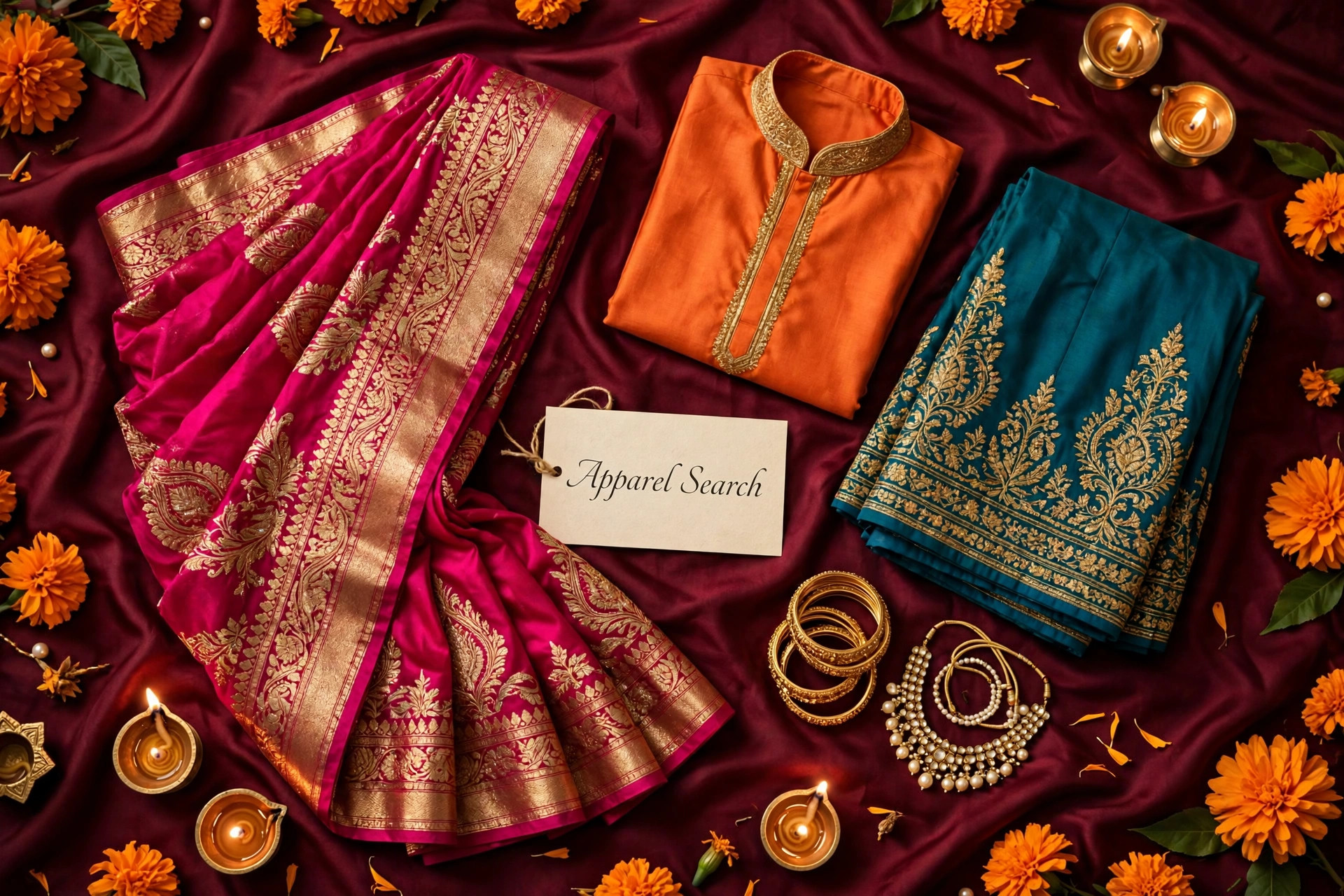
Diwali unfolds over five days, and the clothes build with it. Dhanteras, the first day, is traditionally when gold and new purchases are made — many families buy gold jewellery or coins, and the festival wardrobe is completed. The second day, Choti Diwali, is a smaller rehearsal of lights. The third day is the main event: Lakshmi Puja, when homes are lit with diyas, families dress at their best, and the evening runs from prayers to fireworks to feasting. Govardhan Puja follows, and the fifth day, Bhai Dooj, honours brothers and sisters. Exact observances vary by region and family — North and South India keep the days somewhat differently — but for dressing, the rule is simple: save the finest outfit for the main day.
For Women: Saris, Lehengas and Kurta Sets
The sari is Diwali's emblematic garment — silk above all, in jewel tones with a gold border: Kanjivaram, Banarasi and other brocaded silks are the festival classics, and our saree guide covers draping styles and fabrics in full. The lehenga choli — full skirt, cropped blouse, dupatta — is the other great option, embroidered and often sequinned to catch the lamplight. A salwar kameez or its flowing anarkali form is the comfortable formal choice, and the one many women pick for a long evening of hosting. Whichever you wear, dress for the evening's realities: diyas and sparklers reward sleeves and dupatta ends kept in mind, and pujas may involve sitting on the floor — a drape or skirt you can sit down in gracefully is a practical kindness to yourself.
Gold Jewellery Is Part of the Outfit
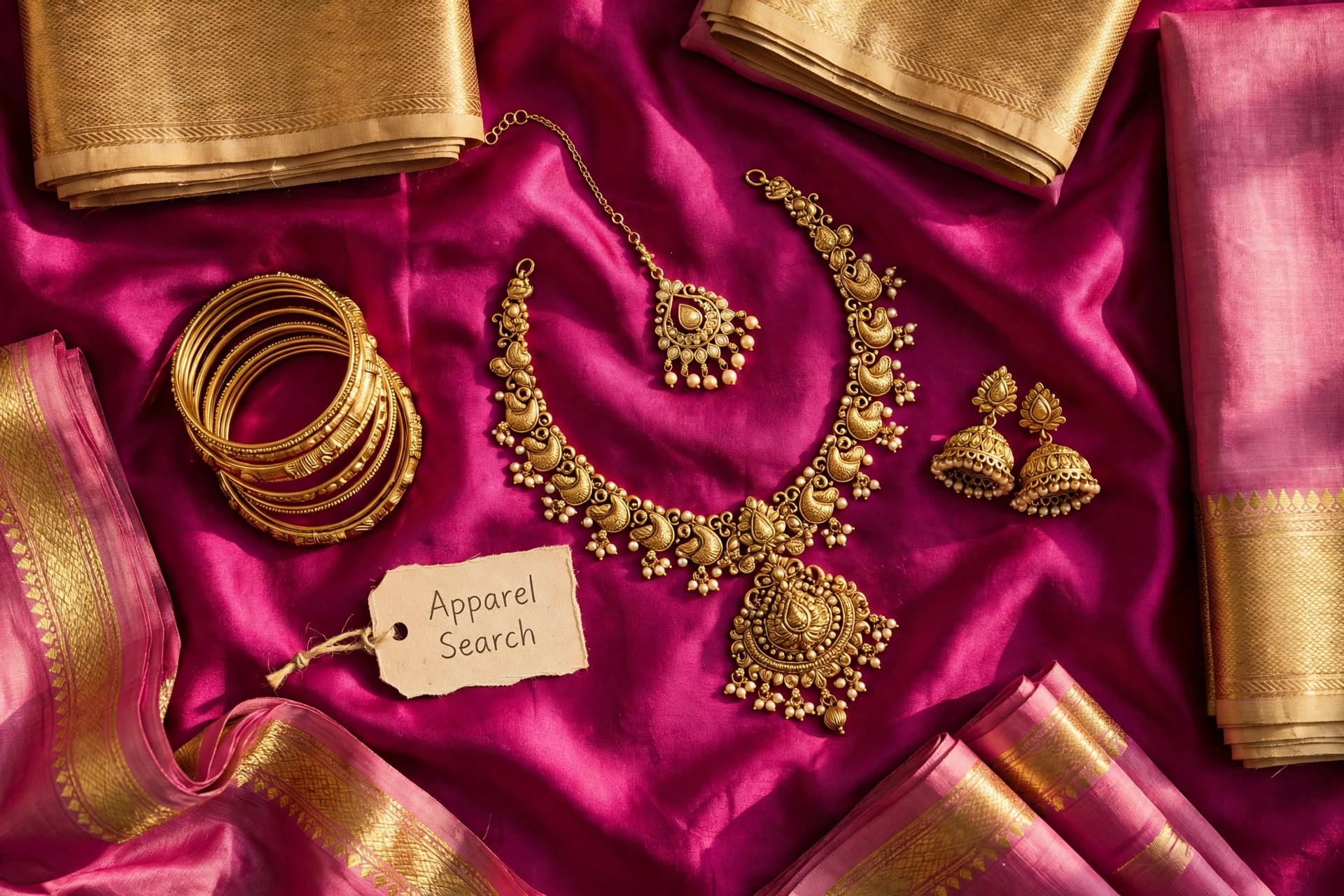
At most festivals jewellery finishes an outfit; at Diwali it is woven into the festival itself — gold symbolises prosperity and is bought, gifted and worn across the five days. Bangles stacked up the wrist, jhumka bell earrings, a worked gold necklace: the traditional set is substantial, and it is meant to be. Our jewellery sizing and wearing guide covers fit and proportion for pieces like these, and our gold versus silver guide helps with the metal choice — though at Diwali, when in doubt, the answer is gold.
For Men: Kurta, Waistcoat and Sherwani
Men's Diwali dress centres on the kurta: a knee-length tunic in cotton-silk or silk, worn over pajama trousers or fitted churidar. A Nehru-style waistcoat over it — in a contrasting colour or a brocade — is the standard step up, and the sherwani, a long structured coat, is the formal summit, reserved for the main evening and big family occasions. Colours are the festival's colours: cream and gold, maroon, teal, mustard — brighter than the office, richer than the everyday, and finished with proper shoes, which will come off at the door of every home you visit.
Guests at Diwali
A guest's brief is joyful and easy: bright colours, festive fabrics, nothing sombre. You will take your shoes off in homes and temples, sit on floors and cushions, be fed continuously and photographed often. If your hosts press a sari or a kurta on you, accept — it is offered in exactly the spirit it looks like. And mind the flames with love: a trailing dupatta near a row of diyas is the festival's one wardrobe hazard. Our holiday fashion shopping guide covers the shopping season that, in much of the world, Diwali opens.
Shop Diwali Outfits on Amazon
Saris, lehenga sets, kurtas and festive gold-tone jewellery are all stocked on Amazon for the festival season.
Shop Clothing on AmazonProduct links are kept in one place on the Apparel Search Amazon shopping guide, so this page can stay a guide rather than a catalogue.
Common Questions
When is Diwali in 2026?
The main day of Diwali — the Lakshmi Puja day, when dressing reaches its peak — falls on Sunday, November 8, 2026. The festival runs for five days around it, and the exact observance of each day varies with regional and family tradition, so a celebration you are invited to may centre on any of the five.
What colours are worn for Diwali?
Bright, saturated and shining: jewel tones such as fuchsia, royal blue, emerald and marigold orange, rich reds and maroons, and gold everywhere — in borders, embroidery, jewellery and trim. Many families avoid black for the puja itself, treating Diwali as a festival of light and colour; follow your hosts' lead on the day.
Can a guest wear a sari to Diwali?
Often, yes — and hosts frequently help with the choice and the draping, which is its own skill. A sari lent or suggested by your host is the clearest invitation. Otherwise a lehenga or a festive outfit of your own in bright colours is entirely right; what matters is that the clothes are celebratory, clean and chosen for the occasion.
What do men wear for Diwali?
The kurta — a long tunic worn over pajama trousers or churidar — is the standard, in silk or cotton-silk with a Nehru-style waistcoat over it for the main evening. A sherwani, the long formal coat, is the dressiest option. Colours follow the festival: richer and brighter than the everyday, often with a gold or contrasting trim.
Related Guides
Cultural & Festival Outfit Guide
The parent guide: the customs that touch your clothes at every festival — coverage, shoes, head coverings and colour symbolism.