Apparel Search Jewelry Guides
Jewelry Sizing and Wearing Guide
How every type of jewelry is sized, how to measure for it at home, and how to wear it well — the fit companion to the Jewelry Guide.
Most jewelry disappointment is a sizing problem wearing a disguise. The ring that spins, the bracelet that will not pass the knuckles, the necklace that lands somewhere other than where the photograph promised — none of these are quality failures; they are measurements that were never taken. This guide is the missing companion to the Apparel Search Jewelry Guide: that guide teaches the pieces themselves — types, metals, stones and designs — while this one teaches how each type is sized, how to measure for it at home, and how to wear it well once the size is right.
Every jewelry type is sized by a different measurement, which is why one guide per type was needed. Rings are sized on a numeric scale tied to the inside of the band. Necklaces are sized by length. Bracelets split three ways: chain bracelets by length, cuffs by fit, bangles by inside diameter. Watches combine a case diameter with a strap or bracelet length. The pages below take each in turn, and this page gives the map, the measuring habits that apply everywhere, and the wearing principles — proportion, balance and choosing a metal — that tie the section together.
Search Apparel Search
The Guides in This Section
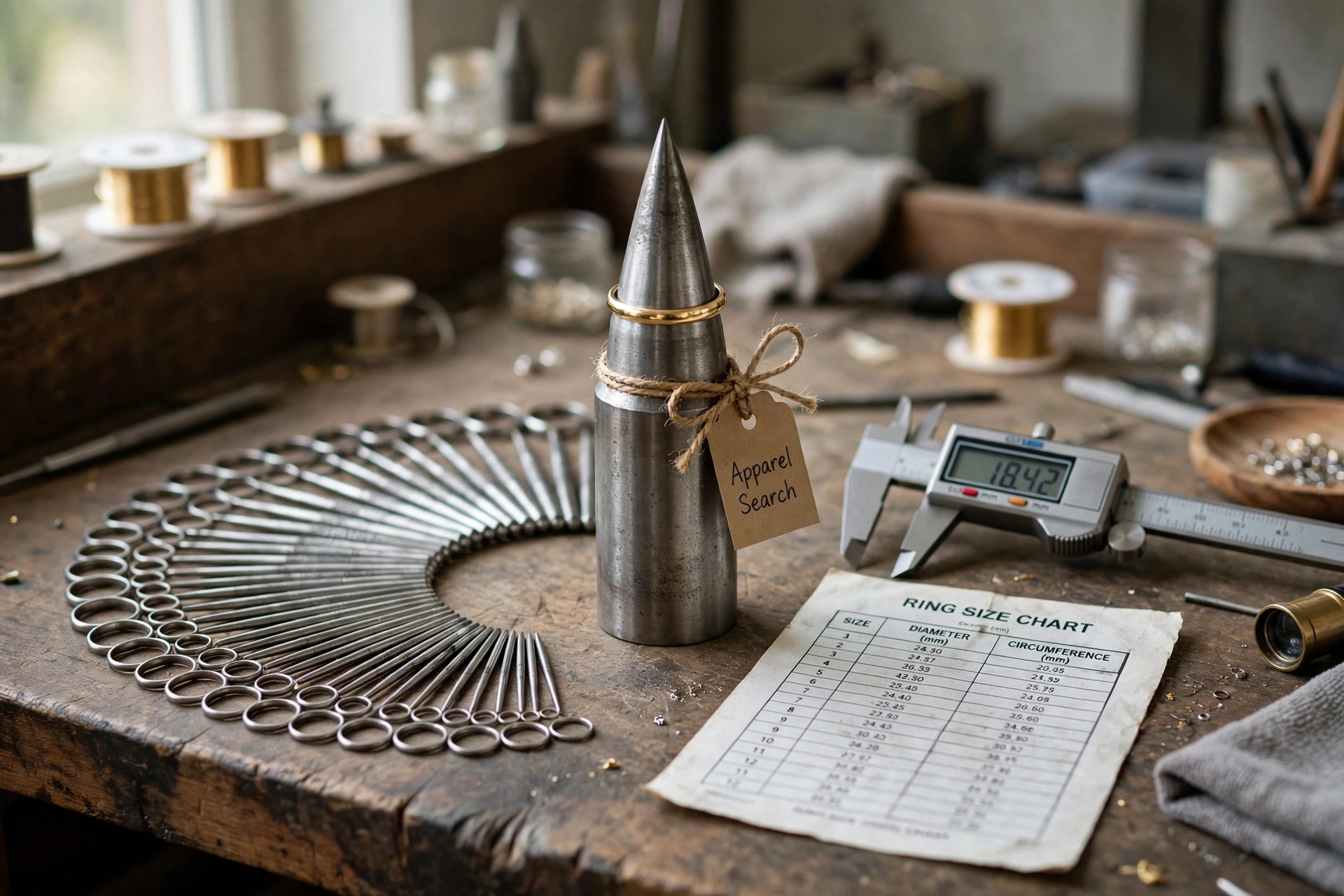 How to Measure Ring SizeThe methods ranked by reliability — an existing ring measured across, printable sizers used properly, the string method with its error honestly stated, and in-store sizing as the gold standard — plus knuckle-versus-base fit.
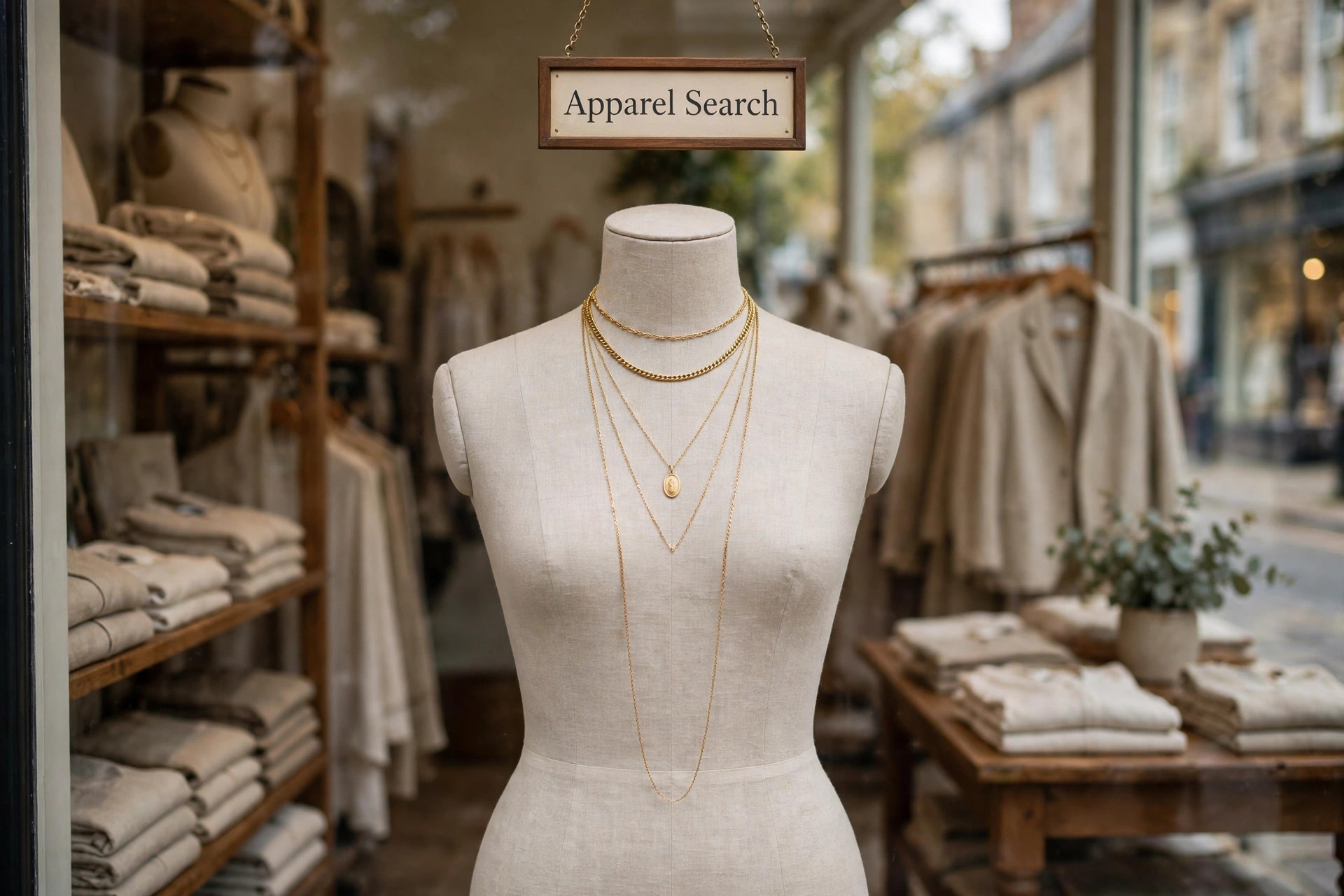 Necklace Layering GuideHow to combine the standard lengths into layers that sit apart instead of tangling: the spacing rule, mixing chains and pendants, pairing layers with necklines, and keeping fine chains out of knots.
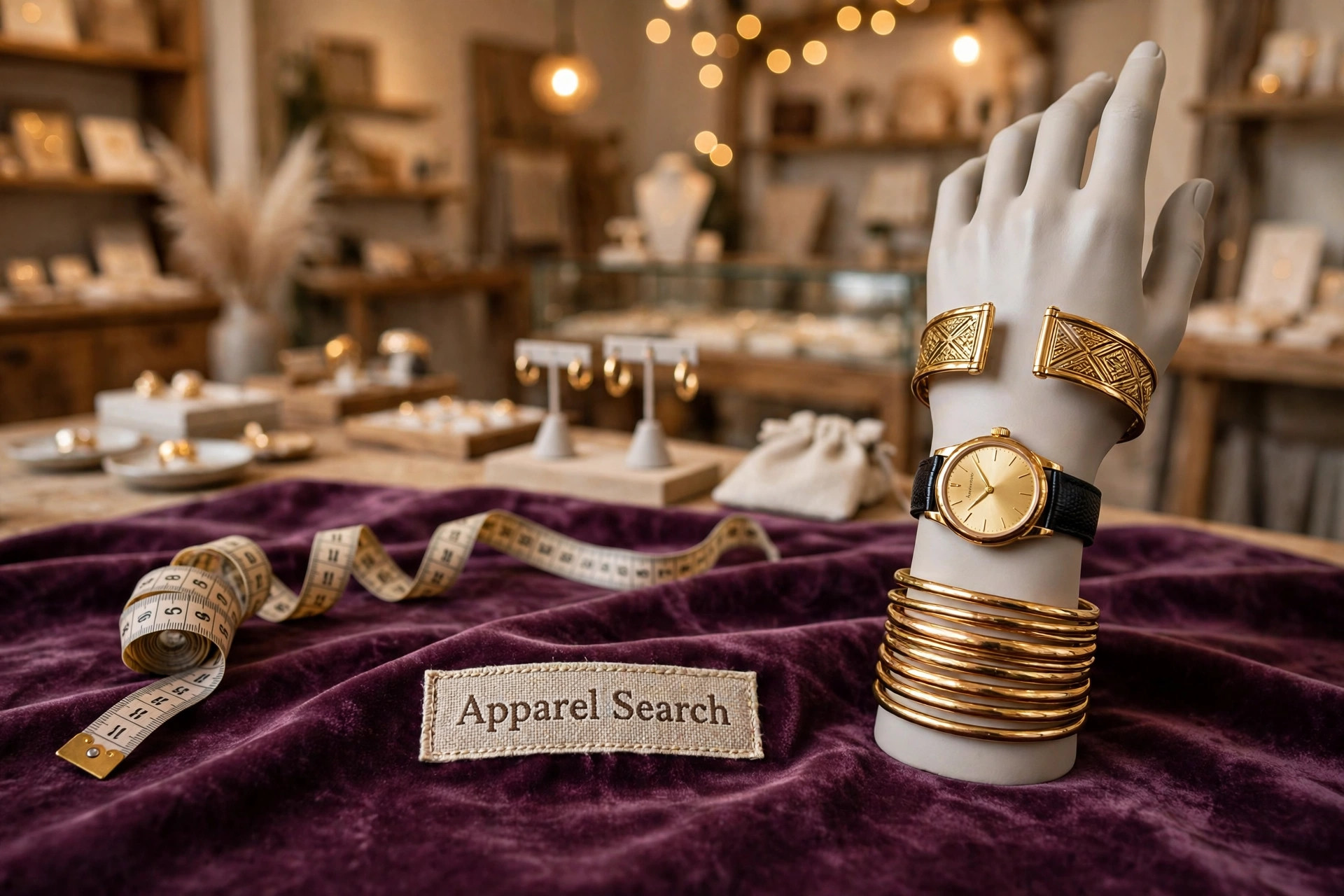 Bracelet and Watch Sizing GuideWrist measuring, the ease each bracelet type needs, bangle sizing over the knuckles, watch case size against wrist size, and the basics of stacking bracelets with intention.
How Sizing Works, Piece by Piece
Rings: a scale built on the inside of the band
A ring size is a stand-in for the inside circumference of the band — the distance around the inside circle your finger passes through. On the US scale used across North America, sizes run in whole and half numbers, and each full size adds about 2.5 millimetres of inside circumference (roughly 0.8 millimetres of inside diameter). Because the scale is a circumference in disguise, anything that changes the circle — a wider band, a larger knuckle — changes the fit, which is why our ring size guide spends as much time on how a ring should travel over the knuckle as on the number itself.
Necklaces: length, with standard names
Necklaces are the friendliest pieces to size, because their size is simply their length and the standard lengths have names — collar, choker, princess, matinee, opera and rope — each describing where that length falls on the body. Choosing a single necklace is a matter of matching length to neckline, and the full length-by-length treatment already lives in the Jewelry Guide at necklace lengths. What that page does not cover is wearing several at once, which is a fit problem of its own and has its own page here: the necklace layering guide.
Bracelets: three types, three measurements
Chain and link bracelets are sized like necklaces — by total length, meaning wrist measurement plus ease. Cuffs are sized by how they sit: snug against the wrist, shaped to it, with an opening that lets the wrist in sideways. Bangles ignore the wrist entirely and are sized by inside diameter, because the circle that matters is the one your hand must pass through. Confusing these three is the commonest bracelet mistake, and the bracelet and watch sizing guide separates them measurement by measurement.
Watches: case size plus strap
A watch has two sizes at once: the case, measured across its diameter, which decides how the watch reads on your wrist, and the strap or bracelet, which decides how it stays there. Both are covered in the bracelet and watch sizing guide, including the lug-to-lug measurement that explains why two watches of the same case diameter can wear very differently.
The Short Version
Jewelry sizing is four measurements, not one: the inside circumference of a ring, the length of a necklace, the fit or inside diameter of a bracelet, and the case diameter of a watch. Measure the one your piece actually uses, measure it twice, and let the maker's own size chart — not a remembered equivalent — have the last word.
Measure Before You Buy: Five Habits
- Measure at the body's largest. Fingers and wrists swell slightly with warmth and across the day, so measure warm, later in the day, and never with cold hands just in from outside — a size chosen at your smallest is a size that will fight you at your largest.
- Measure twice, on different days if the purchase matters. Two readings that agree are a measurement; one reading is a hope. This is doubly true for the approximate home methods.
- Measure the exact finger or wrist the piece is for. The same ring size rarely fits two fingers, and the dominant hand usually runs slightly larger than the other. There is no such thing as your size in general — only the size of the finger a ring is headed for.
- Keep a sizes note. A line in your phone — ring sizes by finger, wrist measurement, preferred necklace lengths — turns every future purchase into a lookup instead of a fresh project, and makes gifts buyable by anyone who can see the note.
- Check the exchange policy on sized pieces. Rings especially are bought across a small margin of error. A seller who exchanges sizes readily is worth more than a slightly lower price from one who does not, and engraved or custom pieces are commonly final sale — another reason the measuring pages below exist.
Wearing It Well: Proportion and Balance
Sizing gets a piece onto the body; wearing is about how it sits in the whole picture. Three principles carry most of the effect. Scale: a piece reads best when its scale suits the wearer — a fine chain can disappear on a broad frame just as a heavy cuff can overwhelm a small wrist, and neither is a flaw in the piece, only in the pairing. One focal point: a look usually wants a single center of attention — layered necklaces, a stack of bracelets, or statement earrings, rather than all three competing at once. Breathing room: skin between pieces is part of the design, which is why layered necklaces are spaced and bracelet stacks leave the wrist some movement. The earrings side of the Jewelry Guide explores the third type in depth at the earrings guide.
Choosing a Metal: Skin Tone, Undertone and Preference
The styling convention you will meet everywhere matches the temperature of the metal to the undertone of the skin. Warm undertones — skin that tans easily and suits earthy colors — are conventionally flattered by warm metals: yellow gold, rose gold and copper. Cool undertones — skin that burns before it tans and suits jewel tones — are conventionally flattered by cool metals: silver, white gold and platinum. Neutral undertones sit between and can wear either, which is also why mixed-metal jewelry exists and works. The usual home tests for undertone (the color of the veins at your wrist, whether gold or silver jewelry seems to light your face up more) are informal indicators, nothing more scientific than that.
Two honest qualifications. First, this is a convention of styling, not a property of the metals or of your skin — nothing about a cool undertone makes yellow gold look wrong, and strong personal coloring, hair color and plain preference routinely and rightly override the chart. Second, the last word belongs to the wearer: wear what you love wins. The convention is a useful first suggestion when you are genuinely undecided — it is not a rule to apologize for breaking. The materials themselves — karats, alloys, tarnish and care — are covered in the Jewelry Guide's jewelry metals guide.
And Keep It Bright: Jewelry Care
Sizing gets a piece onto the body; care keeps it worth wearing. The jewelry care and cleaning guide covers the universal rules and care by material family, how to clean jewelry at home gives the gentle method step by step — and what never to use — and jewelry storage and tarnish prevention covers separate storage, anti-tarnish protection for silver, and travel habits that stop scratches and tangles.
Common Questions
Do jewelry sizes differ between countries?
Yes, and rings show it most clearly. The United States and Canada use a numeric scale (a size 7, for example, with half sizes between the whole numbers). The United Kingdom and Australia use letters, and much of Europe sizes rings by the inside circumference in millimetres, which is also the number many international size charts print beside the US size. Bracelets are usually sold by length or inside diameter, and necklaces by length in inches or centimetres, and those travel across borders more safely. Whenever you order a sized piece from another system, convert with the seller's own chart and measure rather than trusting a single conversion remembered from elsewhere.
Which jewelry metal suits my skin tone best?
The common styling convention matches metal temperature to undertone: warm undertones are usually flattered by yellow gold, rose gold and copper; cool undertones by white gold, platinum and silver; and neutral undertones can wear either, which makes mixed metals an easy option. Treat it as a starting suggestion, not a rule — the metal you love and reach for is the right one, and a piece worn with confidence beats a technically correct one left in the box.
How tight should a bracelet be?
It depends on the type, because each is sized by a different measurement. A chain or link bracelet should drape: your wrist measurement plus roughly half an inch to an inch of ease. A cuff sits snug, close to the wrist with a small opening at the back. A bangle is not sized to the wrist at all — it is sized by its inside diameter, which has to pass over your knuckles. Our bracelet and watch sizing guide walks through each measurement.
Is it better to be sized in a store or to measure at home?
In a store, when the piece matters: a jeweler's mandrel and sizing rings settle a ring size in minutes, and a good jeweler also judges your knuckle, which no home method can do. Home measuring is genuinely useful for everyday and online purchases, as long as you use the most reliable method available to you, measure more than once, and treat string-and-paper results as estimates. The measuring pages in this section rank the methods honestly so you know how much to trust each one.
Then Meet the Pieces Themselves
Sizing tells you how a piece fits; the Jewelry Guide tells you what the pieces are — every type by metal, stone and design, from rings and necklaces to watches, antique and vintage jewelry. Learn the fit here, then browse the full guide with your measurements in hand.