Jewelry
Clothing Definitions — definitions of garments and clothing terms from Apparel Search
Search Apparel Search
At a Glance
Definition: Jewelry is ornamental pieces worn on the body, typically made with gems and precious metals, including bracelets, necklaces, rings and earrings.
Also known as: Jewellery (British spelling)
Category: Clothing Definitions
Word Origin
From jewel, which entered English from the Old French jouel around the 13th century, itself from the Latin jocale, meaning a plaything — a reminder that ornament began as delight before it became an investment.
Jewelry sits at the edge of clothing — worn on the body like clothing, but made to ornament rather than to cover. In American spelling it is jewelry; in British spelling, jewellery. The word covers ornamental pieces typically made with gems and precious metals, though in practice jewelry has been made from almost every material that can be shaped and worn. This page explains jewelry by its forms, its materials and the two great classes — fine and costume — into which the trade divides it, and the Apparel Search jewelry guides linked below take each form in depth, from the bracelets guide to the dedicated men's jewelry section.
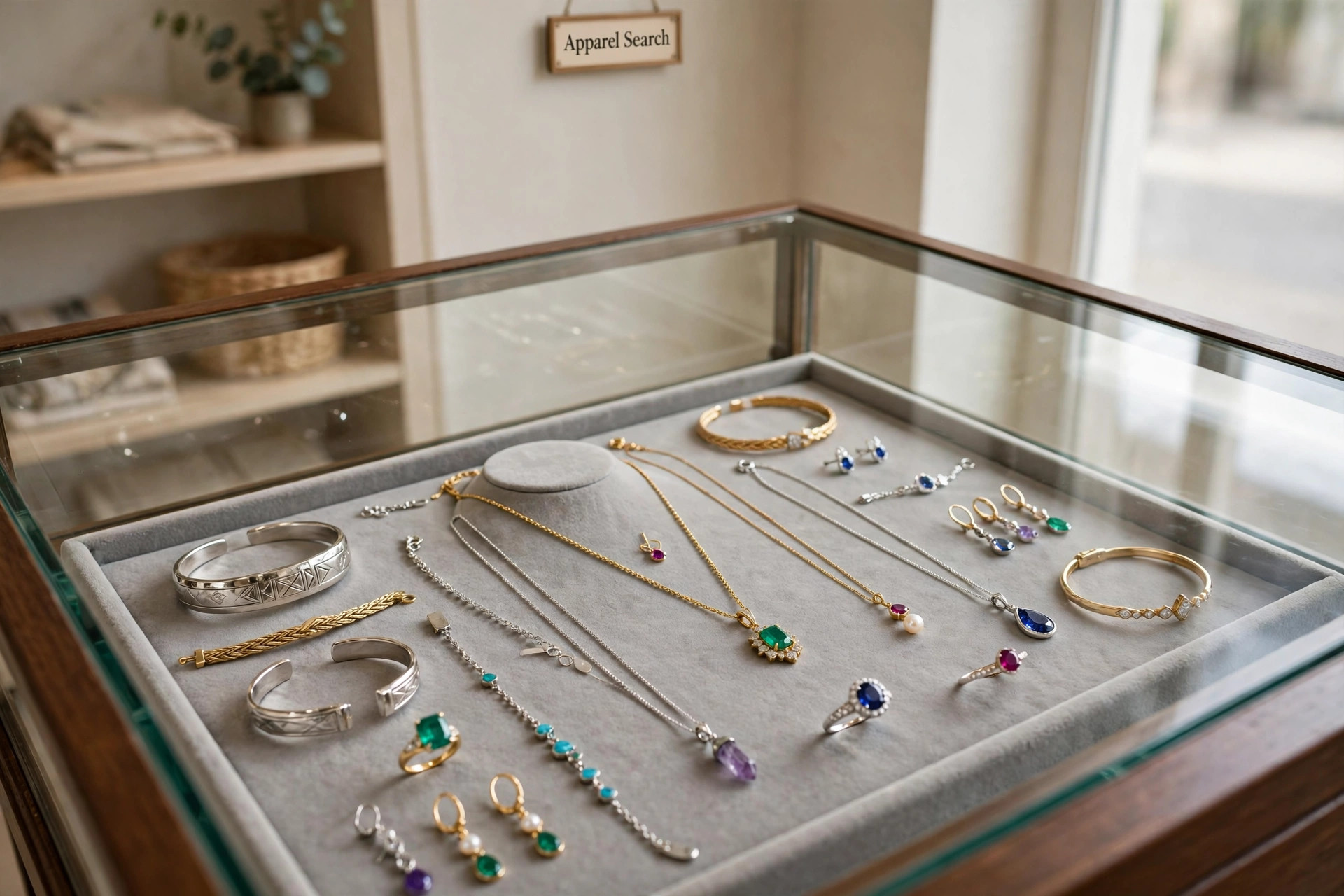
Forms: Where Jewelry Is Worn
The trade organises jewelry first by where it sits on the body. Bracelets circle the wrist, necklaces hang at the neck, rings are worn on the fingers and earrings at the ears. Hair ornaments and body-piercing jewelry complete the standard list, and watches are usually retailed and guided alongside jewelry because they share its materials, its display and its gift market, even though a watch also tells the time.
Within each form, the same sorting continues: the site's guides divide the subject by design, by metals and by stones, because after form, material is what decides a piece's price, care and meaning. A ring is a form; whether it is a plain gold band, a gem-set piece or a plated fashion ring is a question of material, and it is the material question that separates the two great classes described below.
Materials: Precious, and Everything Else
At the top of the scale stand the precious metals — gold, silver and platinum — set with gems. Jewelry in these materials is generally considered valuable and desirable in itself, apart from any fashion it follows, and it is made to be kept: repaired rather than replaced, and often passed on. Below it, costume jewelry is made from less valuable materials: base metals and plated finishes, glass, paste and imitation stones, plastics and modern synthetics. Its purpose is the effect — the look of ornament at a fraction of the cost — and it is expected to follow fashion rather than outlast it.
The honest summary of the material range is that jewelry can be, and has been, made out of almost every kind of material: shell, bone, wood, amber, jet, steel and titanium all have their jewelry traditions alongside gold and diamond. Material sets the floor of value, but design and workmanship can lift a piece in modest materials above a routine piece in precious ones, which is why the guides treat design as a category of its own rather than a footnote to metals and stones.
Precious-metal jewelry carries its credentials on its surface. Hallmarks and fineness stamps — the karat mark on gold, the 925 mark on sterling silver — certify the metal's purity, and they are part of how fine jewelry holds the value described in the next section: a stamped, gem-set piece can be identified, appraised and resold anywhere. Costume jewelry carries no such marks, because its plated finishes are measured in appearance rather than in metal content, and its value is the value of the design alone.
Value, Symbol and Making
Jewelry is rarely only decoration. Because precious jewelry concentrates value in a small, portable, durable form, some cultures have a long practice of keeping a large amount of wealth stored in the form of jewelry, worn as both adornment and reserve. And jewelry is symbolic: a crucifix worn as a pendant states a faith, and in many Western cultures a wedding ring states a marriage — meanings every onlooker can read, carried by pieces that are also ornaments.
The constant underneath is human. Jewelry in some form has been made and worn by both sexes in almost every human culture on every inhabited continent; personal adornment appears to be a basic human tendency. Manufacture is correspondingly worldwide, with historic centres of its own — Jablonec, in the northern Bohemia region of the Czech Republic, for example, has long manufactured a large amount of jewelry for the world market, particularly in glass and costume work. A clothing glossary needs the term at this full width: the wedding band, the crucifix pendant and the pair of costume earrings are all jewelry, because the definition rests on the wearing — ornamental pieces worn on the body — and lets material, value and meaning vary.
Not to Be Confused With
The two are divided by material and intent, not by form — a necklace can belong to either class. Fine jewelry is made of precious metals such as gold and platinum, set with genuine gems, and is made to last, to hold value and often to be handed down. Costume jewelry is made from less valuable materials — base metals, plated finishes, glass and imitation stones — and is made for appearance and fashion: it gives the look of jewelry at a small fraction of the cost, and follows changing styles rather than keeping permanent value. Material, price and expected lifespan tell the two apart.
Common Questions
What is jewelry?
Jewelry consists of ornamental pieces worn on the body, typically made with gems and precious metals. The standard forms are bracelets, necklaces, rings and earrings, together with hair ornaments and body-piercing jewelry.
What is costume jewelry?
Costume jewelry is jewelry made from less valuable materials than gems and precious metals — base metals, plated finishes, glass and imitation stones. It is made for appearance and fashion at a fraction of the cost of fine jewelry.
Why is jewelry worn besides ornament?
Besides ornament, jewelry stores value — some cultures keep a large part of their wealth in jewelry form — and it carries symbolism, as with a wedding ring or a crucifix pendant worn as a statement of faith.