Jewelry Metals Guide
Every jewelry type, organized by metal
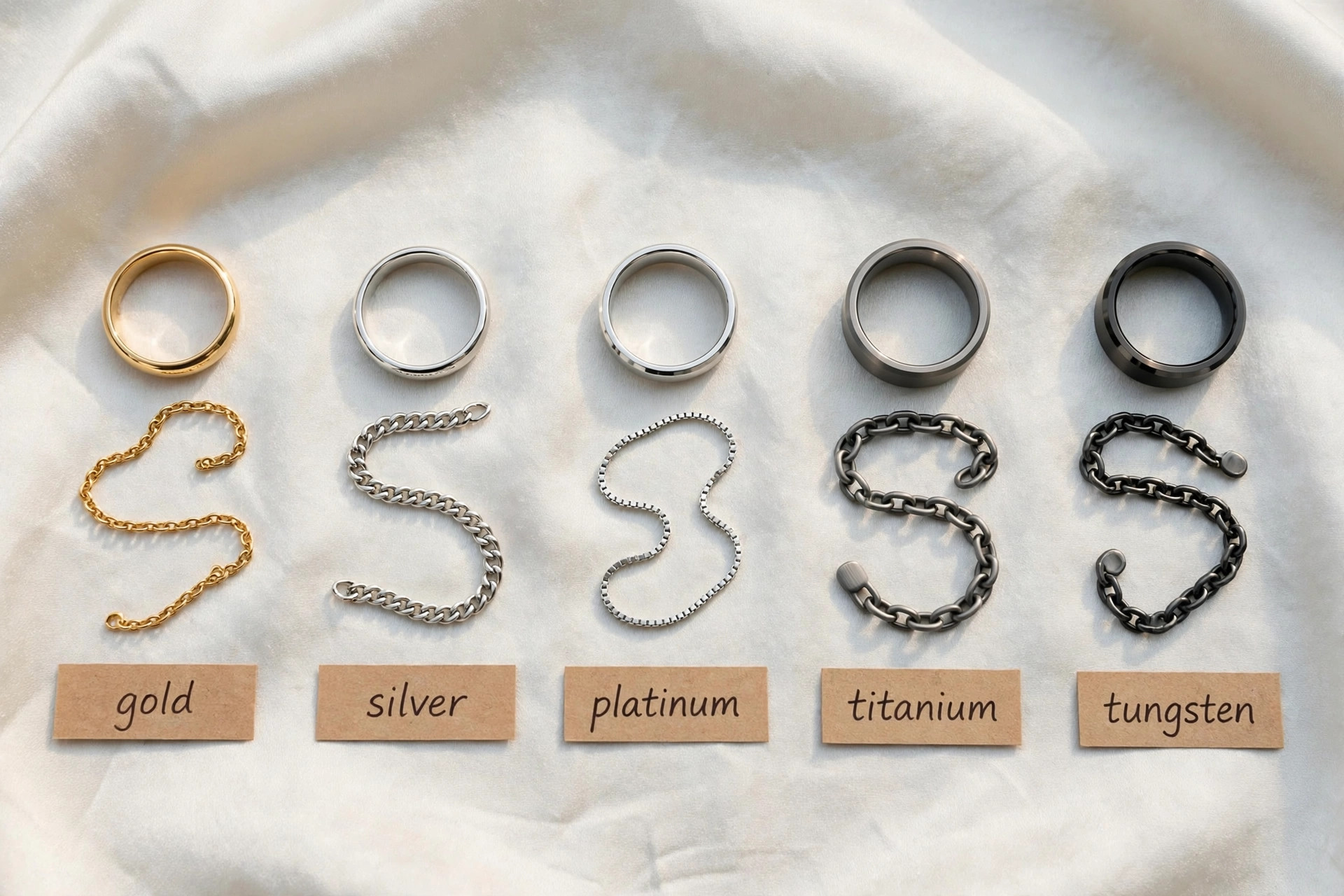
Welcome to the jewelry metals section of the Jewelry Guide. Metals are the foundation of jewelry: they decide a piece's weight, durability, color, price level and skin compatibility before any stone is set. This hub organizes jewelry by metal, so a reader who knows they want gold, sterling silver, platinum, stainless steel, titanium or tungsten can find that metal's bracelets, earrings, necklaces, rings and watches from one place. The metal pages linked high on this page cover the whole group in this section: precious metals, non-precious and base metals, and tarnishing, the surface chemistry every silver owner meets. Below them, the preserved metal-by-metal listings link each metal to its jewelry across the guide, and the section links return to the bracelets, earrings, necklaces, rings and watches hubs and to jewelry by design and by stones.
More to Explore
- Jewelry Metal Guide
- tarnish
- Gold Bracelets
- Gold Earrings
- Gold Necklaces
- Gold Rings
- Gold Watches
- Gold Plated Bracelets
- Gold Plated Earrings
- Gold Plated Necklaces
- Gold Plated Rings
- Gold Plated Watches
- Palladium Bracelets
- Palladium Earrings
- Palladium Necklaces
- Palladium Rings
- Platinum Bracelets
- Platinum Earrings
- Platinum Necklaces
- Platinum Rings
- Silver Bracelets
- Silver Earrings
- Silver Necklaces
- Silver Rings
- Stainless Steel Bracelets
- Stainless Steel Earrings
- Stainless Steel Necklaces
- Stainless Steel Rings
- More Jewelry Metals
- Bracelets
- Earrings
- Necklaces
- Rings
- Watches
- Jewelry by Design
- Jewelry by Stones
- Jewelry Guide
- Precious Metals
- Non-precious Metals
- About Jewelry
- Jewelry Stores
- Jewelry Wholesalers
- Jewelry News
- Base Metals
Welcome to the jewelry metal section of the Apparel Search Jewelry Guide. This area will help you locate information regarding jewelry based on the metal in which the item is produced. For example, you can search for gold bracelets, sterling silver earrings, platinum rings etc.
Jewelry Metals: A Fusion of Artistry, Durability, and Beauty
Jewelry metals form the very foundation of the adornments we cherish. They are the raw materials transformed into symbols of love, culture, style, and heritage. Each metal brings its unique qualities, adding character and charm to the jewelry it crafts. Let's explore the fascinating world of jewelry metals, their properties, popular types, and the art of selecting the perfect metal for the perfect piece.
Properties of Jewelry Metals:
Durability: Jewelry metals are chosen for their ability to withstand everyday wear and tear without losing their form or luster. Durability ensures a piece can be passed down through generations.
Malleability and Ductility: The ability to be shaped and molded into intricate designs is crucial in jewelry-making. Malleable metals can be hammered or rolled into thin sheets, while ductility allows for fine wire-drawing and intricate detailing.
Hypoallergenic Properties: Some metals, like platinum and titanium, are hypoallergenic and suitable for individuals with sensitive skin, reducing the risk of allergic reactions.
Density: The density of a metal affects its weight and feel. Some prefer lightweight options, while others appreciate the heft of denser metals.
Popular Types of Jewelry Metals:
Gold:
Yellow Gold: The timeless classic, known for its warm and rich color.
White Gold: Created by alloying gold with white metals, often plated with rhodium for a bright, white appearance.
Rose Gold: A romantic and trendy hue achieved by blending gold with copper.
Green Gold: A less common variation achieved by alloying gold with silver.
Silver:
A brilliant white metal with a lustrous shine, popular for its affordability and versatility.
Platinum:
A dense, heavy, and naturally white metal, prized for its durability, rarity, and hypoallergenic properties.
Palladium:
A lighter and less expensive alternative to platinum, with similar white color and hypoallergenic characteristics.
Titanium:
A lightweight, strong, and hypoallergenic metal often used in contemporary jewelry designs.
Stainless Steel:
Known for its durability, resistance to tarnish, and affordability, often used in modern, industrial-style jewelry.
Choosing the Right Jewelry Metal:
Style and Aesthetics: Consider the color, shine, and overall look that suits your taste and complements your skin tone and wardrobe.
Budget: Different metals come with different price points, so understanding your budget is crucial in making a choice.
Durability and Maintenance: Consider the durability and how much maintenance a metal requires to keep its shine and appeal.
Allergies and Sensitivities: If you have skin sensitivities, opt for hypoallergenic metals like platinum, palladium, or titanium.
Jewelry metals are a canvas for the jeweler's artistry, a reflection of personal style, and a testament to the enduring appeal of fine craftsmanship. Whether it's the timeless elegance of gold, the sleek modernity of platinum, or the affordability of silver, each metal has a story to tell and a unique place in the world of jewelry.
Gold Jewelry
Gold Plated Jewelry
Palladium Jewelry
Palladium Watches
Platinum Jewelry
Platinum Watches
Silver Jewelry
Silver Watches
- Learn about jewelry metal tarnishing.
Stainless Steel Jewelry
Stainless Steel Watches
You may find the following section of our super trendy fashion directory to be of interest to you:
BraceletsReading the Metals Listings
The listings under this hub run metal by metal, gold in its yellow, white, rose, plated and two-tone forms, then palladium, platinum and silver, sterling silver, stainless steel, titanium, tungsten and the remaining metals on the second page. Each metal links out to its own bracelets, earrings, necklaces, rings and, where they exist, watches, so a single-metal collection, all titanium, or all sterling, can be assembled across every jewelry type without hunting through type-first pages. Readers who think type-first can use the bracelets, earrings, necklaces, rings and watches hubs instead; the two systems cross-link throughout.
Metal choice also quietly determines what a piece will need over its life: silver asks for polishing and dry storage, white gold for periodic rhodium renewal, plated pieces for gentle handling, and steel, titanium and tungsten for almost nothing. Knowing that before buying is the difference between a collection that stays in rotation and one that migrates to the back of a drawer. The pages in this section, precious, non-precious, base metals and tarnishing, are the reference those decisions rest on.
Knowing your metal is also knowing how to clean it: gold, silver and platinum each take a different routine, and the wrong one does real harm. How to clean jewelry at home gives the gentle method metal by metal — and the household products, toothpaste first among them, to keep away from all of them.
Common Questions
How do I choose a jewelry metal?
Match the metal to the wear first: daily pieces need durability and low maintenance, which favor gold, platinum, steel and titanium. Then consider skin, since nickel sensitivity rules out some alloys and points to titanium, platinum or palladium. Color comes next, warm yellow gold, neutral white metals or rose tones, and finally budget, where silver and the modern metals deliver precious looks at lower cost. The precious, non-precious and base metal guides linked from this page walk through each factor.
Which jewelry metals are precious, and which are not?
Gold, silver, platinum and palladium are the precious metals, valued for rarity, corrosion resistance and lasting metal value. Everything else used in jewelry, including brass, copper, pewter, stainless steel, titanium and tungsten, is non-precious, though several of those outperform precious metals in hardness, tarnish resistance or weight. Precious describes market rarity and tradition, not a ranking of how well a metal wears.
Which jewelry metals tarnish?
Silver is the main precious metal that tarnishes, forming silver sulfide in sulfur-bearing air, and copper-family base metals such as brass and copper also darken and can mark skin. Gold, platinum and palladium do not tarnish in normal wear, though lower-karat gold alloys can dull slightly. Stainless steel, titanium and tungsten are effectively tarnish-free. The tarnishing guide in this section explains the chemistry and the storage habits that slow it.