Platinum Necklaces
The dense, durable white metal at full weight
Platinum is the prestige white metal for necklaces: dense, naturally white with no plating, hypoallergenic, and exceptionally durable, with a surface that displaces rather than loses metal when scratched. Jewelry platinum is usually 950 fineness, 95 percent platinum alloyed with ruthenium or cobalt, stamped Pt950 or PLAT. That density is the defining fact of a platinum necklace: the same chain design weighs about a third more than in 18 karat white gold, which the wearer feels at the neck and the buyer feels in the price, since platinum is also priced by weight. This guide covers platinum alloys and stamps, chain construction, why platinum is the classic setting for diamond pendants, its patina, and care and repair.
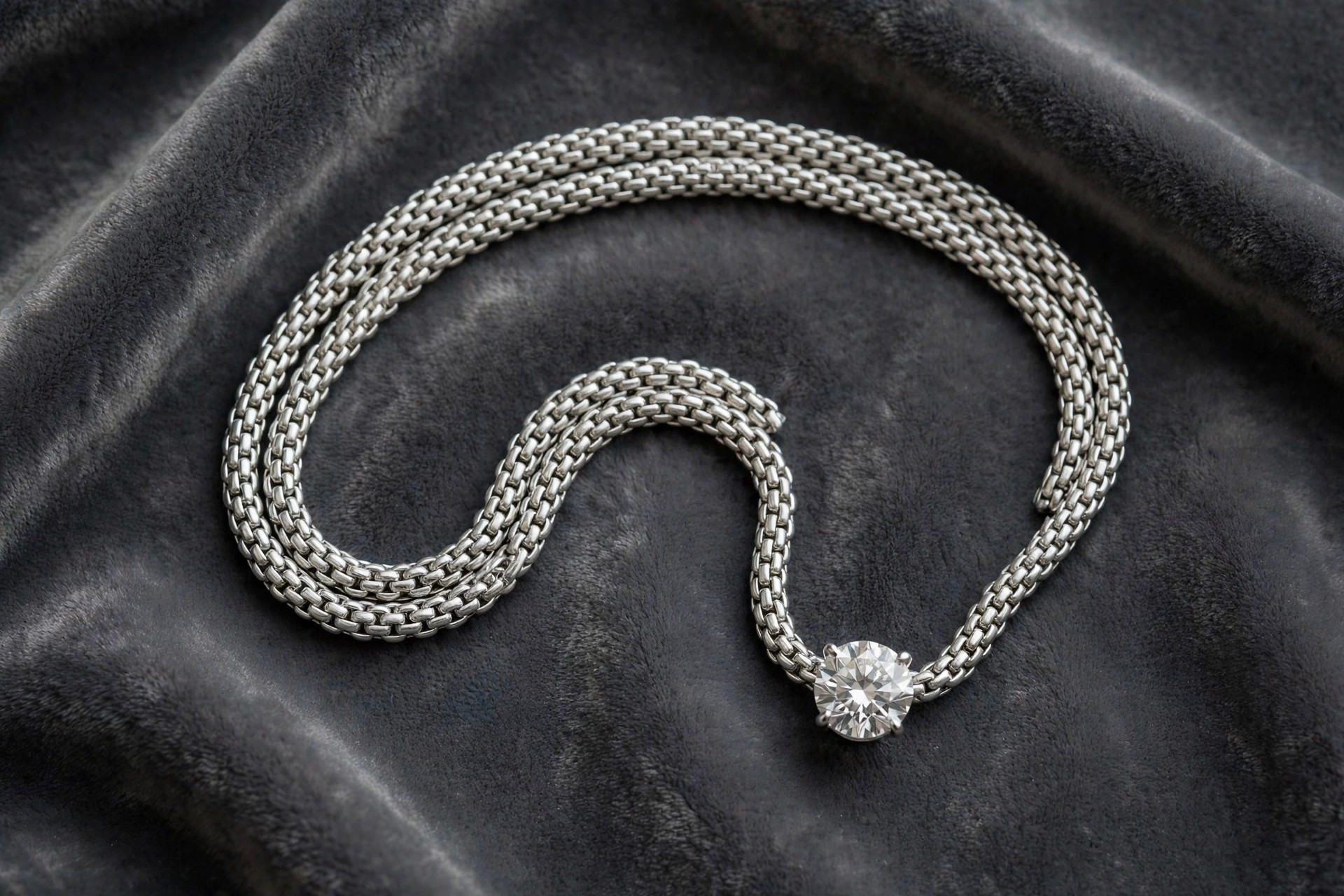
Platinum Necklaces: The Epitome of Elegance and Luxury
Platinum necklaces are luxurious and exquisite pieces of jewelry that showcase the allure and prestige of platinum, a precious metal known for its rarity, durability, and timeless beauty. The unmatched qualities of platinum make it a coveted choice for discerning jewelry connoisseurs.
What Makes Platinum Necklaces Special and Appealing?
Durability: Platinum is incredibly durable and strong, making it ideal for everyday wear. It can withstand daily activities and resist damage and wear, ensuring longevity and value retention.
Hypoallergenic: Platinum is hypoallergenic, making it an excellent choice for individuals with sensitive skin or metal allergies. It is a safe and comfortable option for extended wear.
Elegance and Versatility: Platinum's naturally white color complements various gemstones and enhances their brilliance. Its neutral hue allows it to pair well with different outfits and styles, making platinum necklaces versatile and elegant.
Cost of Platinum Necklaces:
The high cost of platinum necklaces is primarily due to its rarity and the complex mining and refining process. Platinum is much rarer than gold and is often found in smaller quantities in the Earth's crust. Additionally, the refining process to produce pure platinum is labor-intensive and requires specialized equipment, contributing to the higher cost.
Pros and Cons of Owning a Platinum Necklace:
Pros:
Durability: Platinum is highly resistant to wear and tear, ensuring a
long-lasting and durable piece of jewelry.
Hypoallergenic: Its
hypoallergenic nature makes it suitable for those with sensitive skin or
metal sensitivities.
Timeless Elegance: Platinum's natural white color
and enduring beauty add a timeless touch to any design.
Resale Value:
Platinum holds its value well over time, making it a valuable investment.
Cons:
Cost: The initial cost of purchasing a platinum necklace is higher compared to other metals due to its rarity and refining process.
Scratches and Dents: Although durable, platinum can still develop scratches and dents over time, requiring occasional maintenance to restore its luster.
Popular Styles of Platinum Necklaces:
Solitaire Pendant: A single, dazzling gemstone set in platinum, often a diamond, sapphire, or emerald, suspended from a platinum chain.
Multi-Stone Necklace: A necklace adorned with multiple gemstones, arranged in a pattern or random design, showcasing the versatility of platinum.
Choker Necklace: A short, snug-fitting necklace that sits high on the neck, often featuring a single gemstone or intricate platinum design.
Chain Necklace: A necklace made of interlinked platinum chains, sometimes accented with gemstones or pendants.
Determining Authenticity of a Platinum Necklace:
Authenticating whether a necklace is truly made of platinum can be done through the following methods:
Hallmarks and Stamps:
Look for specific hallmarks or stamps on the necklace. Platinum jewelry is often marked with "PT" or "PLAT" to indicate its platinum content. For example, "PT950" signifies 95% platinum (the most common platinum purity), while "PT900" indicates 90% platinum.
Purity Certificate:
Request a purity certificate from the seller, providing information about the platinum content. Reputable jewelers and retailers typically provide this documentation for high-quality platinum jewelry.
Professional Appraisal:
Seek a professional jeweler or gemologist to perform an appraisal. They can verify the platinum content and assess the necklace's authenticity and value.
Magnetic Properties:
Platinum is not magnetic, so if a magnet does not attract the necklace, it could be an indication of platinum. However, this is not a foolproof method as some alloys used in platinum jewelry might have magnetic properties.
Where to Purchase High-Quality Platinum Necklaces:
Reputable Jewelry Stores:
Visit established and reputable jewelry stores known for their quality and authenticity. Brands such as Tiffany & Co., Cartier, and Harry Winston are renowned for their platinum jewelry.
Certified Online Retailers:
Trusted online platforms like Blue Nile, James Allen, and Brilliant Earth offer a wide selection of certified platinum necklaces. Ensure they provide detailed product descriptions and authenticity guarantees.
Local Jewelers:
Visit local jewelers with a good reputation. They often offer custom design options and can guide you in choosing a high-quality platinum necklace.
Auction Houses:
Consider reputable auction houses like Christie's or Sotheby's, where you can bid on or purchase platinum necklaces with verified authenticity and provenance.
Luxury Boutiques:
Explore luxury boutiques in major cities known for their high-end jewelry. They often curate collections featuring platinum necklaces from esteemed designers.
Before making a purchase, always do thorough research, request certifications, and seek recommendations to ensure you are investing in a genuine, high-quality platinum necklace from a trusted source.
Platinum necklaces epitomize luxury and sophistication, representing an investment in timeless elegance. Their durability, hypoallergenic properties, and ability to enhance the beauty of gemstones make them a highly prized choice among jewelry enthusiasts.
Learn about platinum earrings, about platinum rings and platinum bracelets.
Learn about palladium necklaces.
Learn more about metals used for jewelry.
Learn about precious metals.
Weight as a Feature
Platinum's heft reads as quality in the hand and security on the neck: a platinum chain stays where it is placed, drapes with authority and carries a heavy pendant without the links stretching as softer metals can. The same weight argues for trying a long platinum chain before buying, since a 24 inch chain in platinum is a genuinely heavy object by evening. Chain styles in platinum favor smooth, strong constructions, curb, cable and wheat, with clasps engineered for the weight they hold.
Repair is the one planning point: platinum soldering and resizing need a properly equipped bench, and not every jeweler works in it, so an owner should know where the necklace can be serviced. Day to day, care is simple: soapy water, a soft cloth, storage apart from pieces platinum could scratch, since it is harder than gold though softer than gemstones. Bought for permanence, a platinum necklace is the closest thing in jewelry to a lifetime chain.
Common Questions
Why does a platinum necklace cost so much more than white gold?
Three reasons combine: platinum is rarer and its price per gram is high; the metal is far denser, so the same chain contains more grams; and platinum is worked at 950 purity against white gold's 585 or 750, with more demanding workmanship. The result is that a substantial platinum chain is a significant purchase, and its price should be checked against its stated gram weight and fineness.
Does platinum need rhodium plating like white gold?
No. Platinum is naturally white throughout and never needs plating to hold its color. Over time it develops a soft matte patina from fine scratches, which many wearers prize and which a jeweler can polish back to brightness. This plating-free permanence, with no renewal cost, is one of platinum's main advantages over white gold for a necklace worn daily.
Is platinum good for a diamond pendant?
It is the classic choice. Platinum prongs and bezels are strong and do not wear thin as gold settings can, the white metal does not cast color into a diamond, and its density gives a pendant secure, substantial feel. For a significant diamond solitaire or line necklace, platinum settings are the durability benchmark, serviced by jewelers equipped for platinum work.
More to Explore
- Choker Necklace
- Chain Necklace
- jewelry stores
- boutiques
- platinum earrings
- about platinum rings
- platinum bracelets
- about palladium necklaces
- about metals used for jewelry
- about precious metals
- Necklace Guide
- Necklace Guide Pg. 2
- Jewelry Guide
- About Jewelry
- Jewelry Stores
- Jewelry Wholesalers
- Jewelry News