Chain Necklaces
Links, lengths and clasps, the necklace foundation
A chain necklace is a necklace formed entirely of interlocking metal links, worn alone as a complete piece or as the carrier for a pendant. Chain styles are defined by their link pattern: cable, the simple oval-link standard; curb, with flattened twisted links that lie flat; rope, with strands twisted into a spiral; box, from square links; snake, a smooth flexible tube of rings; figaro, with a pattern of short links and one long link; plus Singapore, wheat, bead and other weaves. This guide covers the main chain styles and what each does best, widths and the difference between solid and hollow construction, standard lengths for women and men, clasp types and their security, wearing chains alone and with pendants, and care, including kink-prone styles and repair.
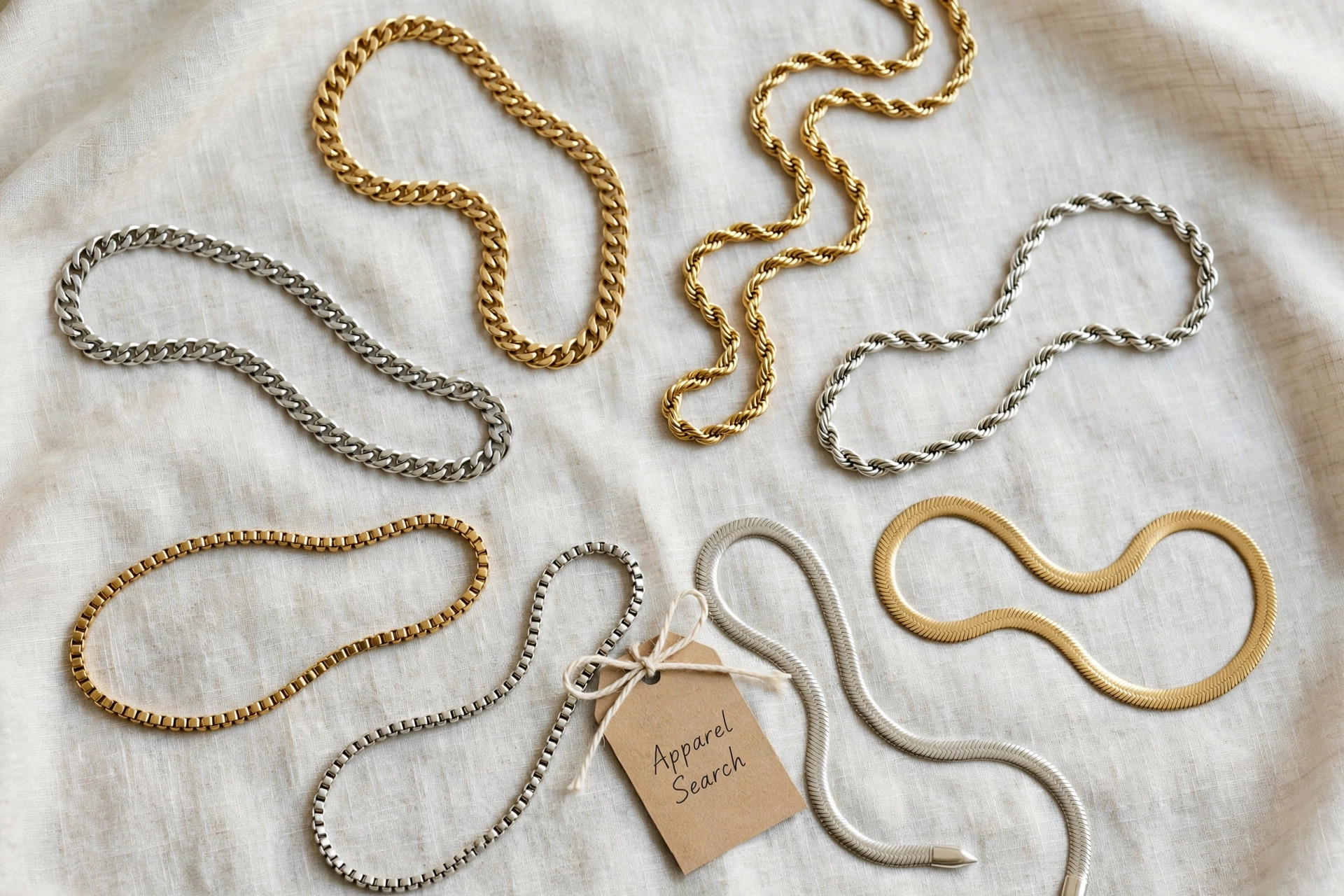
A chain necklace is a type of necklace characterized by a series of interlocking links or loops made of various materials, forming a continuous and flexible chain. Chain necklaces are versatile and popular jewelry accessories worn by people of all ages and genders. They come in a variety of styles, lengths, and designs, making them suitable for various occasions and personal preferences.
Key Features and Design Elements:
Chain Links:
Chain necklaces are made of connected links that vary in shape and size, such as oval, round, cable, curb, box, rope, snake, figaro, and more.
The links can be uniform or vary in design, creating unique patterns and textures along the length of the necklace.
Clasps:
Chain necklaces typically have a clasp, such as a lobster clasp, spring ring clasp, toggle clasp, or a magnetic clasp, which allows for easy wearing and removal.
The clasp securely fastens the necklace around the wearer's neck.
Material:
Chain necklaces can be made from various materials, including:
Metals: Common metals used include gold, silver, platinum, stainless steel, and alloys.
Precious Metals: Gold and silver chain necklaces are often preferred for their elegance and value.
Base Metals: Stainless steel, brass, or other base metals are used for durability and affordability.
Alternative Materials: Some chain necklaces incorporate non-metal materials like leather, fabric, or beads for a unique and contemporary look.
Lengths:
Chain necklaces are available in various lengths, including:
Choker Length: Fits closely around the neck.
Princess Length: Typically 16-18 inches long and falls just below the collarbone.
Matinee Length: Ranges from 20-24 inches, falling at the top of the bust.
Opera Length: Longer necklaces, often 28-36 inches, falling at the chest or belly button.
Rope Length: Extended and versatile, usually over 36 inches, allowing for multiple styling options.
Types of Chain Necklaces:
Cable Chain Necklace:
Consists of uniformly sized round or oval links, creating a simple and
classic look.
Curb Chain Necklace:
Features flat, interlocking links, often with a slight twist, providing a
sturdy and bold appearance.
Rope Chain Necklace:
Comprises tightly intertwined links, resembling a rope, offering an
elegant and intricate design.
Box Chain Necklace:
Consists of square-shaped links that connect to form a smooth and
geometric pattern.
Snake Chain Necklace:
Features closely linked wavy plates that resemble a snake's skin,
providing a sleek and stylish appearance.
Usage and Versatility:
Everyday Wear: Chain necklaces are versatile and can be worn daily, complementing various outfits and styles.
Layering: They are often layered with other necklaces of different lengths and designs for a trendy and personalized look.
Pendants and Charms: Chain necklaces serve as a popular choice for showcasing pendants, charms, or gemstone accents, enhancing their appeal.
Chain necklaces are timeless accessories that suit a wide range of tastes and preferences. Their flexibility, durability, and diverse design options make them a staple in the world of jewelry.
You can make a brooch necklace or cameo necklace from a simple chain necklace.
Learn about chain bracelets.
The Necklace Everything Else Hangs From
Chains are the infrastructure of the necklace world: most pendants in this guide's other pages arrive on a cable or curb chain chosen to carry them, and a plain chain alone, in the right width and finish, is a finished piece of jewelry in its own right. That dual role makes chain literacy valuable. Knowing that a rope chain's sparkle comes from its faceted twist, that figaro is identified by its three-plus-one link rhythm, or that a snake chain must never be folded, turns a buyer from guessing at a counter display into choosing deliberately.
Wear and care follow link logic. Chains fail at clasps and at worn single links, both repairable by a jeweler if the chain is solid, which is why one good solid chain often outlasts several fashion replacements. Lay chains flat or hang them singly to prevent tangling, clean them in soapy water with a soft brush to clear the links, and check a pendant's bail against the chain's width so the two wear evenly. Built that way, a chain wardrobe, one fine, one medium, one bold, covers nearly every necklace need a wearer has.
Common Questions
What are the strongest chain styles for a pendant?
Cable, curb and wheat chains are among the strongest everyday styles, with box chains also sturdy for their size; their links tolerate the pull and movement of a pendant well. Rope chains are strong in solid form. Snake and herringbone chains are the delicate ones: they look smooth and fluid but kink permanently if bent sharply and are hard to repair invisibly, so they suit careful wear without heavy pendants. For any pendant, the chain's width and solid construction matter as much as its style.
What do solid and hollow chain mean?
A solid chain's links are made from solid wire, giving real weight, durability and full repairability at a higher price. A hollow chain's links are tubes, so a wide, bold-looking chain can be light and affordable, but hollow links dent easily and are difficult or impossible to repair when crushed or torn. Bold fashion chains are often hollow for wearability, which is a fair trade when the seller states it; problems come only when hollow construction is sold at solid-chain implications.
What length chain should I choose?
On women, 16 inches sits as a choker at the throat, 18 inches, the princess length, rests at the collarbone and is the standard pendant length, 20 to 24 inches is matinee, falling to the top of the bust. On men, 20 inches is the common starting length, with 22 to 24 inches hanging lower. A pendant adds its own drop below the chain's end, so choose the chain so chain plus pendant lands where intended, and weigh the clasp finding: lobster clasps are the secure everyday standard.