Cameo Necklaces
A portrait carved in relief, worn as a pendant
A cameo necklace carries a cameo: a small relief carving, traditionally a woman's profile portrait, though also figures, scenes, flowers and classical themes, cut so the raised design stands in one color against a contrasting background layer. Cameos are carved from banded materials that provide those layers naturally: shell, most commonly helmet shell with its white layer over a brown-pink ground; hardstone such as agate, onyx and sardonyx; and also coral, lava and molded glass. Set as a pendant in gold, silver or pinchbeck-style frames, cameos were signature jewelry of the Georgian and Victorian eras and remain a distinct antique and revival style. This guide covers cameo materials and how they are identified, carving quality, subjects, settings and frames, dating clues, and care.
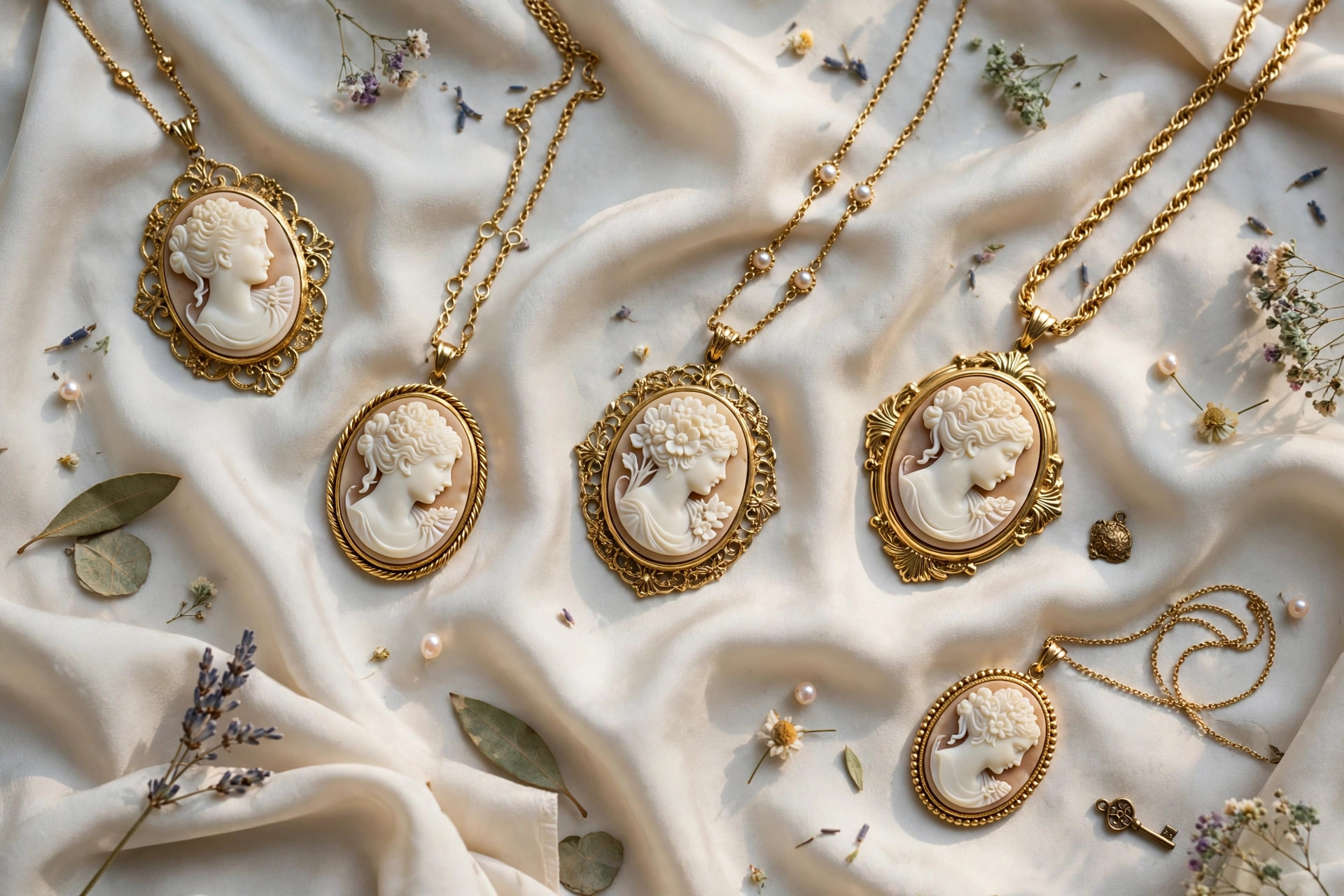
A cameo necklace is a type of jewelry that features a cameo as its focal point. A cameo is a carved or engraved piece of jewelry typically made from materials such as shell, stone, coral, agate, or glass. The design on a cameo often depicts a portrait, figure, or scene in raised relief against a contrasting background. The cameo is then set into a pendant or a centerpiece of a necklace, showcasing its intricate design and artistry.
Key Features and Design Elements:
Cameo:
The centerpiece of a cameo necklace is the cameo itself, a small, raised relief carving often portraying a person, a profile, or a scene. The carving is done on a contrasting background, highlighting the details and creating a visually striking effect.
Materials:
Cameos are traditionally carved from materials like shell, agate, onyx, coral, lava, or glass. The choice of material can influence the colors, textures, and overall appearance of the cameo.
Setting:
The cameo is set into a pendant, usually made of metal such as gold, silver, or other alloys. The pendant may also feature additional ornamentation, gemstones, or decorative elements that complement the design of the cameo.
Chain or Necklace:
The pendant with the cameo is attached to a chain or necklace, which completes the cameo necklace. The chain can vary in style, length, and material, allowing for customization to suit different preferences and necklines.
Designs and Styles:
Cameo necklaces come in various designs and styles, ranging from vintage and classic to modern and contemporary. Some cameos feature elaborate frames or settings, enhancing their aesthetic appeal.
Significance and Symbolism:
Historical and Artistic Significance: Cameos have been prized for centuries for their artistic value and craftsmanship. They have been used in jewelry since ancient times, particularly during the Roman and Greek eras, and have maintained their appeal over generations.
Symbol of Elegance and Timelessness: Cameo necklaces are often associated with elegance, sophistication, and timeless beauty. They have a vintage charm that appeals to individuals who appreciate classic styles and antique jewelry.
Personal Expression: The choice of cameo design and style allows wearers to express their personal taste, interests, or cultural heritage. Cameos can depict various motifs, historical figures, or scenes, allowing for a personalized touch.
Occasions for Wearing:
Special Events and Occasions: Cameo necklaces are suitable for formal events, weddings, galas, and parties, where their elegance and sophistication can complement formal attire.
Everyday Wear: Depending on the design and style, cameo necklaces can also be worn casually, adding a touch of vintage flair to everyday outfits.
A cameo necklace is a timeless piece of jewelry that embodies artistry, tradition, and elegance. Whether passed down as a family heirloom or purchased for its aesthetic and historical value, a cameo necklace is a cherished accessory that holds a special place in the world of jewelry.
There are several famous and valuable cameo necklaces that have gained recognition and prestige due to their historical significance, artistic craftsmanship, and high value. Here are a few notable examples:
Portland Vase Cameo Necklace:
- The Portland Vase is a famous Roman cameo glass vase that dates back to the early 1st century AD. It is renowned for its intricate cameo carving depicting various scenes. The vase was eventually broken and repaired, with some fragments incorporated into a necklace. The restored vase and the fragments used in the necklace are displayed at the British Museum in London.
Napoleon III Pearl and Onyx Cameo Necklace:
- This necklace features a large oval onyx cameo pendant set in gold, surrounded by pearls and diamonds. The cameo is a portrait of Emperor Napoleon III of France. It was auctioned at Christie's in Geneva in 2013 and fetched a high price, reflecting its historical and artistic significance.
The Hope Cameo:
- The Hope Cameo is an ancient sardonyx cameo that dates back to the 1st century BC. It features a portrait of the Emperor Augustus and his wife Livia. The cameo was owned by various historical figures and collectors throughout its history, including Henry Philip Hope, from whom it takes its name. It is now part of the collection at The British Museum.
The Habsburg-Lorraine Cameo and Pearl Necklace:
- This necklace is an exquisite piece from the Habsburg royal collection. It features a large cameo pendant set with diamonds and pearls, surrounded by intricately designed goldwork. The cameo depicts a bust of a Roman empress. The necklace showcases the opulence and grandeur associated with the Habsburg dynasty.
These cameo necklaces are not only valuable for their materials and craftsmanship but also for their historical connections and the stories they tell. They are often displayed in prestigious museums or auctioned at high-profile events, attracting the attention of art and jewelry enthusiasts worldwide.
You may also want to learn about a brooch.
Carving You Wear at the Throat
The cameo is sculpture at jewelry scale, and the pendant necklace is its natural frame: the carving hangs flat, lit evenly, at a size where profile and detail can be read. Italian carving centers, especially Torre del Greco for shell, supplied the Victorian world, and the best shell carvers signed their work on the reverse, a detail collectors look for. Sardonyx hardstone cameos, cut through two or three colored layers, are the connoisseur's version, taking far longer to carve and holding detail shell cannot match.
For buyers, the sequence is material, carving, then frame: identify what the cameo is actually made of, judge the cutting for depth and finesse rather than size, and check that the setting suits the period claimed for the piece, since cameos were often reframed. A well-carved cameo in a sound frame is wearable art with a two-thousand-year lineage behind it, from Roman gems to Victorian shell work to modern revival pieces, and it needs only gentle handling to keep that lineage going.
Common Questions
How can I tell a carved cameo from a molded one?
A hand-carved cameo shows fine, varied tool work under magnification: undercutting at the edges of the design, crisp detail in hair and drapery, and slight natural irregularities. Molded glass or resin cameos show uniform surfaces, soft detail and sometimes mold lines or bubbles. Shell cameos are thin and slightly translucent held to the light; stone cameos are heavier and cool. Carved pieces, especially hardstone, are the collectible end of the category, and prices should reflect the material claimed.
What subjects do cameo necklaces show?
The classical profile of a woman, often with upswept hair, a headband or flowers, is the iconic cameo subject, derived from Greek and Roman carving. Others show full mythological scenes, couples, cherubs, animals, flowers and, in lava and coral cameos from Italy, local classical themes. Left and right facing profiles both occur. Subject quality matters less than carving quality: a finely cut simple profile outranks a clumsy crowded scene.
How should a cameo necklace be cared for?
Cameos are carved in relief, so their raised details are exposed: avoid knocks, ultrasonic cleaners and harsh chemicals. Shell is the most delicate common material, sensitive to water soaking, perfume and hairspray, so wipe shell cameos with a soft, barely damp cloth and store them padded and separate. Stone cameos are hardier but can still chip at fine edges. Check the frame's grip on the carving regularly, since a cameo is usually held by its bezel alone.