Necklaces Guide, Page 2
Onyx to slides, the listings continued
This second page of the necklaces section continues the directory of necklace guides: the remaining gemstones, onyx, opal, pearl, peridot, pink topaz, ruby and sapphire, together with the precious and semi-precious overviews; the white metals palladium and platinum and sterling's parent metal silver; and the form-led pages for religious necklaces and slide pendants. The first directory page covers the gemstones from citrine to mother of pearl, the gold family and the cross, heart, locket, monogrammed and men's pages. Use the links high on this page to move within the section, and the return link to go back to the first necklaces guide page.
More to Explore
- Onyx Necklaces
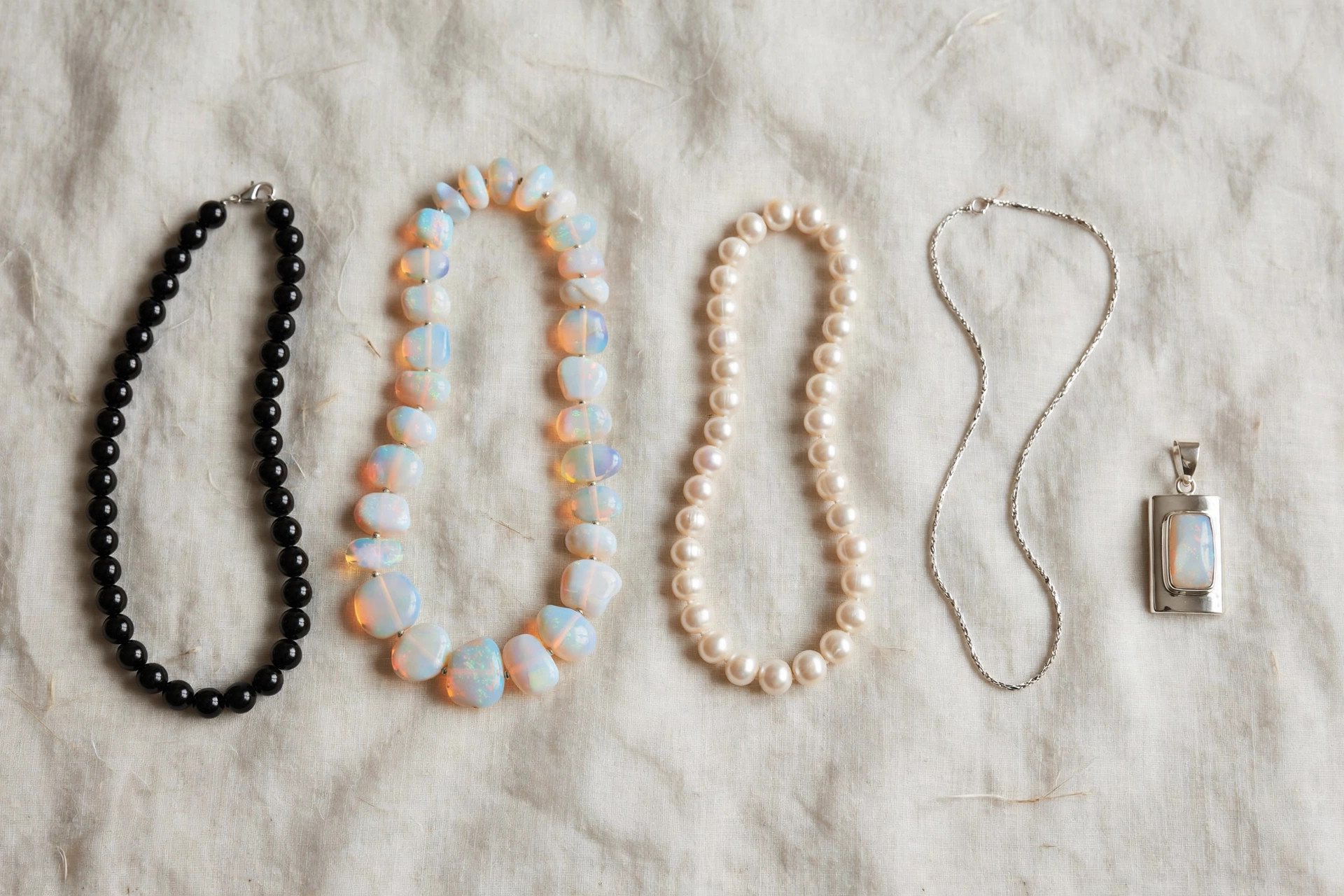
- Opal Necklaces
- Palladium Necklaces
- Pearl Necklaces
- Peridot Necklaces
- Pink Topaz Necklaces
- Platinum Necklaces
- Precious Gems Necklaces
- Religious Necklaces
- Ruby Necklaces
- Sapphire Necklaces
- Semi-Precious Gems Necklaces
- Silver Necklaces
- Slide Necklaces
- Solitaire Necklaces
- Stainless Steel Necklaces
- Sterling Silver Necklaces
- Strand Necklaces
- Tanzanite Necklaces
- Titanium Necklaces
- Tungsten Necklaces
- Two Tone Gold Necklaces
- White Gold Necklaces
- Women's Necklaces
- Yellow Gold Necklaces
- Return to Necklace Main Page
- Bracelets Earrings
- Rings
- Watches
- Jewelry by Design
- Jewelry by Metals
- Jewelry by Stones
- About Jewelry
- Jewelry Guide
- Jewelry Stores
- Jewelry Wholesalers
- Jewelry Network
- Jewelry News
- Citrine Necklaces
- Clover Shape Necklaces
- Cross Necklaces
- Diamond Necklaces
- Emerald Necklaces
- Garnet Necklaces
- Gold Necklaces
- Gold Plated Necklaces
- Heart Shaped Necklaces
- Lab Created Gem Necklaces
- Locket Necklaces
- Men's Necklaces
- Monogrammed Necklaces
- Mother Pearl Necklaces
Welcome to page 2 of the necklace section of the Apparel Search Jewelry Guide. In this section you will find a great deal of information regarding necklaces.
◊ Return to Necklace Main Page
You might find the following sections of our guide to be of help.
Completing the Necklace Tour
Read together, the two directory pages trace the full range of the necklace in jewelry: birthstones and classic gems, the laboratory-grown alternatives, metals from plated fashion gold to platinum, and pendants whose meaning, a cross, a locket's photograph, a monogram, matters as much as their material. That range is the point of the section. A buyer choosing between a pearl strand, an opal pendant and a platinum chain is choosing between different kinds of value, in material, in craft and in sentiment, and the guides here exist to make those differences explicit.
From any page in this section, the links return to this directory and the first necklaces page, and onward to the Jewelry Guide hub, where the same stones and metals appear as bracelets, earrings, rings and watches for readers building matched sets or comparing how a stone behaves in a different form.
Common Questions
What is listed on this second necklaces page?
The gemstone guides for onyx, opal, pearl, peridot, pink topaz, ruby and sapphire, the precious gems and semi-precious gemstone overview pages, the lab created gem guide, the metal guides for palladium, platinum and silver, and the religious and slide necklace pages. The first page lists citrine through mother of pearl plus gold, gold plated, cross, heart, locket, monogrammed and men's necklaces. Together the two pages index the whole necklaces section.
How do palladium, platinum and silver necklaces differ?
All three are white metals. Platinum is the densest, most durable and most expensive, keeping its color without plating. Palladium, in the platinum family, is lighter and costs less while staying naturally white. Silver is the most affordable and the softest, and it tarnishes, needing regular polishing. Their three guides compare weight, price, hypoallergenic qualities and care in detail.
What is a slide necklace?
A slide is a pendant with a channel or tube at its back through which the chain passes, so the pendant sits threaded on the chain rather than hanging from a bail, and slides freely along it. Omega and snake chains are the classic partners. The slide necklace guide covers slide construction, enhancer slides that clip over strands, and chain pairing.