Religious Necklaces
Faith symbols as pendants, described factually
Religious necklaces carry the symbols of many faiths as pendants: the Christian cross and crucifix and saint and Miraculous medals; the Jewish Star of David, chai and hamsa; the Hindu om and the Buddhist wheel and lotus; Islamic calligraphy and crescent forms; and interfaith and spiritual symbols such as the evil eye, tree of life and chakra pendants. They are worn as expressions of belief, as protection tokens in their traditions, and as gifts for rites of passage including baptisms, confirmations, bar and bat mitzvahs and first communions. This guide describes the main forms and materials factually, covers gift occasions and sizing, and notes the respectful handling these pieces are generally given.
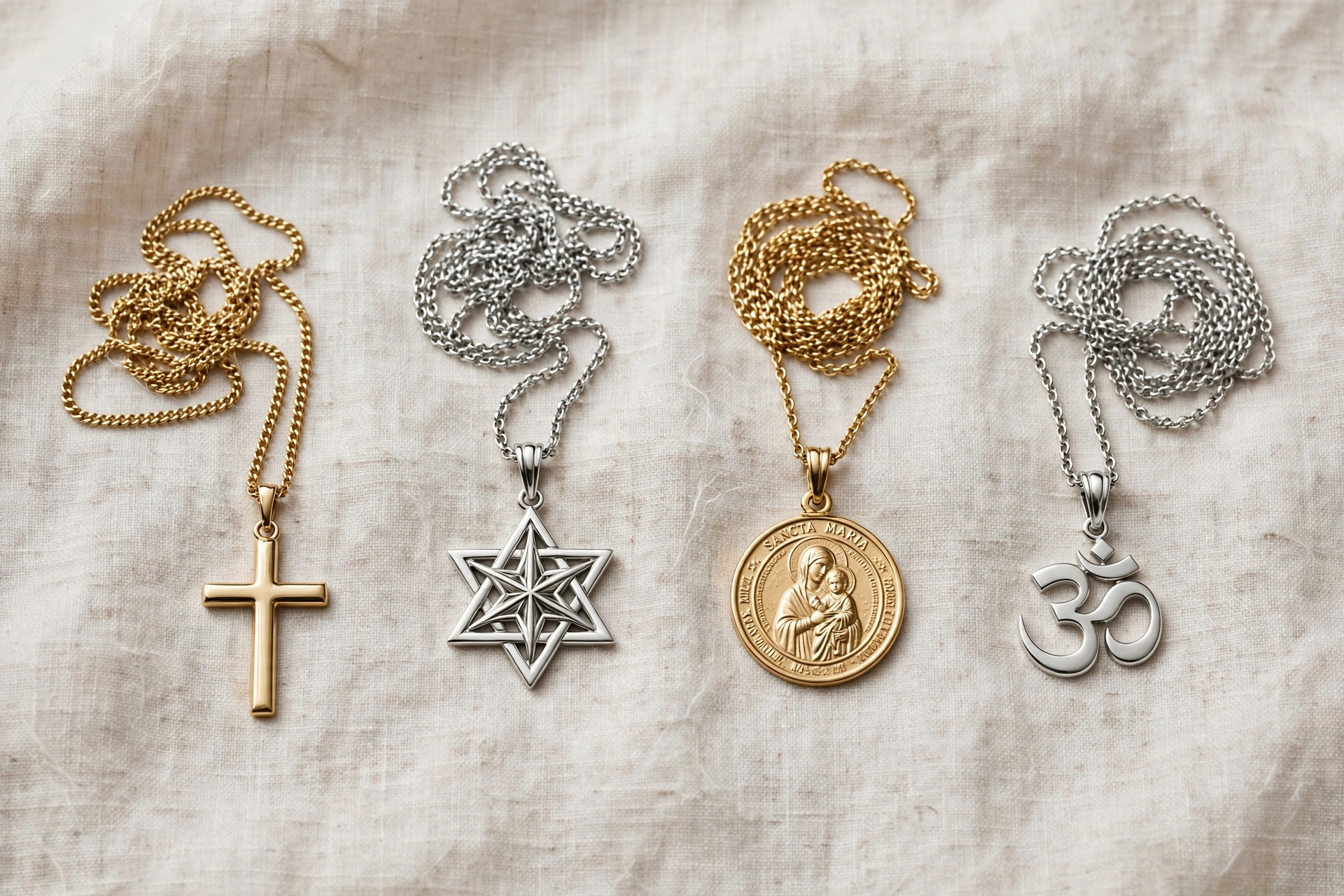
Religious Necklaces: Symbols of Faith and Devotion
Religious necklaces are deeply meaningful pieces of jewelry adorned with symbols, icons, or religious texts that hold spiritual significance. They serve as expressions of faith, devotion, and a connection to one's religious beliefs, offering wearers a tangible reminder of their spirituality.
History of Religious Necklaces:
The history of religious necklaces is intertwined with the history of religious beliefs and practices across cultures and civilizations. Here are some key historical points:
Ancient Civilizations: Throughout history, various ancient civilizations, including the Egyptians, Greeks, and Romans, wore religious amulets and pendants as protective charms or symbols of their gods and goddesses.
Christianity: The wearing of crosses and crucifixes as necklaces is deeply rooted in Christianity. It became especially prevalent during the Middle Ages, symbolizing devotion to Christ and serving as a visible sign of one's faith.
Hinduism and Buddhism: In Hinduism and Buddhism, the wearing of mala necklaces made of prayer beads, often with 108 beads, is a common practice for meditation and prayer. These necklaces help devotees maintain focus and recite mantras.
Islam: Muslims often wear necklaces featuring the Arabic script of Quranic verses or the names of Allah and the Prophet Muhammad as expressions of their faith. These necklaces are worn as reminders of their religious obligations and beliefs.
Judaism: The Star of David and the Hamsa hand are popular symbols worn as necklaces by Jewish individuals, signifying protection, blessings, and a connection to their heritage.
Popular Religious Necklace Designs:
Cross and Crucifix Necklaces: Crosses are central symbols in Christianity, representing the crucifixion and resurrection of Jesus Christ. These necklaces come in various designs, from simple crosses to intricate crucifixes.
Saint Medallions: Medallions featuring depictions of saints, such as Saint Christopher, Saint Michael, or Saint Jude, are worn for protection and guidance.
Angel Pendants: Angel pendants symbolize divine protection and guidance. They often feature angelic figures with outstretched wings.
Prayer Bead Necklaces: Mala necklaces, rosaries, and prayer bead necklaces are used by various religious traditions for counting prayers, reciting mantras, and meditating.
Religious Texts and Verses: Necklaces with inscriptions of religious texts, verses, or prayers from holy scriptures are worn as reminders of one's faith and devotion.
Religious Symbols: Symbols such as the Star of David, the Om symbol, the Hamsa hand, or the Ichthys fish are worn to represent specific religious beliefs and offer protection.
Religious Icons: Icons of religious figures, such as the Virgin Mary or the Buddha, are featured in necklace designs as a way to connect with and seek guidance from these revered figures.
Religious necklaces serve as personal expressions of faith and spirituality. They hold deep meaning for individuals and often become cherished heirlooms passed down through generations, carrying with them the faith and devotion of those who wear them.
Learn more about cross design necklaces.
You may also enjoy learning about religious earring styles, religious rings and religion theme bracelets.
Learn about religious jewelry designs.
Medals, Symbols and Occasions
Medals form their own family within religious necklaces: round or oval pendants struck with a saint's image, the Virgin Mary in the Miraculous and scapular medal traditions, guardian angels for children, and patron saints chosen for occupations, causes and namesakes. They are made by the millions in base metal for distribution and in gold and silver as lifetime pieces, often blessed by clergy after purchase in traditions where that is practiced, a step belonging to the wearer's faith rather than to the jewelry trade.
Practical points are the same as for any pendant worn daily: a smooth back so the piece sits comfortably against the skin, a bail and chain strong enough for constant wear, and a length, usually 18 to 22 inches, that lets the pendant rest on the chest or tuck under clothing as the wearer prefers. Symbols shared across cultures, the hamsa, evil eye and tree of life, are also worn as fashion jewelry by people outside those traditions, which the trade accommodates by offering them in both devotional and decorative lines.
Common Questions
What types of religious pendants are most common?
Crosses and crucifixes are the most widely worn, followed by saint medals and the Miraculous Medal in Catholic tradition. Star of David pendants, often with chai, the Hebrew symbol for life, are the central Jewish forms. Hamsa hands and evil eye pendants come from Middle Eastern traditions shared across faiths, and om, lotus and dharma wheel pendants represent Hindu and Buddhist traditions. Each symbol has its own meaning within its faith, which sellers describe and buyers usually already know.
What materials are religious necklaces made from?
Gold and sterling silver carry most faith pendants, with stainless steel common for men's medals and crosses worn daily. Wood, olive wood especially, ceramic, shell and stone are used for carved crosses and prayer-related pendants, and gemstone versions set small diamonds or colored stones into cross and Star of David forms. Material usually follows how the piece will be worn: daily and under clothing favors smooth, sturdy metals.
Are religious necklaces given as gifts?
Frequently, and usually tied to an occasion in the faith: baptisms and christenings, first communions, confirmations, bar and bat mitzvahs, weddings and times of illness or travel where a protective symbol is meant. Engraving a date or name on the back of a medal or cross is customary. Because the meaning is personal, givers typically choose the symbol of the recipient's own faith and tradition.