Religious Earrings
Crosses and faith symbols, worn and given with respect
Religious earrings carry faith symbols close and visible: Christian cross and crucifix studs and drops first of all, along with ichthys fish, dove and angel designs, and earrings bearing symbols of other faiths, such as the Star of David, Om, lotus and hamsa, in gold, silver and gem-set forms. Wearers choose them as a personal expression of faith, and givers choose them for religious milestones. This guide covers the main symbols found in earrings, respectful wearing and gifting, sizing from small everyday studs to occasion drops, materials, and the occasions, communion, confirmation and Easter among them, when religious earrings are traditionally given. Most designs stay deliberately small and neat, so the symbol can be worn daily at school, at work and at worship without looking like costume or drawing unwanted attention.
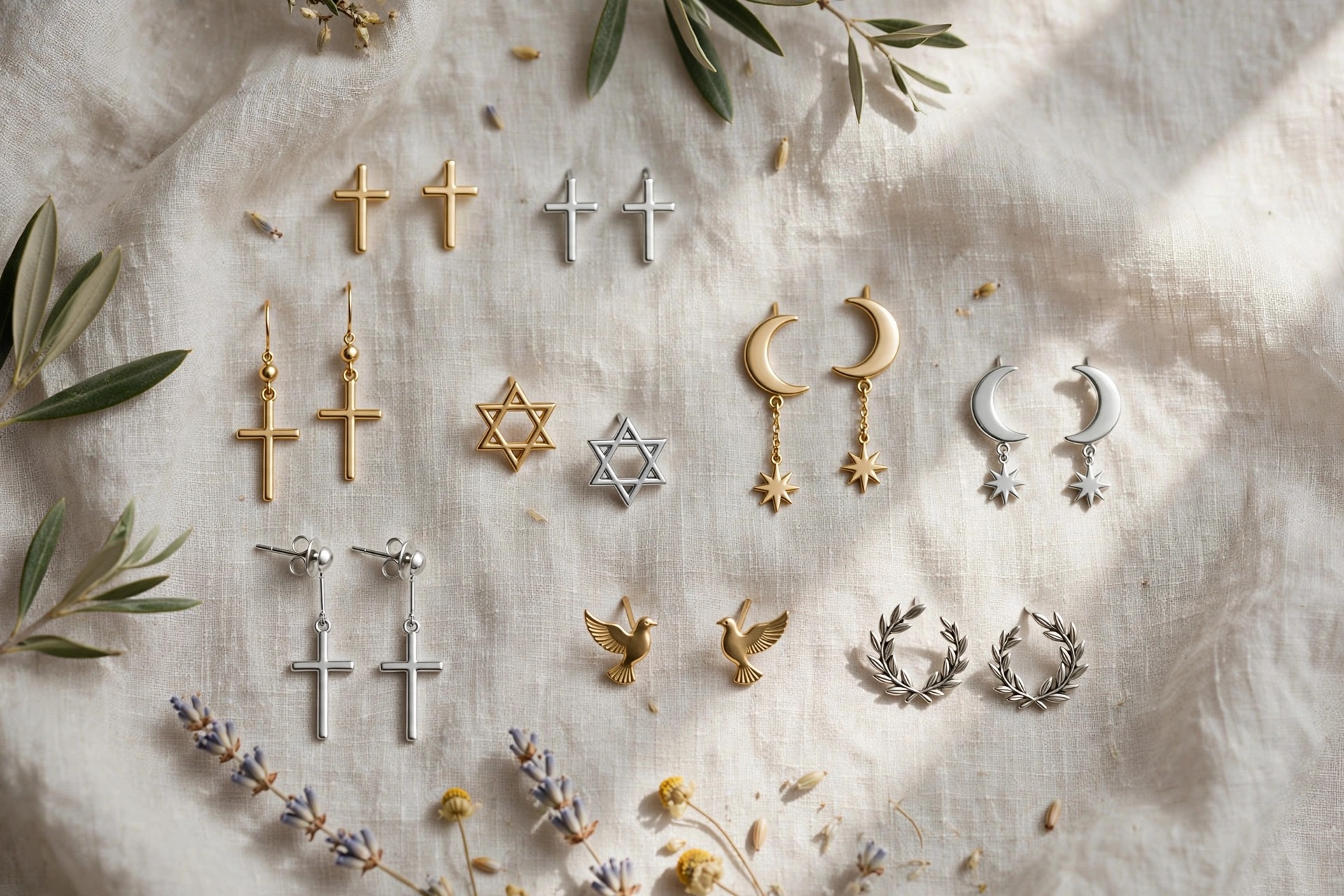
Religious Earrings: Expressing Faith Through Jewelry
Religious earrings are a unique and meaningful form of self-expression and devotion that allow individuals to wear their faith close to their hearts, quite literally. These earrings come in various designs, often featuring symbols, motifs, or scriptures that hold spiritual significance for the wearer. They serve as a powerful reminder of one's beliefs and a way to share their faith with the world.
Types of Religious Earrings:
Cross Earrings: Crosses are perhaps the most universally recognized religious symbol, representing Christianity and the crucifixion of Jesus Christ. Cross earrings come in a variety of styles, from simple and understated to ornate and embellished.
Star of David Earrings: The Star of David is a symbol of Judaism and the Jewish faith. Earrings featuring this six-pointed star design are often worn by Jewish individuals to express their identity and connection to their heritage.
Om Earrings: Om is a sacred sound and spiritual icon in Hinduism, Buddhism, and other Indian religions. Earrings with the Om symbol are worn as a form of meditation and to signify spiritual awareness.
Islamic Earrings: Earrings featuring Arabic calligraphy or verses from the Quran are popular among Muslim individuals. These earrings often carry verses that inspire and uplift the wearer.
Buddhist Earrings: Buddhist earrings may feature the lotus flower, the dharma wheel, or other symbols relevant to Buddhism. These designs represent the teachings and principles of Buddhism.
Meaning and Significance:
Religious earrings hold deep personal meaning for those who wear them:
Faith and Devotion: Religious earrings serve as a constant reminder of one's faith, fostering a sense of connection to one's beliefs and spirituality.
Identity: These earrings can be a way to proudly display one's religious identity, allowing wearers to feel a sense of belonging to their faith community.
Protection and Blessings: Some individuals believe that wearing religious symbols close to the body brings protection and blessings. They may view these earrings as a form of spiritual armor.
Expression of Gratitude: Wearing religious earrings can be an expression of gratitude and reverence for the divine. It signifies one's appreciation for the teachings and principles of their faith.
Design and Material:
Religious earrings come in a wide range of designs to suit individual preferences. They can be crafted from various materials, including:
Precious Metals: Gold, silver, and platinum are commonly used for religious earrings due to their durability and significance. These metals often complement the symbolic designs.
Gemstones: Gemstones may be incorporated into the design to add color and brilliance, with each stone carrying its unique symbolism or significance.
Wood: Wood is often used for earrings with a more rustic or natural feel, especially in designs related to Buddhism or indigenous spiritual practices.
Enamel: Enamel can be used to add vibrant colors to religious symbols, making them visually appealing and eye-catching.
Religious earrings provide a meaningful way for individuals to integrate their faith into their everyday lives and fashion choices. They are a beautiful fusion of spirituality and self-expression, allowing wearers to showcase their beliefs and find comfort and strength in their faith journey.
You may find interest in religious bracelets, religion rings and religion theme necklaces.
Learn more about religion relevant jewelry.
Small Jewelry With a Larger Meaning
Religious earrings are usually modest in size, and that modesty is the point: a small gold cross stud or a tiny dove drop states faith quietly, every day, at school, work and worship, without turning belief into display. Fine versions in solid gold and silver are bought to be kept for decades and often handed down, so secure posts, well-made hooks and honest metal matter more here than extra size or decoration.
The cross jewelry design and religious jewelry guides in the design section cover these symbols across all jewelry forms. For earrings specifically, comfort and respect work together: lightweight studs a child can wear through a communion day, smooth edges that catch on nothing, and symbols rendered accurately for their tradition. A religious earring given well, right faith, right occasion, right size, is remembered long after larger gifts are forgotten. Keep the presentation simple as well: a small box, a card naming the occasion, and no elaborate wrapping that overwhelms the meaning, lets the symbol itself carry the gift, which is exactly how most families have traditionally presented first communion and confirmation jewelry for generations.
Common Questions
What symbols are used in religious earrings?
Cross and crucifix earrings are the most common, followed by the ichthys fish, doves, angels and small medallion designs for Christian wearers. Jewish Star of David earrings, and Om, lotus, hamsa and other faith-symbol earrings, serve wearers of other traditions. Small studs keep a symbol discreet for everyday wear, while drops make it the clear focus.
When are religious earrings given as gifts?
Cross earrings are traditional gifts for first communion, confirmation, baptism and christening celebrations, Easter and Christmas, often in small gold or silver studs for a young recipient's first fine earrings. Matching the symbol and form to the recipient's own tradition, and choosing an age-appropriate size and secure back, matters more than cost.
How should religious earrings be worn respectfully?
Wear a faith symbol as an expression of that faith or in genuine sympathy with it, sized and styled as jewelry rather than costume, and be thoughtful in settings where a prominent religious symbol may not suit the occasion. For gifts, let the recipient's own tradition lead the choice, since a faith symbol is personal in a way ordinary motifs are not.