Strand Necklaces
Beads and pearls gathered into layered strands
A strand necklace is built from beads, pearls or gemstones strung in one or more continuous strands, rather than a pendant hung on a chain. The simplest form is a single uniform strand, the classic pearl necklace; from there the construction opens out into multi-strand necklaces with two or more parallel strands, twisted strands wound around each other for texture, and graduated strands where beads grow from small at the back to largest at the center front. Materials range across freshwater and cultured pearls, gemstone beads, glass, crystal, wood and metal beads, each strung on silk cord, beading wire or thread and finished with a clasp that gathers the strands. This guide covers strand constructions, graduation and length, clasps and knotting, choosing materials for different occasions, and the restringing care strung necklaces periodically need.
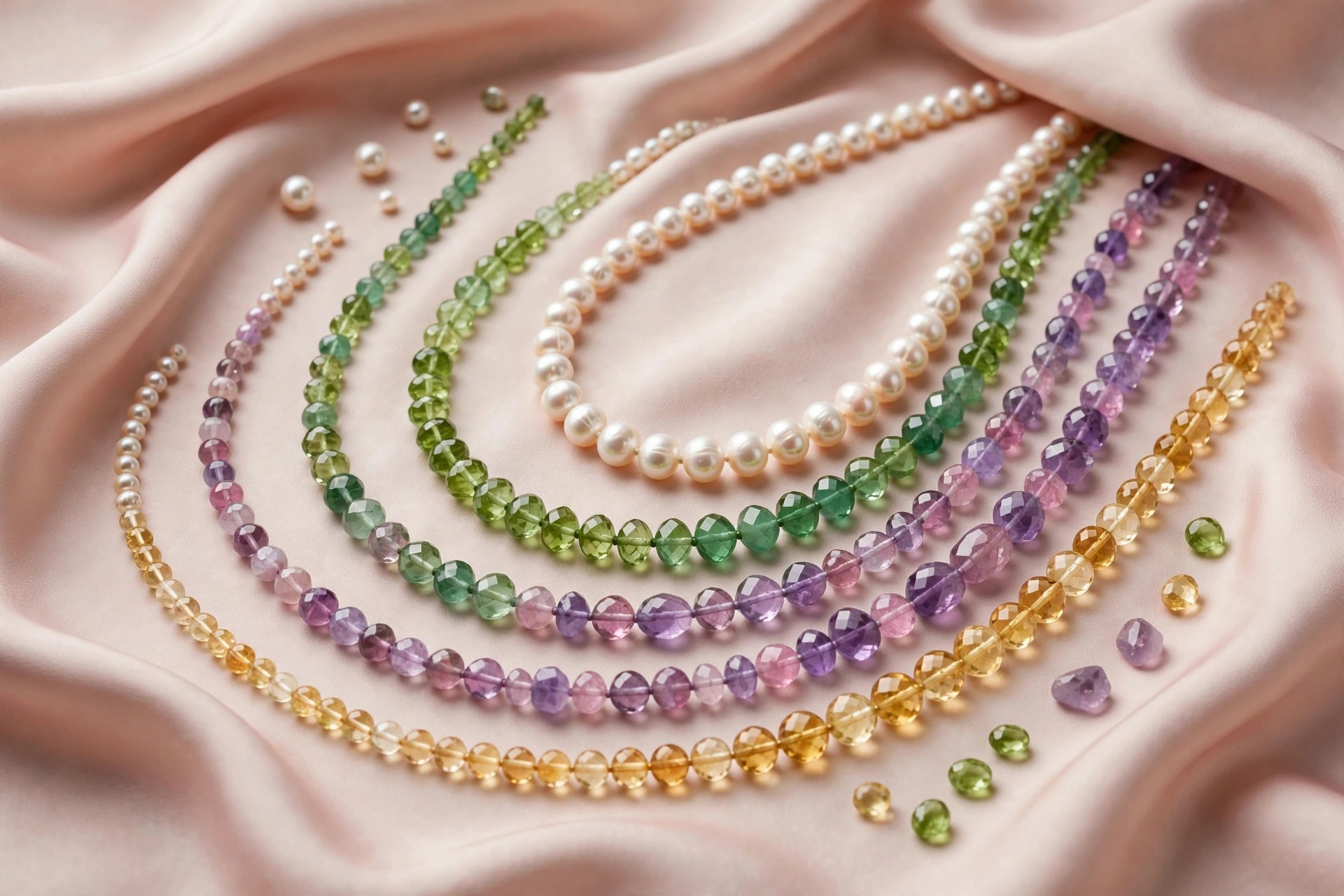
Strand Necklaces: Adornments Woven with Elegance
A strand necklace is a style of necklace consisting of multiple strands or strings of beads, gemstones, pearls, or other materials arranged side by side to create a collective piece of jewelry. These strands are typically attached to a clasp or a central focal point, providing structure and unity to the necklace. Strand necklaces have been cherished throughout history for their beauty, versatility, and ability to add a touch of sophistication to various ensembles.
Key Features and Characteristics:
Materials:
Beads and Gemstones: Strand necklaces are often crafted using a diverse
array of beads, gemstones, or crystals. The materials can range from
semi-precious stones to glass, wood, ceramic, metal, or even plastic beads,
offering a wide variety of options for different looks and styles.
Pearls: Pearl strand necklaces are a classic example, where multiple strands
of pearls are woven together to create an elegant and timeless piece.
Arrangement:
The beads or materials in a strand necklace are arranged in parallel strands, often of equal length, running side by side, providing a cohesive and uniform appearance.
Each strand may contain beads of the same size and shape, or they can be graduated, creating a captivating visual effect.
Clasp and Closure:
Strand necklaces typically feature a clasp or closure, usually made of
metal, that joins the ends of the strands together. This clasp secures the
necklace around the wearer's neck.
Some strand necklaces have adjustable
lengths or additional extension chains, allowing for versatility in wearing
and adjusting the fit.
Lengths:
Strand necklaces come in various lengths, from choker-style to long and flowing strands that may reach the waist or beyond. The length can impact the overall style and how the necklace complements different necklines.
Design Variations:
Layered Strands: Some strand necklaces feature layers of multiple strands, providing a lush and opulent appearance.
Mixed Materials: Designs may incorporate a mix of materials and textures within the strands, adding complexity and visual interest.
Focal Points: Strand necklaces often have a focal point, such as a larger or more ornate bead, gemstone, or pendant, at the center or front of the necklace, drawing attention to it.
Occasions:
Strand necklaces are versatile and can be dressed up or down, making them suitable for both casual and formal occasions. The choice of materials and design can determine the necklace's appropriateness for a particular event.
Cultural and Historical Significance:
Strand necklaces have been worn by various cultures throughout history and across different regions. They often carry cultural or symbolic significance, showcasing the wearer's heritage or beliefs.
Strand necklaces are adored for their ability to add grace, sophistication, and a touch of opulence to any outfit. Whether worn as a standalone statement piece or layered with other necklaces, they offer a captivating and elegant way to enhance one's style and showcase the beauty of different materials and gemstones.
You may want to learn about other necklace designs such as slide necklaces.
Lengths, Clasps and Focal Points
Strand lengths follow the familiar necklace scale with their own effects: 16-inch collar strands sit close and suit multi-strand designs, 18-inch princess length is the standard for single pearl and bead strands, and matinee and opera lengths let long strands be worn doubled, which converts one necklace into a layered look. Clasps on strands are often part of the design, box clasps with safety catches on fine pearl strands, decorative toggles and bead clasps on gemstone strands, and multi-row clasps whose width matches the number of strands they gather.
Some strands add a focal point, a larger bead, carved element or small pendant at the center front, borrowing emphasis from pendant design while keeping strung construction. Mixed-material strands, alternating pearl with gemstone, metal or crystal beads, rely on rhythm and spacing rather than a focal point. Whatever the material, a strand's value sits in its beads, its matching and its stringing, so inspect uniformity of luster and color in natural light and check that the clasp closes with a positive, secure action.
Common Questions
What is the difference between uniform and graduated strands?
A uniform strand uses beads of one size throughout, giving an even, formal line; a graduated strand increases bead size gradually from the clasp to a largest center bead, then decreases symmetrically. Graduated strands draw the eye to the center front and can look more substantial at the same bead count, while uniform strands layer more predictably with other necklaces and pendants.
How often does a strand necklace need restringing?
Pearl and gemstone strands worn regularly are commonly restrung every one to two years, or sooner if the cord shows gaps, stretching or fraying near the clasp, or beads slide loosely. Silk cord stretches and absorbs oils over time. Restringing with knots between beads is worthwhile for valuable strands: knots stop beads scattering if the cord breaks and prevent them rubbing.
How do multi-strand necklaces stay untangled?
Construction does most of the work: strands are made in slightly graduated lengths so they nest rather than twist, gathered into a single clasp or spaced bars that hold them apart. Twisted designs are intentionally wound and fixed at the ends. In storage, lay multi-strand necklaces flat and clasped, never hung by one strand, and put each on clasp-first so the strands fall in their intended order.