Jewelry Stones Guide
Jewelry organized by the stone it is made with
Welcome to the stones section of the Jewelry Guide, where jewelry is organized by the stone, bead or gem it is produced with, so a reader looking for amethyst necklaces, ruby bracelets or diamond earrings can start from the stone and go to the form. Jewelry stones, also called gemstones, are natural or synthetic minerals and materials prized for beauty, rarity, durability and often for symbolic meaning, cut and polished and set into jewelry. This first directory page covers the opening run of stones, amethyst, aquamarine, beaded jewelry, blue topaz, citrine, diamond, emerald and garnet, each linking to that stone's bracelets, earrings, necklaces and rings. Two further directory pages continue the alphabet, and the topic pages in this section explain birthstones, gemstones in general, and the precious and semi-precious categories. The links appear high on this page, directly below this introduction, because a directory's job is navigation first. Below them, background on how stones are valued, by rarity, color intensity, cut, size and clarity, helps a reader compare the stones they are moving between.
More to Explore
- Amethyst Bracelets
- Amethyst Earrings
- Amethyst Necklaces
- Amethyst Rings
- Aquamarine Bracelets
- Aquamarine Earrings
- Aquamarine Necklaces
- Aquamarine Rings
- Beaded Bracelets
- Beaded Earrings
- Beaded Necklaces
- Beaded Rings
- Blue Topaz Bracelets
- Blue Topaz Earrings
- Blue Topaz Necklaces
- Blue Topaz Rings
- Citrine Bracelets
- Citrine Earrings
- Citrine Necklaces
- Citrine Rings
- Diamond Bracelets
- Diamond Earrings
- Diamond Necklaces
- Diamond Rings
- Emerald Bracelets
- Emerald Earrings
- Emerald Necklaces
- Emerald Rings
- Garnets Bracelets
- Garnets Earrings
- Garnets Necklaces
- Garnets Rings
- Next Jewelry Stones Page
- Bracelets
- Earrings
- Necklaces
- Rings
- Watches
- Jewelry by Design
- Jewelry by Metals
- Fashion Accessory Retailers
- About Gemstones
- Jewelry Guide
- About Jewelry
- Jewelry Stores
- Jewelry Wholesalers
- Jewelry Network
- Jewelry News
- Birthstones
- Choosing Gemstones by Color
- Precious Gemstones
- Semi-Precious Gemstones
- Jewelry Stones Guide 3
Welcome to the jewelry stone section of the Apparel Search Jewelry Guide. This area will help you locate information regarding jewelry based on the stones, beads, or gems in which the item is produced. For example, you can search for amethyst necklaces, ruby bracelets, diamond earrings etc.
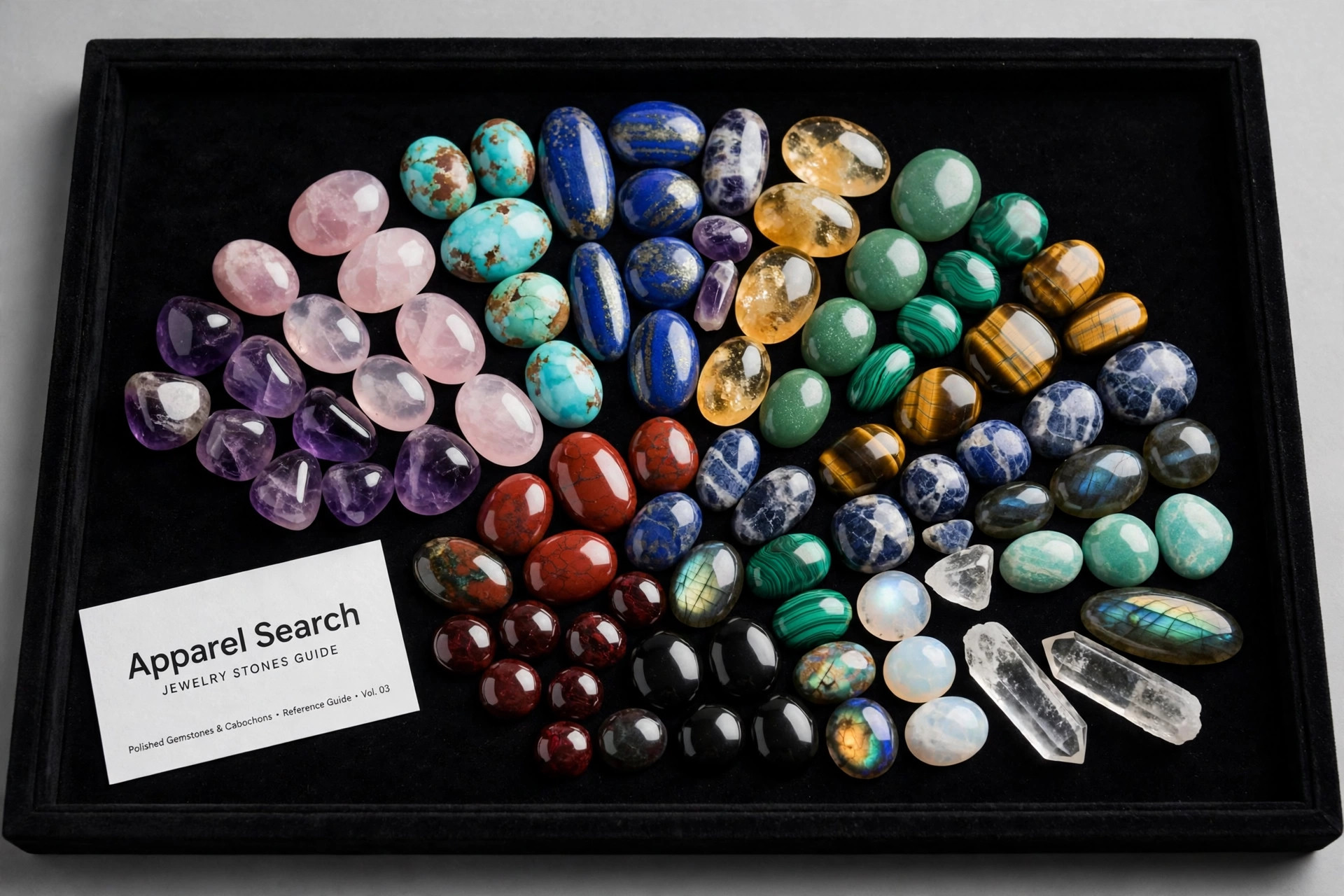
Jewelry stones, also known as gemstones or precious stones, are natural or synthetic minerals or materials that are prized for their beauty, rarity, durability, and often symbolic or mystical properties. These stones are cut, polished, and set into jewelry to enhance its aesthetic appeal. Gemstones come in a variety of colors, shapes, and sizes, and they play a crucial role in the world of jewelry, both for adornment and as symbols of status, love, spirituality, or protection.
Amethyst Jewelry
Aquamarine Jewelry
Beaded Jewelry
Blue Topaz Jewelry
Citrine Jewelry
Diamond Jewelry
Emerald Jewelry
Garnets Jewelry
Some common and popular jewelry stones include diamonds, rubies, sapphires, emeralds, amethyst, aquamarine, opals, pearls, and more. Each stone has its unique characteristics, including color, hardness, clarity, and brilliance, making them desirable for different jewelry styles and purposes. The value and desirability of jewelry stones are influenced by factors such as rarity, color intensity, cut, size, clarity, and historical or cultural significance.
Gemstones have been used for centuries across various cultures and societies, not only for ornamental purposes but also for their believed healing, protective, or spiritual properties. Whether used in engagement rings, necklaces, bracelets, or earrings, jewelry stones add elegance, symbolism, and personal meaning to the pieces they adorn, making them timeless and cherished by wearers and collectors alike.
You may find the following areas of our site to be of interest:
Reading the Stone Listings
The stone-by-stone arrangement answers the way people actually shop for gemstone jewelry: the stone is chosen first, for its color, its meaning or its birth month, and the form follows. A reader who settles on sapphire can compare that stone as a ring, where hardness matters most, against a pendant, where a softer or larger stone would also serve. The section's topic pages support those decisions with hardness, care and category background for each stone family.
From any stone, the links onward reach the wider Jewelry Guide, where bracelets, earrings, necklaces and rings have their own sections organized by form, and the metals section covers the gold, silver and platinum the stones are set in. Moving between the two arrangements, by stone and by form, gives a complete picture of a piece before buying.
Common Questions
How is the Jewelry Stones Guide organized?
By stone, across three directory pages in alphabetical order. Each stone entry links to the jewelry made with that stone: bracelets, earrings, necklaces and rings, and some stones add watches. This first page runs from amethyst through garnet, the second continues with lab created gems through pink topaz, and the third completes the list with precious gems, ruby, sapphire, semi-precious gems and tanzanite. The topic pages on birthstones, gemstones, precious and semi-precious stones sit in the same section.
What decides the value of a jewelry stone?
Rarity, color intensity, cut, size and clarity, together with historical and cultural significance. A stone that is scarce, strongly and evenly colored, well cut, large and clean commands the highest price for its type. The same factors explain why two stones with the same name can differ enormously in price, and why a smaller stone of fine quality often outsells a larger stone of ordinary quality in the same species.
Are the stones in this guide natural or synthetic?
Both appear, and the guide treats them as separate, clearly labeled choices. Lab created gems have their own entries on the second directory page, linking to lab created bracelets, earrings, necklaces and rings. Natural stones make up most listings. Whichever a buyer chooses, the material should be stated plainly, since natural and lab created versions of the same stone differ in price even when they share chemistry and appearance.