Blue Topaz Rings
Three blues, from pale sky to deep London
Blue topaz rings are set with topaz, a silicate mineral that is naturally colorless or very pale blue in most rough, and given its familiar saturated blues by irradiation followed by gentle heating, a stable and widely disclosed treatment. Three trade shades dominate: pale Sky Blue, vivid Swiss Blue, and deep, slightly greyish London Blue, which commands the highest prices of the three. The stone suits large, clean cuts such as oval, emerald, cushion and checkerboard faceting, because it is affordable in big sizes, transparent and bright. Blue topaz is widely listed as a modern December birthstone alongside turquoise and tanzanite, and as the fourth anniversary stone. At 8 on the Mohs scale it resists scratching well, yet it has perfect cleavage in one direction, so a hard knock on the wrong plane can split it, a fact that should shape both setting choice and wear.
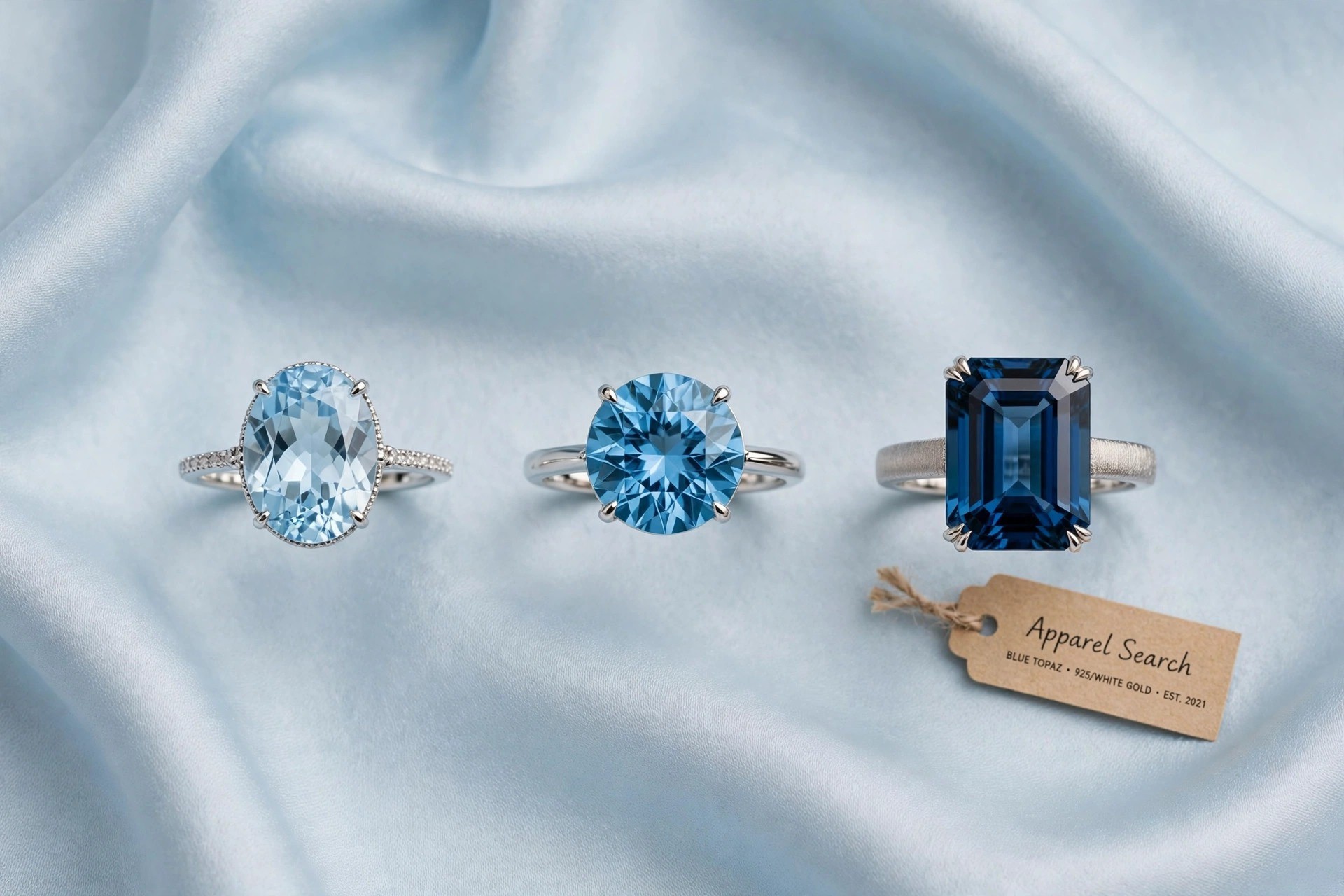
Blue Topaz Rings: Captivating Elegance in Every Hue
Blue Topaz Mineral:
Blue topaz is a radiant gemstone known for its exquisite shades of blue, ranging from pale sky blue to deep London blue. It belongs to the family of silicate minerals known as topaz. While natural blue topaz exists, most of the blue topaz used in jewelry is created through a combination of heat and irradiation treatments to enhance its color. The resulting gemstone is admired for its transparency, brilliance, and vibrant blue hues.
Design Techniques:
Blue topaz rings are crafted using various design techniques to showcase the gemstone's beauty. Common design features include:
Solitaire Settings: Single blue topaz stones are often set as the centerpiece of rings, emphasizing the gem's natural allure.
Accent Stones: Blue topaz can be paired with diamonds or other colored gemstones to create visually stunning and contrast-rich designs.
Different Cuts: Blue topaz can be cut into various shapes, including round, oval, emerald, and pear, allowing for versatility in ring designs.
Prong and Bezel Settings: Rings may employ prong or bezel settings to securely hold the gemstone while accentuating its brilliance.
Manufacturing Process:
The manufacturing of blue topaz rings involves several key steps:
Gemstone Selection: Skilled gemologists select high-quality blue topaz
stones based on color, clarity, and cut.
Design and Setting: Experienced
jewelers create intricate ring designs and choose suitable settings to
enhance the gemstone's beauty.
Ring Casting: The chosen metal (commonly gold, white gold, yellow gold, or platinum) is melted and cast into the desired ring shape.
Setting the Stone: The blue topaz is carefully set into the ring using
the chosen setting technique.
Finishing: The ring is polished, and any
final details, such as engraving, are added.
Quality Control: Each ring undergoes thorough quality control checks to ensure it meets design specifications and quality standards.
Retail and Shopping: Consumers interested in blue topaz rings can find them at various retail outlets, including:
Jewelry Stores: Local and chain jewelry stores often carry a selection of blue topaz rings in various styles and price ranges.
Online Retailers: E-commerce platforms such as Blue Nile, James Allen, and Etsy offer a wide range of blue topaz ring options, including custom and artisanal designs.
Boutiques: Boutique jewelry shops may offer unique and handcrafted blue topaz rings for those seeking distinctive pieces.
Auctions and Estate Sales: Vintage blue topaz rings can be found at auctions and estate sales, offering a chance to own a piece with historical value.
In summary, blue topaz rings are celebrated for their captivating hues and versatility in design. The gem's appeal, combined with expert craftsmanship, results in elegant and eye-catching jewelry pieces that cater to various tastes and preferences. Whether you're drawn to the subtle sky blue or the deep London blue, blue topaz rings are a timeless choice for both casual and formal occasions.
You may also have interest in learning about blue topaz earrings, blue topaz bracelets, and blue topaz necklaces.
You may want to also explore the option of pink topaz rings.
Choosing a Shade and a Setting
Sky Blue reads as a light, airy accent and pairs easily with sterling silver and white gold for everyday rings, while Swiss Blue makes a deliberate color statement that holds its own beside diamonds or white sapphire accents. London Blue, with its steely depth, is the most forgiving in mixed lighting and the most often chosen for cocktail and statement rings. Because color is the main value factor, compare stones in daylight as well as under shop lighting, check that the shade is even through the face of the stone, and be wary of windows, pale patches in the middle where light leaks through a shallow cut.
Prong settings show the most color and brilliance but leave the girdle exposed, so six prongs or a partial bezel is prudent for larger stones worn daily. Full bezels and halo settings add real protection for a cleavage-prone gem and suit London Blue solitaires intended as signature pieces. Whatever the setting, ask that the treatment be stated in writing, confirm the stone is topaz rather than blue glass or synthetic spinel, and have prongs checked yearly, since a loosened stone that shifts and strikes the setting is the most common route to damage.
Common Questions
Are Sky Blue, Swiss Blue and London Blue natural colors?
Natural blue topaz exists but is uncommon and usually very pale. Nearly all ring stones in the three trade shades start as colorless topaz and are irradiated and then heated to produce Sky, Swiss or London Blue. The color is considered stable for normal wear, the treatment is routinely disclosed by reputable sellers, and it is why vivid blue topaz remains affordable even in large, eye-clean stones.
Is blue topaz a December birthstone?
Yes, in modern birthstone lists blue topaz is one of the stones assigned to December, sharing the month with turquoise, tanzanite and zircon in most current charts. Older lists gave December turquoise or lapis instead, so descriptions vary by tradition. As a gift, a London or Swiss Blue ring is a recognized December choice, while plain topaz without the blue color is traditionally linked to November.
How should a blue topaz ring be worn and cleaned?
Protect the stone from sharp blows, especially to an exposed edge or point, because its perfect cleavage can let it chip or split. Bezel and low prong settings suit active wear better than high solitaires. Clean with warm water, mild soap and a soft brush, rinse well and dry with a lint-free cloth. Avoid steam and ultrasonic cleaners for fracture-prone stones, and store the ring apart from diamonds, which can scratch its facets.