Garnet Rings
Deep red classics and rare greens, made for rings
Garnet is a family of related minerals rather than a single stone, and garnet rings draw on that range: deep red almandine and pyrope are the classic choices, while orange spessartine, green tsavorite and rare demantoid offer very different color at higher prices. All share good transparency, strong color without treatment in most cases, and hardness from 6.5 to 7.5 on the Mohs scale, hard enough for rings with sensible settings and care. Garnet is the birthstone for January and the traditional gift for a second wedding anniversary, giving a red garnet ring a personal meaning beyond its color. This guide covers the main garnet varieties and their colors, how hardness and setting choice affect daily wear, value factors such as color saturation and clarity, and straightforward cleaning, storage and protection from knocks.
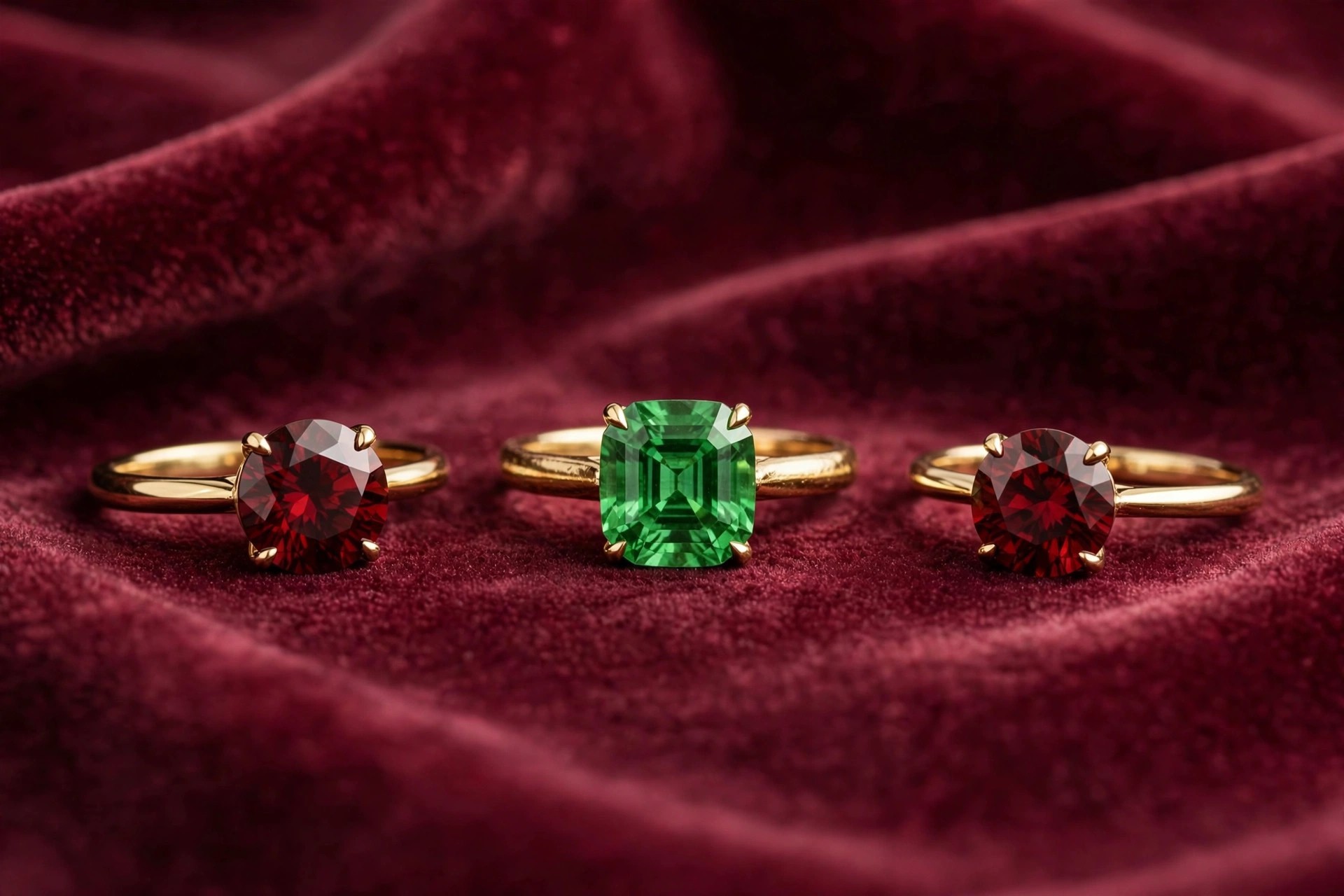
Garnet Rings: The Fiery Gemstone of Passion and Vitality
Garnet rings epitomize a fiery and diverse gemstone, renowned for its captivating hues ranging from deep reds to vibrant greens and beyond. This gemstone is not only a symbol of passion and vitality, but also a source of protection throughout history. Garnet rings come in various styles, from classic solitaires to vintage designs, offering a versatile and timeless choice for different occasions. As January's birthstone and associated with second wedding anniversaries, garnet rings hold personalized significance, making them a meaningful gift that combines beauty, symbolism, and a touch of historical charm.
Garnet Gemstone Overview:
Garnets are a group of closely related minerals that encompass a wide range of colors, but the most commonly recognized shade is a deep, fiery red. This vibrant gemstone has been cherished for its beauty and symbolism for centuries.
Characteristics of Garnet:
Color Variety: While red garnets are the most well-known, garnets can also be found in shades of orange, yellow, green, brown, and even rare blue hues.
Durability: Garnets have a hardness ranging from 6.5 to 7.5 on the Mohs scale, making them suitable for various jewelry types, including rings.
Clarity: High-quality garnets are transparent to translucent and may have minimal inclusions. Clarity is an important factor in assessing their quality.
Garnet Rings:
Garnet rings showcase the gemstone's bold and captivating colors. Here are some aspects to consider:
1. Symbolism:
Passion and Vitality: Red garnets are often associated with passion, energy, and vitality. They are believed to bring strength and motivation to the wearer.
Protection: Throughout history, garnets were believed to offer protection from harm, making them a popular choice for amulets and talismans.
2. Styles and Settings:
Classic Solitaire: A single garnet as the centerpiece of a ring, either in a prong or bezel setting.
Halo Settings: Garnets can be encircled by a halo of diamonds or other gemstones, enhancing their brilliance.
Vintage and Bohemian: Garnet rings with intricate and vintage-inspired designs appeal to those who appreciate nostalgia and artistic flair.
3. Occasions and Gifts:
Birthstone: Garnet is the birthstone for January, making garnet rings a thoughtful and personalized gift for January-born individuals.
Anniversary: Garnet is also associated with the 2nd wedding anniversary, making it a meaningful choice for celebrating the early years of marriage.
4. Care and Maintenance:
Garnets require minimal care. Regular cleaning with warm, soapy water and a soft brush will help maintain their luster.
Protect garnet rings from sharp blows and extreme temperatures to prevent damage.
In summary, garnet rings offer a vibrant and passionate alternative to traditional gemstone choices. Whether as a symbol of love and motivation, a birthstone gift, or a unique fashion statement, garnet rings have a timeless appeal that can add a fiery touch of color to any jewelry collection.
Learn about semi-precious gemstones.
You may want to also learn about garnet earrings, garnet necklaces and garnet bracelets.
Choosing Color and Setting
Judge a garnet first by color in ordinary daylight: the best red stones show a rich, saturated red without going black at the edges or turning brown under warm light, and they should stay lively when the hand moves. Cut matters as much as color, since a well-proportioned garnet returns light across the whole crown instead of leaving a dark, lifeless center. Green tsavorite should be a clean, vivid green, and demantoid is prized for bright green color with fine, horsetail-like inclusions that confirm its identity rather than detract from it.
For settings, yellow and rose gold warm up red garnet and are the traditional pairing, while white metal sharpens the contrast and suits green stones. A halo of small white stones can lift a dark red garnet, but a stone that looks black in the shop will not brighten on the hand, so compare candidates side by side. Because garnet is softer than sapphire or diamond, an engagement-style garnet ring is best reserved for hands that can take it off for heavy work, gardening and sport.
Common Questions
Which garnet is best for a ring worn every day?
Almandine and pyrope, the familiar deep red garnets, are the practical everyday choice: they sit at the harder end of the garnet range, are widely available in ring sizes, and hide daily wear well in their dark, saturated color. Tsavorite wears similarly but costs far more. Whichever variety you choose, a bezel or low prong setting that shields the girdle matters more than small differences between garnet types.
How can I tell a garnet ring from a ruby ring?
Garnet red runs deeper and browner, often described as wine or pomegranate, while ruby red is brighter and can fluoresce vividly under ultraviolet light. Garnet is singly refractive, ruby doubly refractive, a distinction a jeweler confirms quickly with standard instruments. Price is a clue but not proof, since fine tsavorite and demantoid garnets can cost more than commercial ruby, so ask for the stone to be identified in writing.
How should I clean and store a garnet ring?
Clean a garnet ring in warm water with a little mild soap, using a soft brush behind the stone where lotion and dust collect, then rinse and pat dry. Avoid steam and ultrasonic cleaners for stones with visible inclusions, and keep the ring away from sharp blows and sudden temperature changes. Store it separately in a soft pouch so harder stones cannot scratch it and it cannot scratch softer gems.