Diamond Necklaces
Solitaires, tennis necklaces and diamond stations
Diamond necklaces concentrate more diamond weight at the neck than any other everyday jewelry form, from a single solitaire pendant through station necklaces with spaced stones to the continuous line of a tennis necklace. Judging them uses the four Cs, but weighted differently than for a ring: in a line of matched stones, consistency of color, clarity and cut across the set matters more than any single grade, and in a pendant the setting and chain decide how the stone presents. This guide covers the main diamond necklace styles, matching and graduation, settings from four-prong to bezel, lab-grown options at necklace scale, certification, and security and care for high-value pieces.
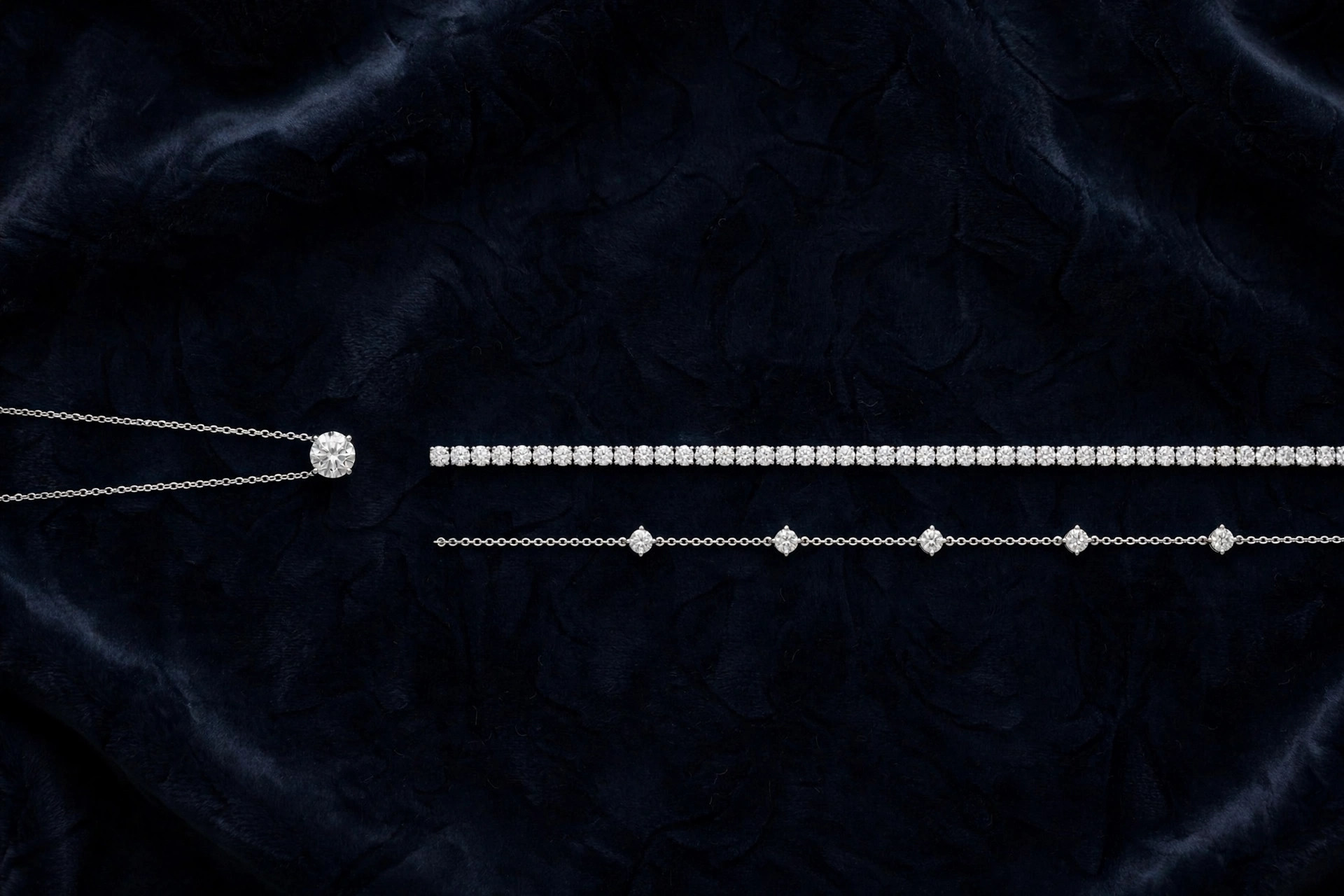
Diamond necklaces are exquisite pieces of jewelry that feature diamonds as the central or prominent element. Diamonds, known for their brilliance, rarity, and timeless beauty, make diamond necklaces highly prized and luxurious accessories. These necklaces are often worn for special occasions and events, making a statement of elegance and sophistication.
Key Features and Design Elements:
Diamonds:
Diamonds are the primary gemstone in diamond
necklaces. They vary in size, cut, color, and clarity, contributing to the
overall appearance and value of the necklace.
Setting:
Diamonds in a necklace can be set using various techniques, including prong, bezel, pave, or channel settings. The setting style affects the diamond's visibility and security
Metal:
- The necklace's chain and setting are typically made of precious metals such as white gold, yellow gold, rose gold, or platinum. The choice of metal can influence the overall aesthetics and complement the diamonds.
Necklace Styles:
Diamond necklaces come in various styles, including:
Pendant Necklaces: A single diamond or a cluster of diamonds set in a pendant hanging from the chain.
Choker Necklaces: Sit close to the neck, often featuring a single row of diamonds or a design that encircles the neck.
Layered Necklaces: Multiple strands or layers of diamonds, creating a cascading effect.
Y-Necklaces: A drop-down pendant or design resembling the letter "Y" with diamonds adorning the length.
Significance and Symbolism:
Elegance and Glamour:
Diamond necklaces symbolize sophistication, luxury, and elegance. They
are often worn on formal occasions, adding a touch of glamour to the
wearer's ensemble.
Love and Commitment:
Diamond necklaces are popular gifts to symbolize love and commitment,
making them a popular choice for anniversaries, engagements, or milestones
in a relationship.
Status and Prestige:
Throughout history, diamonds have been associated with wealth, prestige, and social standing. Diamond necklaces are seen as a symbol of affluence and success.
Timelessness:
Diamonds are one of the hardest and most enduring gemstones, symbolizing enduring love and timelessness. A diamond necklace can be passed down through generations, carrying the legacy of the family. Learn about precious gemstones.
Occasions for Wearing:
Formal Events and Galas:
Diamond necklaces are ideal for formal events like weddings, galas, red
carpet events, and high-profile gatherings, complementing elegant
eveningwear.
Bridal Jewelry:
Diamond necklaces, especially diamond pendant necklaces, are a popular choice for brides, adding a sparkle to their bridal attire.
Celebrations and Anniversaries:
They make meaningful gifts for significant celebrations such as anniversaries, birthdays, or milestones, expressing love and appreciation.
Famous Diamond Necklaces and Celebrity Endorsement:
The Heart of the Ocean:
Made famous by the movie "Titanic," this blue diamond necklace was a prominent feature in the film. While the movie was fictional, the necklace captivated audiences, and replicas were created for promotional events.
The Hope Diamond:
Known for its stunning deep blue color and storied history, the Hope Diamond has been worn by various celebrities and is on display at the Smithsonian National Museum of Natural History.
The L'Incomparable Diamond Necklace:
This necklace features the world's largest internally flawless diamond, weighing 407.48 carats. It was worn by celebrities like Sandra Bullock.
The Mouawad L'Incomparable Diamond Necklace:
Another impressive piece by Mouawad, it features a yellow diamond of over 229 carats, making it one of the world's most expensive necklaces.
Elizabeth Taylor's La Peregrina Necklace:
Acquired by Richard Burton for Elizabeth Taylor, this pearl and diamond necklace was a historic piece that once belonged to Spanish royalty.
Geological Properties of Diamonds and Mining:
Composition and Formation:
Diamonds are composed of carbon atoms arranged in a crystal lattice
structure. They are formed deep within the Earth's mantle under extreme
pressure and high temperatures over millions to billions of years.
Mining:
Diamonds are mined through various methods, including open-pit mining,
underground mining, and alluvial mining. The process involves extracting
diamond-bearing ore, processing it to concentrate the diamonds, and then
sorting and grading them.
Determining Diamond Quality:
The 4 Cs:
Carat Weight: The weight of the diamond in carats.
Cut: The diamond's cut influences its sparkle and brilliance.
Color: The absence of color, with D being colorless and Z having noticeable color.
Clarity: The presence of internal or external imperfections.
Certification: Reputable diamonds come with certification from gemological laboratories like GIA, AGS, or IGI, validating their quality.
Additional Factors:
Fluorescence, polish, symmetry, and measurements also affect a diamond's overall quality.
Importance of Diamond Quality in a Necklace:
Overall Aesthetics:
Diamond quality significantly impacts the overall appearance and beauty
of the necklace. Well-cut, high-quality diamonds enhance the sparkle and
brilliance of the piece.
Long-Term Value:
Higher-quality diamonds retain their value and desirability over time,
making the necklace a good investment.
Durability and Wear:
Higher-quality diamonds are less likely to have structural issues, ensuring the necklace's durability for long-term wear.
Choosing a diamond necklace with high-quality diamonds is crucial for both aesthetic and investment reasons, ensuring a stunning piece that stands the test of time and holds its value.
Diamond necklaces are timeless, iconic, and carry significant emotional and cultural value. Their beauty and sparkle make them a cherished possession and a symbol of love and prestige.
Learn about diamond bracelets and diamond earrings.
Styles at the Neck
The solitaire pendant is the purest form: one diamond, usually in a four-prong basket, bezel or halo setting, sliding on or fixed to a fine chain, with the stone sized to the wearer rather than to a ring finger. Station necklaces space small bezel-set diamonds along a chain for a lighter, everyday effect. The tennis necklace, also called a diamond line or rivière when graduated, sets stones continuously around the neck and is the formal peak of the category, worn at 16 to 18 inches so it lies along the collarbone.
Buying well means looking at the necklace as a system: stone matching, setting security, chain or link construction, and clasp quality all carry equal weight. Papers matter most for a center solitaire; for line necklaces, a seller's matching standard and the piece's overall appearance in daylight are the practical tests. Insuring a significant diamond necklace and keeping its documentation with the piece's records is standard practice.
Common Questions
What matters most in a tennis necklace?
Matching. The stones should agree in color, clarity, cut quality and size so the line reads as one continuous ribbon of light, with no visibly darker or duller stone. Graduated necklaces, larger at the center, should step down evenly. Check the clasp: a tennis necklace needs a secure box clasp with a safety catch, and every link should flex smoothly without kinks.
Are lab-grown diamonds used in necklaces?
Yes, and necklaces are one of their most popular uses, because a tennis or station necklace needs many matched stones. Lab-grown diamonds are chemically diamond and are graded on the same four Cs; they cost substantially less per carat than mined stones of the same grades, which is what makes longer, higher-weight necklaces attainable. Reputable sellers disclose the origin and supply grading reports for larger stones.
How should a diamond necklace be stored and cleaned?
Store it flat or hung so the chain cannot tangle or kink, away from other pieces that diamonds could scratch. Clean with warm water, mild soap and a soft brush, rinse well, and have prongs, links and the clasp inspected regularly, since a necklace carries many settings and its clasp is the single point of failure.