Precious Gemstones
The Big Four: diamond, ruby, sapphire and emerald
Precious gemstones are the small traditional group at the top of the gem hierarchy, and the term has long meant the Big Four: diamond, ruby, sapphire and emerald. Diamond is famous for unmatched brilliance and for being the hardest natural material, the standard centerpiece of engagement rings. Ruby is corundum in its richest red, long associated with love, courage and protection. Sapphire is corundum in every other color, with blue the icon, symbolizing wisdom, loyalty and nobility, and made still more famous by the blue sapphire engagement ring associated with Diana, Princess of Wales. Emerald is beryl in vivid green, linked with rebirth and growth and treasured since the ancient world. What sets the four apart is a shared set of characteristics: intense color, high clarity relative to other gems, hardness near the top of the Mohs scale, brilliant luster and genuine rarity in fine quality. Those qualities made them the stones of crowns and state jewelry across cultures. This guide covers each of the Big Four, the characteristics they share, their cultural weight, and the mining and ethical questions that now accompany stones of this value.
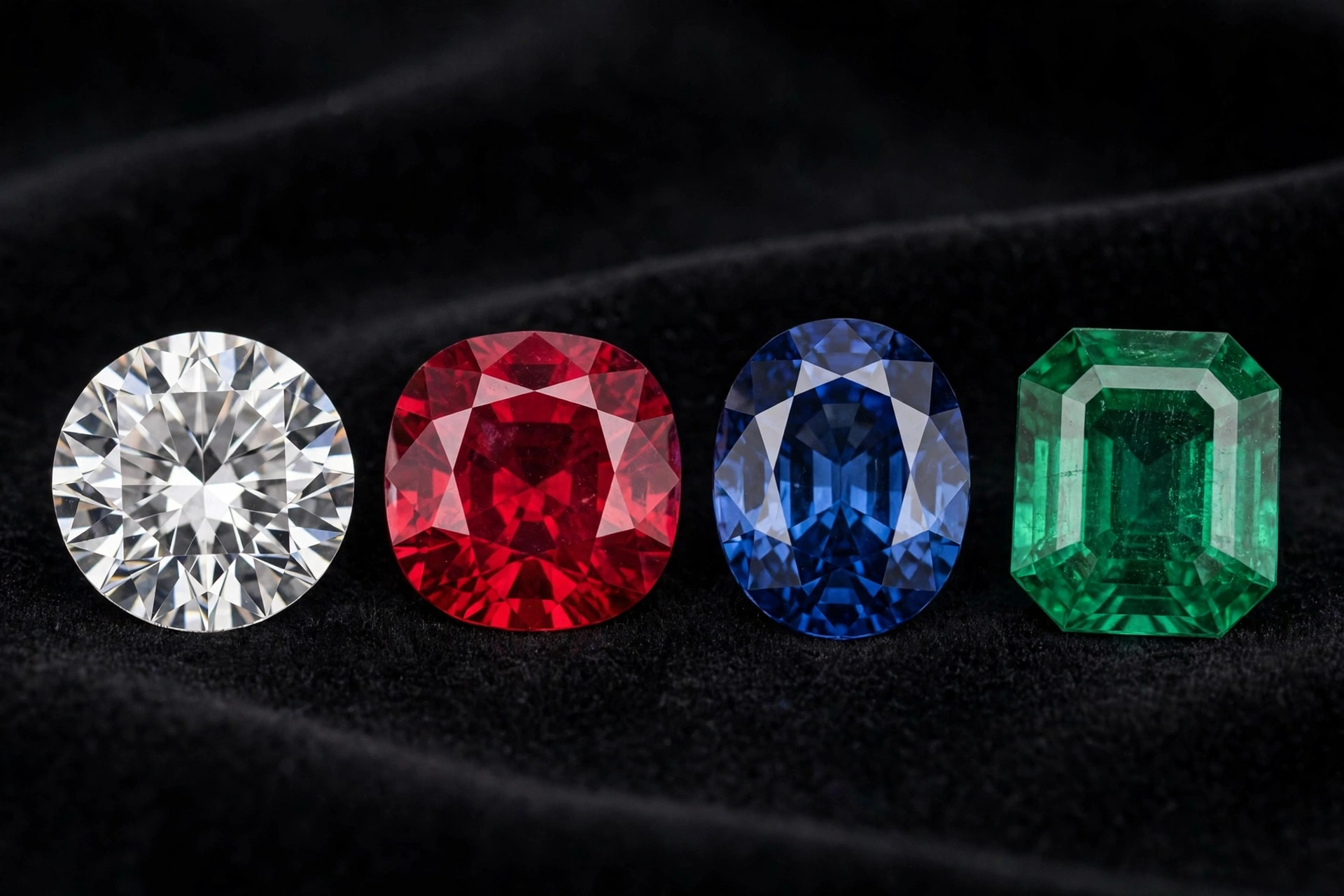
Precious Gemstones: Treasures of Nature's Beauty and Rarity
Precious gemstones are a category of gemstones that have captivated humanity for centuries due to their exquisite beauty, rarity, and enduring allure. These remarkable minerals, prized for their exceptional qualities and cultural significance, have held a special place in the world of jewelry, art, and history. Let's explore the enchanting world of precious gemstones and some of the most renowned examples.
The Big Four Precious Gemstones:
Traditionally, the term "precious gemstones" has been associated with the "Big Four," which are considered the most valuable and esteemed gemstones:
Diamonds: Diamonds are the most famous of all precious gemstones. Known for their unmatched brilliance and durability, they are often used as centerpieces in engagement rings and other high-end jewelry.
Rubies: Rubies, with their deep, rich red color, are celebrated for their passionate and regal appeal. They are associated with love, courage, and protection.
Sapphires: Sapphires come in a spectrum of colors, with blue sapphires being the most iconic. They symbolize wisdom, loyalty, and nobility.
Emeralds: Emeralds are treasured for their vivid green color and are often associated with rebirth, growth, and fertility. They have a long history of use in royal jewelry.
Characteristics of Precious Gemstones:
What sets precious gemstones apart are their remarkable characteristics:
-
Color: Precious gemstones are known for their vibrant and intense colors, which often evoke emotions and hold symbolic meanings.
-
Clarity: These gems exhibit exceptional clarity, with fewer inclusions (internal flaws) than most other gemstones.
-
Hardness: Precious gemstones are among the hardest minerals on the Mohs scale, making them durable and suitable for everyday wear.
-
Luster: They display a brilliant luster, which contributes to their scintillating beauty.
-
Rarity: Precious gemstones are relatively rare in nature, which adds to their desirability and value.
Cultural Significance:
Precious gemstones have deep cultural and historical significance:
Diamonds: Diamonds have been revered as symbols of wealth, power, and eternal love. They have a long history of adorning the crowns and jewelry of royalty.
Rubies: Rubies have been cherished by cultures worldwide as symbols of passion and protection. In many Asian countries, rubies are associated with prosperity and good fortune.
Sapphires: Sapphires have played a prominent role in royal jewelry and are considered symbols of truth, sincerity, and nobility. The famous blue sapphire engagement ring of Princess Diana, now worn by Kate Middleton, has further cemented their status.
Emeralds: Emeralds have been treasured by cultures from the Incas to the Pharaohs. They symbolize renewal, growth, and the lushness of nature.
Mining and Ethical Considerations:
The mining of precious gemstones can have environmental and ethical implications. Many efforts have been made to promote responsible mining practices and traceability in the industry to ensure that these exquisite treasures are sourced ethically and sustainably.
Are their only four precious gemstone options?
The term "precious gemstones" traditionally includes the "Big Four" gemstones, which are considered the most valuable and esteemed in the world of gemology. These are:
Diamonds: Known for their unmatched brilliance and exceptional hardness, diamonds are the most famous and highly valued precious gemstones. They come in various colors, with white (colorless) and fancy colored diamonds being the most sought after.
Rubies: Rubies are prized for their rich, deep red color, symbolizing passion and power. They are among the rarest and most valuable of all gemstones.
Sapphires: While sapphires are most commonly associated with the classic blue variety, they come in a range of colors, including pink, yellow, green, and more. Blue sapphires are particularly renowned for their beauty and symbolism.
Emeralds: Emeralds are famous for their vivid green color and are associated with renewal, growth, and nature. They are often set in high-end jewelry.
While the "Big Four" are the traditional precious gemstones, it's worth noting that the classification of gemstones can vary based on cultural and historical factors. Some other gemstones may also be considered precious or semi-precious based on specific criteria. However, the designation of a gemstone as precious or semi-precious is somewhat arbitrary and has evolved over time.
It's important to keep in mind that the value and desirability of a gemstone can depend on various factors, including its color, clarity, size, and market demand, regardless of whether it falls into the traditional categories of precious or semi-precious.
Precious gemstones are nature's masterpieces, celebrated for their unmatched beauty, rarity, and cultural significance. Whether adorning a royal crown, a symbolic engagement ring, or a piece of fine jewelry, these gems continue to captivate and inspire with their timeless allure.
You should also learn about semi-precious gemstones.
Four Stones, Four Characters
Diamond value is judged by the four Cs, cut, color, clarity and carat, with cut carrying the most influence on sparkle. Ruby is judged color first, with the most prized reds showing a pure, slightly bluish red of strong saturation, and fine unheated rubies are among the rarest gems sold. Sapphire's blue range runs from pale cornflower to deep royal, and the same mineral supplies pink, yellow and padparadscha orange-pink stones at very different prices. Emerald is the character stone of the four: its inclusions, called jardin, the French word for garden, are expected and even prized as proof of natural origin, and clarity demands made of diamond would miss the point of emerald entirely.
Culturally the four divide the virtues: diamond for permanence and eternal love, ruby for passion and protection, sapphire for truth and nobility, emerald for renewal and growth. That symbolism, carried in crowns from Europe to Asia and in treasures from the Incas to the Pharaohs, is a large part of why these four, above dozens of beautiful alternatives, still anchor fine jewelry.
Common Questions
Why are only four gemstones called precious?
The division is traditional rather than scientific. Diamond, ruby, sapphire and emerald earned the label over centuries because they combined the qualities jewelers valued most: strong color, hardness high enough for any jewelry, bright luster and scarcity in fine grades, reinforced by their place in royal and religious treasures. Every other gem was classed semi-precious by default. The boundary is historical, and some stones outside the Big Four, such as fine jadeite or rare alexandrite-quality material, can outsell ordinary precious stones, but the Big Four label remains the trade's shorthand for its classic top tier.
How hard are the precious gemstones?
Diamond is 10 on the Mohs scale, the hardest natural material. Ruby and sapphire are both corundum at 9, which makes them excellent everyday ring stones. Emerald is beryl at 7.5 to 8, respectably hard but more brittle than its ranking suggests because most emeralds contain inclusions and fine fractures, so emerald rings deserve gentler wear and protective settings despite belonging to the hardest group of gems.
What should a buyer check about the ethics of a precious gemstone?
Ask where the stone was mined and how it reached the seller, and look for suppliers who state their sourcing and support responsible mining, since gem mining can carry environmental and labor costs. For diamonds, ask about conflict-free sourcing documentation. Lab-created versions of all four stones exist with the same chemistry at lower prices, and a seller should always disclose origin and any treatment such as heating or oiling, which are common and accepted when stated openly.