Beaded Necklaces
Beads of every material, strung into strands
Beaded necklaces are necklaces made by stringing beads, of gemstone, glass, pearl, wood, ceramic, metal, shell, seed or synthetic materials, onto silk thread, cord, leather or beading wire. Beadwork is among the oldest jewelry arts, found in ancient civilizations worldwide, and beaded necklaces still span every level of jewelry, from hand-knotted pearl strands to long bohemian gemstone ropes and fine seed-bead work. This guide covers bead materials and how they differ in weight, durability and care, stringing methods, including knotting between beads, which protects strands and keeps beads from scattering if a strand breaks, bead sizes and strand lengths and styles, from chokers to opera and rope lengths, clasps, and restringing and care.
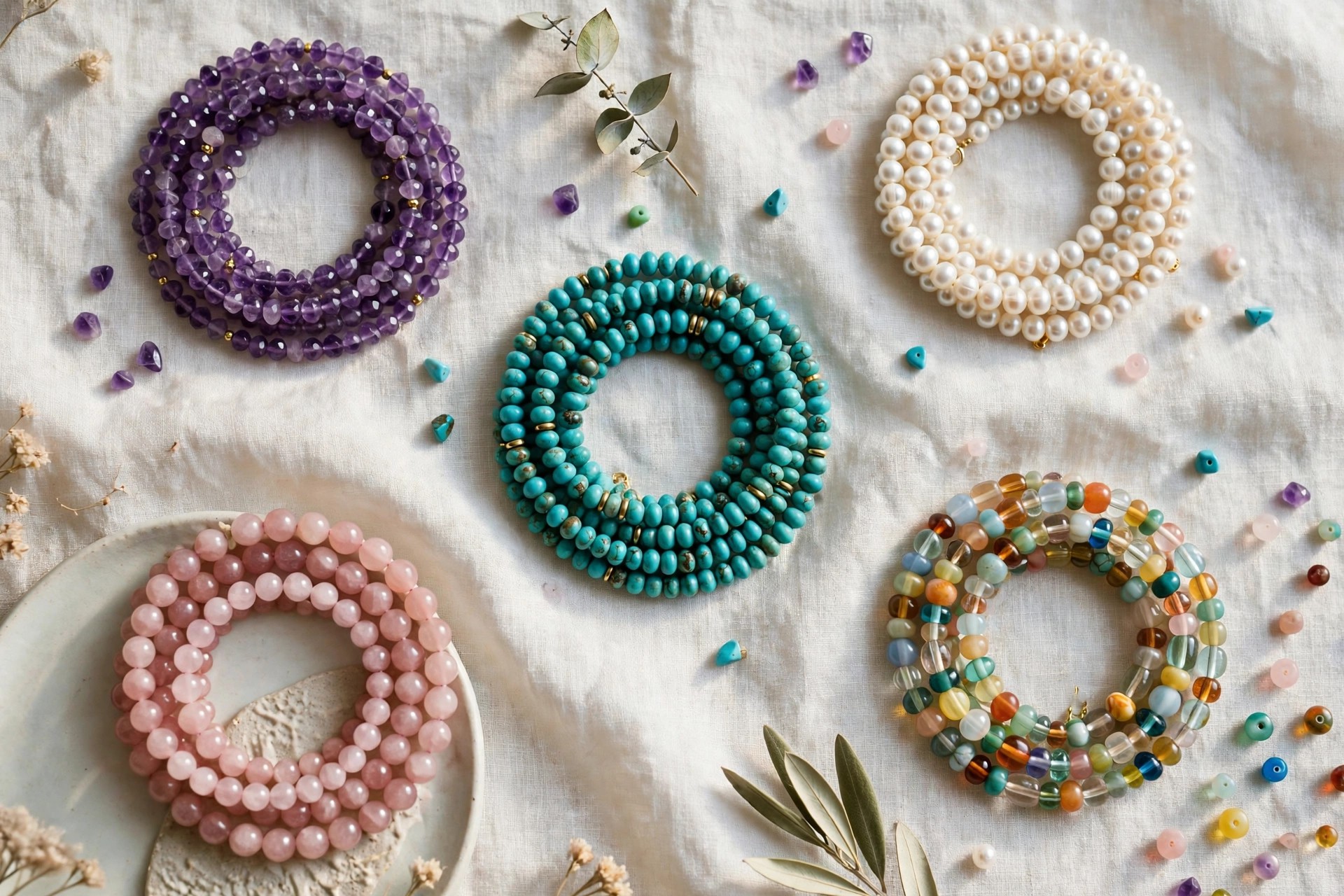
Beaded necklaces are a form of jewelry crafted by stringing together small beads made of various materials onto a cord or thread to create a wearable accessory for adorning the neck. The art of creating beaded jewelry has been practiced for thousands of years, with evidence of beaded ornaments dating back to ancient civilizations. The technique and designs have evolved over time, incorporating cultural, artistic, and personal influences.
Materials:
Beads:
- Beads are the primary components of a beaded necklace. They come in a multitude of materials, including glass, metal, wood, plastic, gemstones, ceramics, pearls, and even natural materials like seeds and shells. Each material offers unique textures, colors, shapes, and finishes.
Cord or Thread:
- The beads are strung onto a cord or thread, which can be made of nylon, silk, cotton, leather, wire, or other durable materials. The choice of cord depends on the weight of the beads and the overall design of the necklace.
Clasps:
- Clasps are used to secure the ends of the necklace, allowing it to be worn comfortably and adjusted to the desired length. They come in various designs, such as lobster clasps, toggle clasps, magnetic clasps, and spring ring clasps.
Spacer Beads:
- Spacer beads are small beads placed between larger beads to add aesthetic appeal and create a balanced design. They can be of the same material or different to the main beads.
Design and Creation:
Design Concept:
Before starting the creation process, a design concept is essential. This includes selecting the type and combination of beads, determining the necklace length, and visualizing the overall pattern or arrangement.
Bead Selection:
Beads are chosen based on the desired design, color scheme, and theme. Mixing and matching beads of various sizes, shapes, and colors can create an attractive and dynamic look.
Stringing the Beads:
The selected beads are carefully strung onto the chosen cord or thread in the planned sequence, following the design concept. This process requires precision and attention to detail to achieve the desired pattern.
Adding Clasps:
Once the beads are strung, the clasps are attached to both ends of the cord, ensuring a secure closure that allows for easy wearing and removal of the necklace.
Adjustments and Final Touches:
The length of the necklace is adjusted to the desired size, making sure it fits comfortably around the neck. Any excess cord is trimmed, and the ends are secured to ensure durability and longevity.
Variations:
Single-Strand Necklace:
A simple necklace with one strand of beads, often made with uniform beads or a specific pattern.
Multi-Strand Necklace:
Multiple strands of beads are combined to create a fuller and more intricate design, providing a layered and textured look.
A short necklace that fits snugly around the neck, usually made of tight strings of beads.
Statement Necklace:
Bold and eye-catching designs using large, unique, or ornate beads, often used to make a fashion statement.
Cultural and Artistic Significance:
Beaded necklaces hold cultural significance in many societies, often representing status, traditions, rituals, or even storytelling. Additionally, they serve as a medium for artistic expression, allowing artisans to showcase their creativity and craftsmanship. Whether simple or elaborate, beaded necklaces are a timeless form of jewelry that continues to captivate and adorn people across the globe.
Creating a beaded necklace through a DIY (Do It Yourself) project can be a rewarding and enjoyable endeavor. Here are some important tips to keep in mind for a successful DIY necklace beading project:
Plan Your Design:
Before you start, have a clear design plan in mind. Decide on the type of beads, colors, patterns, and length of the necklace. Sketching or creating a visual guide can be helpful.
Choose Quality Materials:
Invest in good quality beads, cord, and clasps. Quality materials will enhance the durability and overall look of your necklace.
Gather the Right Tools:
Essential tools include needle-nose pliers, wire cutters, crimping pliers, bead mat or board, and a clasp. These tools will assist in stringing beads, securing closures, and making adjustments.
Measure and Cut Carefully:
Measure the desired length of the necklace accurately before cutting the cord. It's better to start longer and trim later if needed.
Practice Your Technique:
If you're new to beading, practice the basic techniques like stringing, knotting, and crimping on spare beads and cord before working on your actual project.
Organize Your Beads:
Keep your beads organized by type, size, or color to easily find what you need during the project. Smallcontainers, trays, or bead organizers work well for this purpose.
Consider Balance and Symmetry:
Aim for a balanced and symmetrical arrangement of beads unless you deliberately want an asymmetrical design. This will create an aesthetically pleasing necklace.
Experiment with Patterns:
Be creative and experiment with different bead patterns and arrangements to achieve the desired look. Mixing shapes, sizes, and colors can add visual interest.
Use Proper Techniques for Attaching Clasps:
Learn and use appropriate techniques for attaching clasps to ensure a secure and reliable closure for your necklace.
Double-Check Measurements:
Double-check the measurements and layout of your beads before securing any closures. It's easier to make adjustments before finishing the necklace.
Pay Attention to Durability:
Ensure that your necklace is durable and able to withstand wear and tear. Knot cords securely and use appropriate crimping techniques for added strength.
Be Patient and Take Breaks:
Beading can be intricate and time-consuming. Take breaks to avoid eye strain and frustration, especially when working on detailed designs.
Enjoy the Process:
The most important tip is to enjoy the process of creating something unique and beautiful. Let your creativity flow and have fun bringing your vision to life.
Remember, practice makes perfect, and with each project, you'll improve your skills and develop your own style in beading.
Learn about beaded bracelets, ring beading and beaded earrings.
Learn about friendship jewelry.
One Technique, Every Culture and Budget
Stringing beads is jewelry's universal technique: it needs no soldering, no setting bench, only material, thread and patience, which is why beaded necklaces appear in every era and culture, from ancient faience and carnelian to Victorian jet, Art Deco crystal and today's gemstone chip strands. The design variables are endless, bead material, size, shape, graduation, pattern, strand count and length, and multi-strand and lariat forms multiply them further. A single strand of well-matched beads in a beautiful material remains the form's classic, as true for pearls as for turquoise, jade or amber.
Quality in a beaded necklace is consistency: beads matched for size, color and luster, drill holes centered so the strand hangs straight, knots tight and even, and a clasp proportioned to the strand's weight. Check those, roll the strand gently to feel for rough or cracked beads, and ask when it was last restrung. With periodic restringing and flat storage, a beaded necklace is nearly immortal, its components outlasting every thread that will ever hold them, ready to be restrung and worn by the next generation.
Common Questions
Why are good beaded necklaces knotted between beads?
A knot between each bead, standard on pearl and better gemstone strands, does three things: it stops beads rubbing directly against each other and wearing their surfaces, it keeps the strand draping evenly, and if the thread breaks only one bead can slip away instead of the whole strand scattering. Knotting is skilled hand work done on silk or nylon thread, and a knotted strand is a sign of a well-made beaded necklace.
How often do beaded necklaces need restringing?
Strands worn regularly are usually restrung every one to three years, sooner if the thread shows fraying, stretching, gaps or discoloration near the clasp, or if knots have loosened so beads slide. Silk stretches and weakens with moisture and skin oils. Restringing is routine, inexpensive maintenance done by jewelers and bead shops, and it is far cheaper than losing beads from a broken strand. Store strands flat or loosely coiled, never hanging, to slow stretching.
What lengths do beaded necklaces come in?
Standard strand lengths mirror necklace lengths generally: choker at about 16 inches, princess at 18 inches, the most common for bead and pearl strands, matinee at 20 to 24 inches, opera at 28 to 36 inches, and rope lengths over 36 inches that can be doubled or knotted. Bead size changes the feel: fine beads drape softly, while large beads make a strand shorter in effect and heavier, so graduated strands are often sized by their center bead.