Lab Created Gem Necklaces
Laboratory-grown stones, honestly described
Lab created gems are real gem material grown in a laboratory rather than mined: the same mineral chemistry and crystal structure as their natural counterparts, produced by flame fusion, flux, hydrothermal and other growth methods. Necklaces are a natural home for them, since pendants and strands can carry large, clean, vividly colored stones, created sapphire, ruby and emerald among them, at prices far below comparable mined stones. The essential rules are disclosure and naming: a created stone must be sold as lab created, lab grown or synthetic, never simply as the gem name alone. This guide covers the main created gems in necklaces, how they are made, how they differ from imitations and simulants, identification, and value expectations.
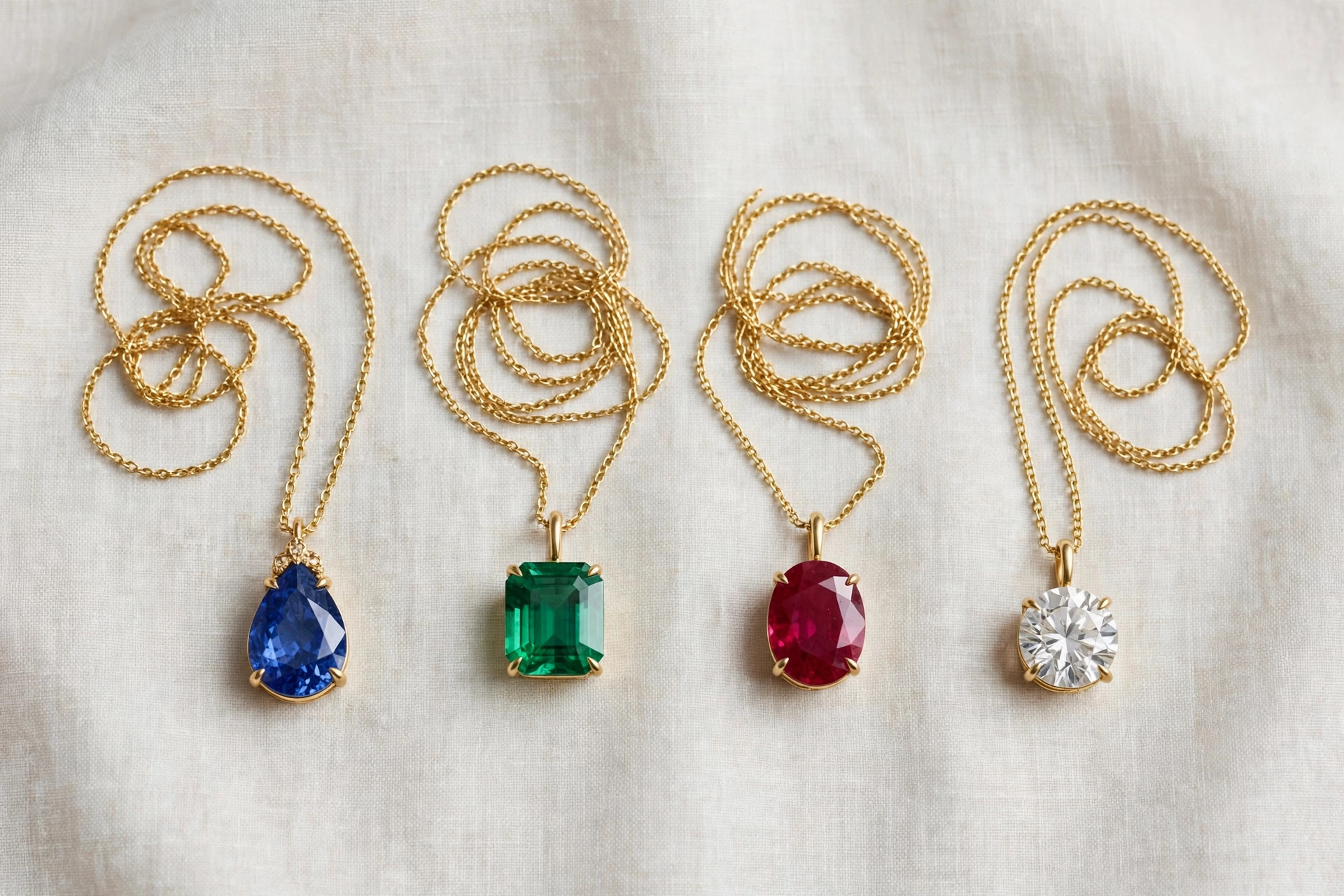
Lab-created gemstone necklaces feature gemstones that are grown in a controlled laboratory environment using advanced scientific techniques. These gemstones have the same chemical, physical, and optical properties as their natural counterparts but are created in a shorter timeframe under controlled conditions. They are often referred to as lab-grown, lab-created, or synthetic gemstones.
Key Characteristics of Lab-Created Gemstone Necklaces:
Origin:
Lab-created gemstones are produced in laboratories rather than being naturally formed within the Earth's crust.
Composition:
The chemical composition of lab-created gemstones is nearly identical to natural gemstones. For instance, a lab-created emerald will have the same chemical composition as a natural emerald.
Appearance:
Lab-created gemstones often have a visually flawless appearance due to the controlled growth conditions. They can exhibit vibrant colors, clarity, and brilliance.
Cost:
Lab-created gemstones are generally more affordable than their natural counterparts, making them an attractive option for those seeking the beauty of gemstones without the higher cost.
Ethical and Environmental Considerations:
Lab-created gemstones are considered more ethical and environmentally friendly since they do not involve mining, which can have adverse ecological and social impacts.
Advantages of Lab-Created Gemstone Necklaces:
Affordability:
Lab-created gemstones are typically more budget-friendly, allowing individuals to own larger or more valuable-looking gemstones at a lower cost.
Sustainability:
They offer a more sustainable and environmentally conscious choice, as they do not involve mining or depleting natural resources.
Consistency and Availability:
Lab-created gemstones are available in a wide range of sizes and colors. Their production is consistent, ensuring a reliable supply and availability.
Customization:
Due to their controlled growth, lab-created gemstones can be produced in specific sizes, shapes, and colors, making them ideal for customized jewelry designs.
Considerations for Lab-Created Gemstone Necklaces:
Disclosure and Transparency:
It's essential for jewelers to transparently disclose that the gemstones
in the necklace are lab-created to ensure consumer awareness and informed
decision-making.
Perceived Value:
While lab-created gemstones are more affordable, some individuals may still prefer the perceived rarity and value of natural gemstones.
Lab-created gemstone necklaces provide an ethical, sustainable, and cost-effective alternative to natural gemstones, allowing individuals to enjoy the beauty and allure of gemstones in a responsible and accessible manner.
Preconceived notions about people wearing costume jewelry compared to real jewelry often stem from perceptions regarding value, social status, and authenticity. These notions can be misconceptions as they don't always accurately reflect an individual's style, preferences, or financial situation.
1. Perceived Value:
Misconception: There's a common belief that real jewelry, typically made of precious metals and genuine gemstones, holds more intrinsic value than costume jewelry, which is often made of less expensive materials.
Reality: The perceived value of jewelry should also consider the
craftsmanship, design, sentimental attachment, and personal preference.
Costume jewelry can have significant emotional or aesthetic value to
individuals.
2. Social Status and Wealth:
Misconception: Wearing real jewelry is sometimes associated with higher social status, affluence, and financial success, implying that those who wear costume jewelry may not be as well-off.
Reality: Social and economic circumstances can vary widely, and individuals may choose costume jewelry for various reasons, including personal taste, trendiness, or the desire for a specific look without the high cost.
3. Quality and Durability:
Misconception: Real jewelry is perceived to be of higher quality and durability compared to costume jewelry, which may be seen as less durable and prone to tarnishing or fading.
Reality: Quality in costume jewelry has significantly improved over the years. Many costume jewelry pieces are well-made, utilizing better materials and manufacturing techniques, allowing them to maintain their appearance and quality over time.
4. Authenticity and Elegance:
Misconception: Authenticity is sometimes associated with real jewelry, implying that costume jewelry lacks a sense of authenticity and may not be as elegant.
Reality: Costume jewelry can be elegant and stylish, providing a wide array of designs, patterns, and colors. It's an art form in itself and can complement various outfits and occasions.
5. Investment Value:
Misconception: Real jewelry is often considered a better investment compared to costume jewelry, which is seen as having little to no investment value.
Reality: While it's true that real jewelry can be a financial investment due to its material value, costume jewelry can also appreciate in value, especially if it's vintage or from a renowned designer.
In reality, both real and costume jewelry have their own unique appeal and purpose. The choice between the two depends on individual preferences, fashion trends, occasion, budget, and the desired aesthetic. It's essential to respect and appreciate all forms of jewelry based on their artistic, cultural, and personal significance rather than making assumptions about an individual's circumstances or tastes based on the type of jewelry they wear.
You may want to also learn about lab created gemstone bracelets, man-made gemstone rings and lab created gem earrings.
Learn about fashion earrings.
Where Created Stones Shine
Necklaces reward exactly what laboratories do best: matched sets and large center stones. A created sapphire or emerald pendant can carry a big, evenly colored stone that in natural material would be a major purchase, and created stones make matched station and line necklaces practical in colors that nature rarely supplies in quantity. Flame-fusion corundum, the oldest method, is the least costly; hydrothermal emerald and quartz and flux-grown stones sit closer to natural appearance and price.
The vocabulary is the buyer's protection. Created, lab grown and synthetic all mean grown gem material; simulant, imitation and names ending in -ette or trade coinages usually mean a look-alike of another material. A necklace listing should state plainly which it is, what the metal is, and whether natural accent stones are mixed with created ones. With that honesty, lab created gem necklaces are one of the best value routes in colored stone jewelry.
Common Questions
Is a lab created gemstone a real gem?
It is real gem material: a lab created sapphire is corundum with the same chemistry, hardness and optics as a mined sapphire, and it is graded by the same color, clarity and cut standards. What differs is origin, and therefore price and rarity. It is not the same as an imitation, such as colored glass or a simulant like cubic zirconia standing in for diamond, which are different materials entirely.
How can a buyer tell a created stone from a natural one?
Often not by eye: fine created stones are clean and well colored, and natural stones can be equally clean. Gemologists identify origin under magnification from growth features and inclusions, and laboratories issue reports stating natural or laboratory-grown origin. The practical protection is buying from a seller who discloses origin in writing on the invoice, as honest trade practice requires.
Do lab created gem necklaces hold value?
They hold their value as jewelry, in the metal, making and wear they give, rather than as rare material: created stones are producible in quantity, so their prices are far lower than natural stones and resale values follow the piece, not the stone's rarity. Buyers who want maximum gem size and color for a budget are well served; buyers seeking rarity should choose natural stones with reports.