Lab Created Gem Bracelets
Gemstones grown in a laboratory, chemically the same as mined stones
Lab created gemstones are real gemstones, grown in a laboratory with the same chemical composition, crystal structure and optical properties as their natural counterparts, including sapphire, ruby, emerald, spinel and alexandrite, and lab-grown diamonds. In bracelets they allow large, clean, vividly colored matched stones, ideal for line and tennis-style bracelets, at a fraction of natural prices. This guide covers how lab gems are created, how they differ from imitation simulants such as glass and cubic zirconia, identification and disclosure, value, and care, which is the same as for natural stones.
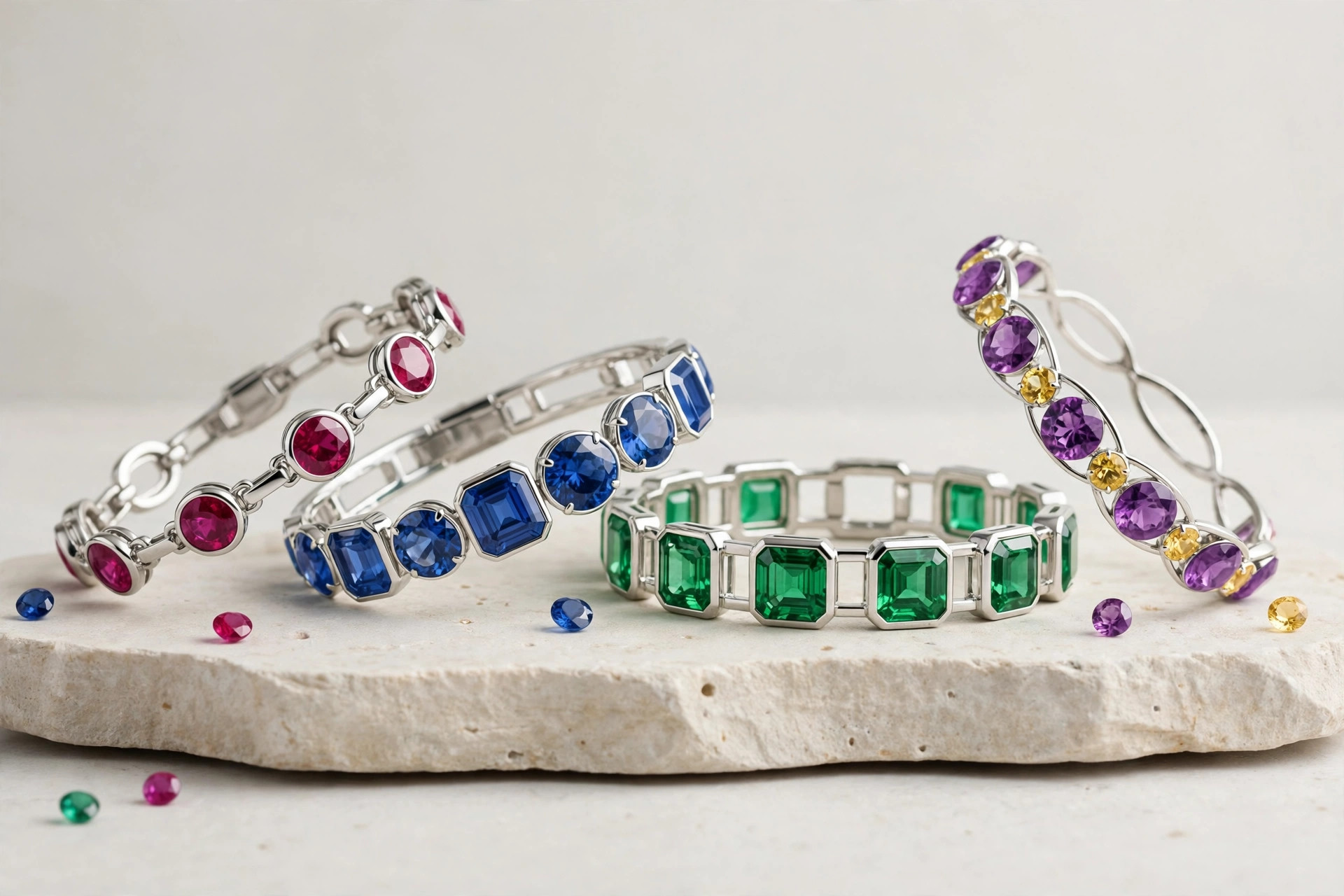
Lab-Created Gemstone Bracelets: A Sparkling Revolution
Lab-created gemstone bracelets have emerged as a fascinating and increasingly popular choice in the world of jewelry. These gems, often referred to as synthetic or lab-grown gemstones, offer a unique blend of affordability, environmental friendliness, and dazzling beauty. On this page we will explore what lab-made gemstones are, discuss the pros and cons of lab-created gemstone bracelets, delve into their history, examine technological advancements, and provide tips on how consumers can distinguish lab-created gemstones from natural ones.
What Are Lab-Made Gemstones?
Lab-created gemstones are precisely what the name suggests – gemstones that are grown in a laboratory setting, rather than being mined from the earth. These gemstones share the same chemical, physical, and optical properties as their natural counterparts but are created under controlled conditions.
The Pros and Cons of Lab-Created Gemstone Bracelets
Pros:
a. Affordability: Lab-created gemstones are generally more budget-friendly than their natural counterparts, making them accessible to a wider range of consumers.
b. Ethical Sourcing: The production of lab-grown gemstones is generally considered more ethical, as it doesn't involve the environmental impact, labor concerns, or unethical mining practices associated with natural gemstone extraction.
c. Environmentally Friendly: Lab-grown gemstones have a lower environmental footprint as they require fewer resources and do not contribute to habitat destruction or pollution.
d. Quality Control: The controlled environment of a laboratory ensures consistency in terms of color, clarity, and other qualities, resulting in a high-quality product.
Cons:
a. Perceived Value: Some consumers place a higher value on natural gemstones due to their rarity and long history of use in jewelry.
b. Resale Value: Lab-created gemstones often have lower resale value compared to natural gemstones.
c. Recognition: Some buyers may have difficulty distinguishing lab-created gemstones from natural ones, which can lead to misunderstandings.
The History of Lab-Made Gemstones
The history of lab-made gemstones dates back to the late 19th century when scientists began experimenting with methods to replicate the conditions under which natural gemstones form. Over time, these methods were refined, leading to the creation of synthetic gemstones that were virtually indistinguishable from natural ones.
Technological Advancements in Lab-Made Gemstones
Advancements in technology have played a crucial role in improving lab-created gemstones. Key developments include:
a. Flux Growth: This method uses high-temperature processes to create gemstones with fewer impurities and improved color.
b. Hydrothermal Growth: This technique involves growing gemstones in water-rich solutions, producing high-quality, near-colorless stones.
c. Chemical Vapor Deposition (CVD): CVD technology has enabled the production of diamonds with exceptional clarity and color.
d. Advancements in Diamond Synthesis: Researchers have made significant progress in creating larger, higher-quality synthetic diamonds for jewelry.
Distinguishing Between Lab-Made and Natural Gemstones
Distinguishing between lab-created and natural gemstones can be challenging, as synthetic gems are designed to mimic the characteristics of natural ones. To identify lab-made gemstones, consumers can consider the following factors:
a. Inclusions: Natural gemstones often have unique inclusions, while lab-created gems may have fewer or none.
b. Price: Lab-created gemstones are generally more affordable than natural ones.
c. Certification: Look for certificates from reputable gemological laboratories that verify the gem's origin.
d. Refractive Index: A gemologist can measure the refractive index of a gem, which may differ slightly between natural and lab-grown stones.
Lab-created gemstone bracelets have revolutionized the jewelry industry by offering beautiful, ethical, and environmentally conscious alternatives to natural gemstones. With ongoing advancements in technology, the quality of lab-made gemstones continues to improve, providing consumers with an ever-expanding range of stunning options. Whether you prefer natural or lab-created gemstones, both have their unique qualities and appeal, allowing you to choose the option that aligns with your values and budget.
Learn about lab created gem necklaces and lab created gemstone earrings & lab created gemstone rings.
Origin Is the Only Difference, and It Must Be Disclosed
Honest selling is the foundation of this category: reputable trade rules require lab created stones to be disclosed clearly as laboratory-grown, laboratory-created or an equivalent term, never passed off as natural. Buyers should expect that disclosure in writing and be wary of vague words such as 'created' used without 'laboratory'. The emerald bracelets guide shows why the distinction matters most for emerald, where natural prices are highest and lab stones offer the vivid green without the jardin.
For bracelet design, lab stones remove the old compromises. A line bracelet can hold its color from end to end, a bangle can carry a large center stone without a large price, and replacing a lost stone is straightforward because supply is consistent. Care is unchanged from natural gems of the same species, since hardness and chemistry are the same: clean as you would the natural stone, and set and check it the same way.
Common Questions
Are lab created gemstones real?
Yes. A lab created sapphire, ruby or emerald is the same mineral as the natural stone, with the same chemistry, hardness and appearance, differing only in origin: it grew in a laboratory over weeks or months instead of in the earth over millions of years. Gemologists can identify origin with magnification and instruments, but the stones themselves are genuine.
How are lab created gems different from imitations?
Imitations, or simulants, only look like a gem: cubic zirconia, glass and synthetic spinel have been used to imitate diamond and colored stones while being different materials with different hardness and brilliance. Lab created gems are the actual gem material, so a lab sapphire is sapphire, while a sapphire-colored simulant is not.
Why choose lab created gems in a bracelet?
Bracelets need sets of matched stones, and lab creation supplies clean, evenly colored matched stones in quantity at accessible prices, including in large sizes. That makes full gemstone line bracelets, and bold single-stone designs, available at prices natural matched stones cannot reach, with identical wear and care.