Lab Created Gemstone Rings
Grown stones, chemically identical to mined gems
Lab created gemstone rings carry stones grown in a laboratory that are chemically, physically and optically the same material as mined gems: lab sapphire and ruby are corundum, lab emerald is beryl, and lab diamond is carbon. Because the crystal is the same, hardness, brilliance and durability match the mined equivalent, so a lab sapphire ring wears exactly as a mined sapphire ring does. Growth takes weeks to months rather than geological time, using methods such as flame fusion, flux, hydrothermal and Czochralski pulling for colored stones. The controlled process gives strong, consistent color and high clarity in sizes that are rare and expensive mined, which is why lab stones typically cost substantially less. This guide covers the main growth methods, the stones most often grown, disclosure rules, price and resale differences, and how jewelers identify a grown stone.
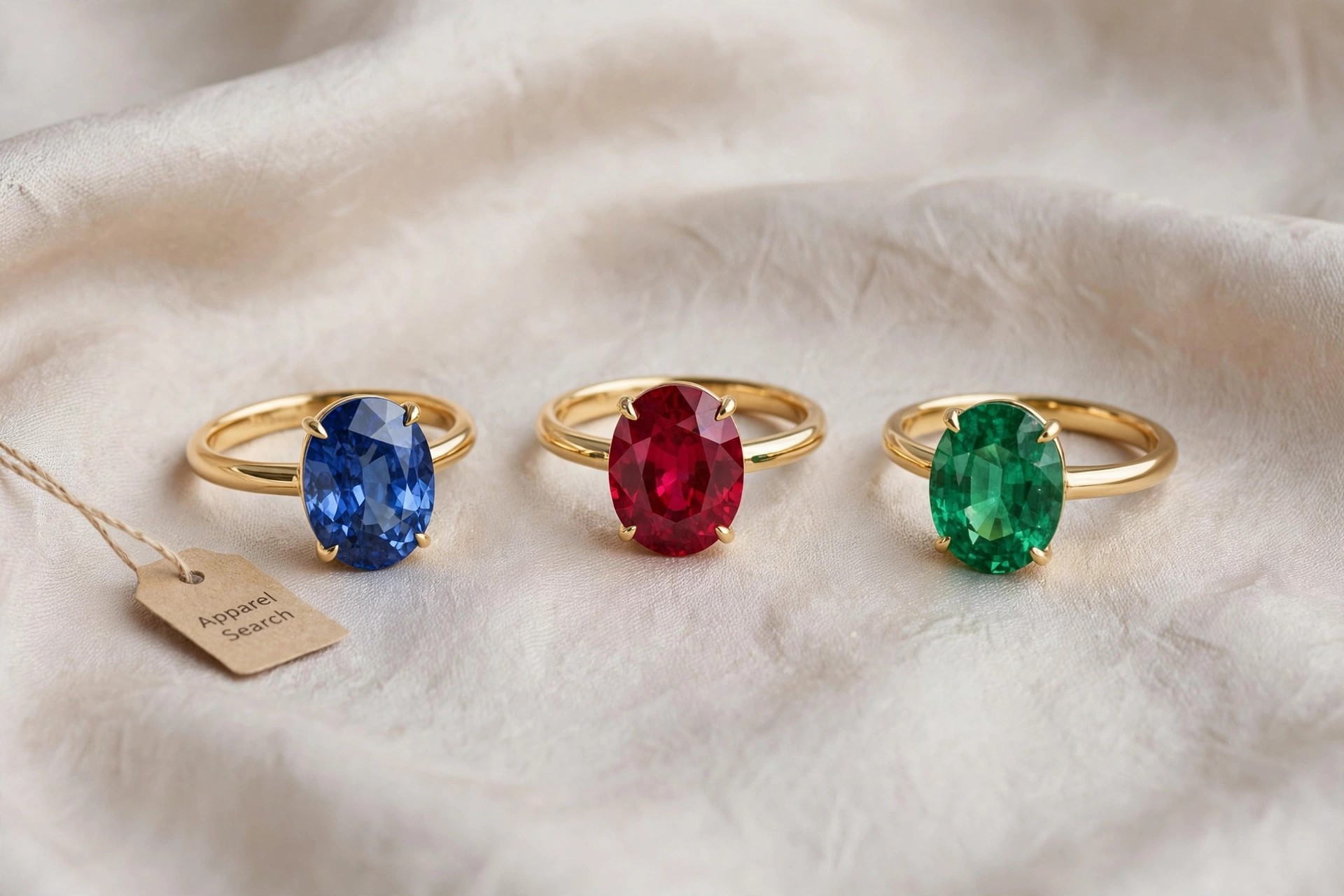
Lab-Created Gemstone Rings: A Fusion of Science and Beauty
Creation Process:
Lab-created gemstone rings feature gemstones that are grown in a controlled laboratory environment, replicating the natural conditions under which gemstones are formed within the Earth. Scientists and gemologists use advanced techniques to create gemstones with identical physical, chemical, and optical properties to their natural counterparts.
Composition and Characteristics:
Lab-created gemstones, also known as synthetic or man-made gemstones, are composed of the same mineral and crystal structures as natural gemstones. For example, lab-created diamonds have the same carbon structure as natural diamonds. They exhibit the same brilliance, sparkle, and durability, making them an attractive alternative to naturally occurring gemstones.
Advantages of Lab-Created Gemstone Rings:
Affordability: Lab-created gemstones are often more affordable than natural gemstones of similar quality and size, providing a cost-effective option for those seeking beautiful gemstone rings without the premium price.
Ethical and Sustainable: Lab-created gemstones are considered an ethical choice as they do not involve mining or harm to the environment. They also bypass the ethical concerns associated with some mining practices.
Consistency: Lab-created gemstones offer consistency in terms of color, clarity, and quality, ensuring you get the exact gemstone you desire without natural variations.
Innovative Designs: The controlled growth process allows for innovative designs and customization, enabling jewelers to create unique, contemporary pieces that might not be possible with natural gemstones.
Popular Lab-Created Gemstones:
Lab-Created Diamonds: Lab-created diamonds are chemically and physically identical to natural diamonds. They offer an ethical and affordable alternative to mined diamonds.
Lab-Created Sapphires: Lab-created sapphires exhibit the same stunning blue hues as natural sapphires. They are widely used in engagement rings and other jewelry pieces.
Lab-Created Rubies: Lab-created rubies boast the vibrant red hue of natural rubies and are a popular choice for both fashion and fine jewelry.
Emotional and Sentimental Value:
Lab-created gemstone rings carry the same emotional and sentimental value as natural gemstone rings. They represent love, commitment, milestones, and special occasions, just like rings featuring natural gemstones.
While man-made or lab-created gemstones offer many advantages, they also come with certain disadvantages, particularly when used in rings. Here are some potential drawbacks:
Perceived Value: Lab-created gemstones are often more affordable than their natural counterparts, which can lead some people to perceive them as having less intrinsic value. This perception can impact the resale value of the ring.
Durability of Coatings: Some lab-created gemstones, such as cubic zirconia (CZ), may have a coating applied to enhance their appearance. Over time, this coating can wear off, affecting the stone's brilliance and clarity.
Limited Rarity: Natural gemstones are prized for their rarity and uniqueness. Lab-created gemstones lack this rarity, which may be important to individuals who value the distinctiveness of natural gems.
Not All Lab-Created Gems Are Equal: The quality of lab-created gemstones can vary depending on the manufacturer and the specific creation process. Lower-quality lab-created gems may not match the brilliance and durability of high-quality natural stones.
Possible Allergies: Some individuals may be sensitive to the materials used in the creation of lab-created gemstones or the metals in the ring settings. Allergies or skin reactions can occur in rare cases.
Resale Value: Lab-created gemstones typically do not hold their value as well as natural gemstones. If you plan to resell the ring in the future, you may not recoup as much of your initial investment.
Ethical Considerations: While lab-created gemstones are considered more ethical in terms of environmental impact and labor practices, some individuals may still prefer the natural option for ethical or sentimental reasons.
Lack of Geological History: Natural gemstones often have geological histories and stories associated with their formation, which can add to their sentimental value. Lab-created gemstones lack this unique history.
Resistance to Scratches: Some lab-created gemstones may be less resistant to scratches than natural gemstones, affecting their long-term appearance.
It's important to note that the disadvantages of lab-created gemstones can vary depending on the specific gemstone and its quality. When considering a ring with lab-created gemstones, it's advisable to carefully evaluate the quality and characteristics of the stone, as well as your personal preferences and priorities, to make an informed decision that aligns with your needs and expectations.
Lab-created gemstone rings are a blend of science and artistry, offering an ethical, affordable, and visually appealing option for those seeking stunning jewelry. With advancements in gemstone creation technology, lab-created gemstones are gaining popularity and acceptance, providing more options to jewelry enthusiasts without compromising on beauty or quality.
You may also find interest in man-made gemstone earrings, man-made gemstone necklaces, and man-made gemstone bracelets.
Disclosure, Price and Choosing Well
Lab origin must be disclosed. Trade rules require a grown stone to be described clearly as lab created, laboratory grown or synthetic wherever it is sold, never simply as sapphire, ruby or emerald on its own, and never as natural. That disclosure matters at the point of sale and should travel with the ring in its paperwork, because a stone's origin cannot be assumed later from its appearance. In price, lab stones remove the rarity premium rather than the material itself: color and clarity that would command a high mined price are routine in grown material, so the budget usually buys a noticeably larger or cleaner stone, and the difference is greatest in ruby, emerald and diamond.
Resale runs the other way: grown stones are plentiful by design, so a lab created ring is bought for wear and appearance rather than as a store of value, and its setting, in gold or platinum, often holds more of the remaining worth than the stone. Choose accordingly: spend on a well-made setting, confirm the stone's identity and origin in writing, check that the seller distinguishes grown stones from simulants such as cubic zirconia, and judge the ring by its color, cut and finish on the hand.
Common Questions
How are lab created sapphires, rubies and emeralds made?
Sapphire and ruby, both corundum, are commonly grown by flame fusion (the Verneuil method), flux growth or the Czochralski pulling method, each producing a crystal that is then cut like a mined stone. Emerald is usually grown hydrothermally, in a pressurized hot-water solution that deposits beryl onto a seed plate, which reproduces the inclusions and color zoning jewelers associate with emerald. Spinel is also frequently flame-fusion grown.
Are lab created gemstones as durable as mined stones?
Yes, when the grown stone is the same mineral species. Lab sapphire is corundum at hardness 9, lab emerald is beryl at 7.5 to 8, and lab diamond is 10, exactly as mined, so scratch resistance, toughness and everyday ring wear are the same. The exception is simulants such as cubic zirconia, which only imitate a gem's look, are softer, and should not be judged by the same standard.
How can a jeweler tell a lab created stone from a mined one?
Visually and by hardness or refractive index, usually not at all, because the properties match. Jewelers use magnification to look for growth clues such as curved striae in flame-fusion corundum, flux fingerprints, seed plates or characteristic inclusion patterns, and advanced labs use spectroscopy. Reputable sellers disclose lab origin in writing, and many grown stones carry a microscopic laser inscription on the girdle recording that origin.