Lab-Grown Diamonds
Real diamond, grown in a laboratory instead of mined from the earth
A lab-grown diamond is diamond in the full material sense: pure carbon arranged in the same crystal lattice as a diamond formed underground, with the same hardness, brilliance, fire and durability. The only difference is origin. A mined diamond crystallized deep in the earth over geological time and was brought to the surface and dug out; a lab-grown diamond crystallizes in a controlled chamber in a matter of weeks, using one of two growth methods, HPHT or CVD, and is then cut and polished by the same craftspeople, on the same equipment, as a mined stone. Because the material is identical, the 4Cs grading language, the care routine and the way the stone behaves in a setting are identical too. What changes is price, paperwork and disclosure: lab-grown stones cost a fraction of comparable mined stones, carry reports that state their origin, and must by trade rules be sold with that origin clearly disclosed. This guide explains how the stones are grown, how they are graded and detected, what they cost and why, the disclosure rules that govern their sale, and how to buy one well.
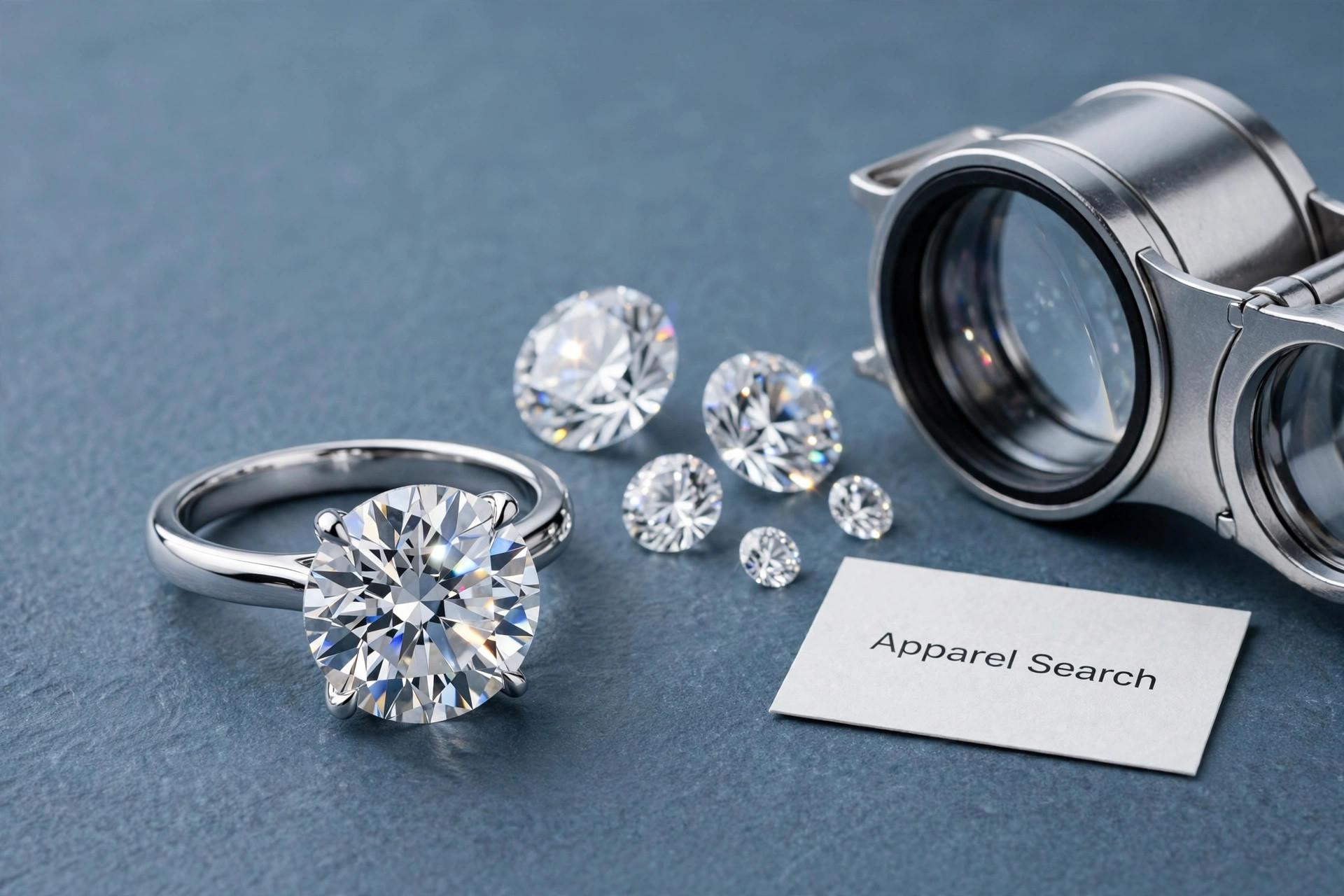
What a Lab-Grown Diamond Is
Diamond is a single material: carbon atoms bonded in a rigid tetrahedral crystal structure. That structure is what gives diamond its defining properties, a hardness of 10 on the Mohs scale, the highest of any natural material, a high refractive index that returns light to the eye as brilliance, and dispersion that splits that light into the rainbow flashes jewelers call fire. A lab-grown diamond has that exact structure and those exact properties, because it is grown atom by atom from carbon, not assembled as an imitation. Chemical, physical and optical testing cannot separate the material itself from mined diamond; only its origin story, and subtle growth features discussed below, differ.
That identity is what separates lab-grown diamonds from diamond simulants. Cubic zirconia is zirconium dioxide, moissanite is silicon carbide, and white sapphire is corundum: each imitates diamond's look to a different degree, but each is a different material with different hardness, sparkle character and aging behavior. A lab-grown diamond is not an imitation of diamond. It is diamond, produced by a different route, in the same way that ice made in a freezer is the same material as ice formed on a winter lake. Shoppers comparing stones should keep that line bright: lab-grown diamond on one side, simulants on the other, and mined diamond as the same material from the other source.
Lab-grown stones now appear across every jewelry category. They are set as solitaires and in pavé and eternity bands, cut into studs and drops, and strung into tennis necklaces and bracelets, in every standard shape from round brilliant to oval, cushion, emerald and pear. The category guides in this section treat the forms themselves: diamond rings, diamond bracelets, diamond earrings and diamond necklaces each explain cuts, settings and styles that apply in exactly the same way whether the stones in them were mined or grown.
How Lab-Grown Diamonds Are Made: HPHT and CVD
Two industrial processes grow gem-quality diamond, and both begin with a seed: a thin slice of diamond crystal on which new carbon can deposit in the correct structure. Between them they reproduce, in a chamber, the two things the earth supplies underground, carbon and the conditions that persuade it to crystallize as diamond rather than as graphite, its soft grey sibling.
HPHT: High Pressure, High Temperature
The HPHT method imitates the mantle conditions under which natural diamonds form. A small diamond seed is placed in a press with a carbon source, usually graphite, and a metal catalyst or flux, commonly an iron, nickel or cobalt alloy. The press squeezes the chamber to pressures above 50,000 atmospheres while heating it to roughly 1,300 to 1,600 degrees Celsius. At those conditions the metal melts and dissolves the carbon, which then migrates and crystallizes onto the cooler seed, growing it layer by layer into a rough diamond crystal. HPHT was the first method used for synthetic diamond, developed for industrial abrasives in the 1950s, and it is still widely used for gem stones. Growth takes days to a few weeks depending on the target size. HPHT can also be applied to finished stones as a treatment to improve color, which is one reason grading reports record growth method and treatment together.
CVD: Chemical Vapor Deposition
The CVD method grows diamond from a gas. Thin seed plates of diamond are laid in a vacuum chamber, which is filled with a carbon-rich gas mixture, typically methane in hydrogen. Energy, usually microwaves, heats the gas into a plasma, breaking the methane molecules apart. Carbon atoms rain gently onto the seed plates and bond in the diamond structure, building the crystal up layer by layer, a fraction of a millimeter at a time. The plates are periodically removed, the top surface is flattened, and growth resumes, so a gem-size crystal takes several weeks of cumulative growth. CVD tends to produce very pure material and is the method behind many of the large, high-color stones now on the market. Because CVD growth can leave the crystal with a brownish tint or internal strain, some CVD stones receive an HPHT treatment afterward to improve color, a step that grading laboratories test for and note.
From Rough Crystal to Polished Stone
However it was grown, a finished rough crystal goes through the same finishing route as a mined rough diamond. It is studied and planned, sawn or laser-cut into pieces, shaped on a bruting machine, and faceted and polished on a rotating scaife by cutters using the same skills and proportions as for any diamond. Nothing about the cutting is simplified because the rough came from a chamber: a poorly cut lab-grown stone looks as dull as a poorly cut mined one, and an excellent cut sparkles the same way. When you shop, the growth method is background knowledge; the cut quality in front of you is what decides how the stone performs.
Grading: The 4Cs, GIA and IGI Reports, and Detection
Lab-grown diamonds are described with the same 4Cs as mined diamonds: cut, color, clarity and carat weight. The scales mean the same things. Color runs from D, colorless, toward Z, tinted; clarity runs from flawless down through the VVS, VS, SI and I ranges as inclusions become easier to see; carat is weight, one carat being 200 milligrams; and cut grades judge how well the proportions return light. Because growth is controlled, lab-grown stones cluster at the strong end of those scales: high colors and clarities that are rare and expensive in mined stones are routine in grown material, which is a large part of why the price gap, covered below, is so wide.
Two laboratories issue most of the reports shoppers will meet. IGI, the International Gemological Institute, grades a large share of the world's lab-grown diamonds and issues full reports giving individual color, clarity and cut grades alongside measurements, proportions and the stone's origin. GIA, the Gemological Institute of America, which created the 4Cs system, changed its approach in 2025: announced in June of that year and effective October 1, 2025, its Laboratory-Grown Diamond Quality Assessment no longer applies the color and clarity nomenclature developed for natural diamonds, and instead describes each qualifying stone with one of two overall terms, Premium or Standard, based on a combination of its color, clarity and finish. GIA's stated reason is that the great majority of lab-grown diamonds fall within a very narrow range of color and clarity, so the broad natural-diamond scales add little information. Stones below the Standard minimum receive no assessment, earlier GIA lab-grown reports remain valid, and each assessed stone is laser-inscribed on its girdle with the word "Laboratory-Grown" and its assessment number. In practice, a shopper who wants letter grades on the paperwork will most often be looking at an IGI report, while a GIA-assessed stone will carry the Premium or Standard description; both documents confirm the essential point, that the stone is a laboratory-grown diamond of the stated weight and quality.
Detection follows from the material identity. No one, jeweler or gemologist, can separate a lab-grown diamond from a mined one with the naked eye, a loupe, or the handheld thermal and electrical testers used at a sales counter, because those tools measure properties the two share. Gemological laboratories use spectroscopic and imaging instruments that read faint growth-related features, such as trace element patterns and characteristic fluorescence behavior, and screening devices built on that science, including instruments of the DiamondView type that image a stone's growth structure under ultraviolet light, can flag stones for the fuller testing that settles origin conclusively. For a buyer, the practical identifiers are simpler: the grading report, and the laser inscription on the girdle that many reports correspond to, readable under magnification and matched against the report number.
Price: Why Lab-Grown Costs Less, and What That Means for Resale
A lab-grown diamond typically sells for a fraction of a mined diamond of the same size and grades, in recent years commonly on the order of 60 to 80 percent less at retail, with the gap generally widening as stones get larger. Exact figures move quickly and vary by seller, shape and grade, so treat any single percentage as a snapshot rather than a rule. The reason for the gap is structural, not qualitative. A mined diamond's price carries the cost and scarcity of finding gem-quality crystals underground: most diamond-bearing rock yields few stones, and large, clean, colorless ones are genuinely rare. A lab-grown stone's price carries factory costs instead: energy, equipment, time in the chamber and cutting. As reactors have grown larger and more efficient, those costs have fallen steeply, and prices have followed them down. The same budget that buys a modest mined stone commonly buys a lab-grown stone one or more carat sizes larger, or the same size with budget left over for a finer setting.
Resale runs in the opposite direction, and honest buying means facing it. Because supply can expand whenever demand does, lab-grown diamonds hold little scarcity value: second-hand prices are low relative to purchase price and have drifted down as new-stone prices fell. Mined diamonds also resell well below their retail price, but they retain a larger share of it. The sensible conclusion is to buy a lab-grown diamond the way you would buy the jewelry itself, for the pleasure of wearing it, and to put the money saved toward the parts of the piece that do hold up: a well-made gold or platinum setting, sound construction and a design you will still like in twenty years. Buyers who see that trade clearly, a bigger, brighter stone worn for its own sake, are the buyers lab-grown diamonds suit best.
Disclosure and the Rules of Sale
Because origin cannot be seen, the trade polices it with disclosure rules. In the United States, the Federal Trade Commission's Jewelry Guides, last comprehensively revised in 2018, govern how diamonds may be described. The 2018 revision removed the word "natural" from the FTC's definition of a diamond, so a laboratory-grown stone may truthfully be called a diamond; but a seller must make its origin clear by placing a qualifier such as "laboratory-grown," "laboratory-created" or "[manufacturer name]-created" immediately before the word diamond, with equal prominence, so the buyer understands the stone is not mined. Hashtags, fine print and paperwork handed over after the sale do not meet that standard, and the FTC has written to diamond marketers whose advertising buried the disclosure. The Guides also dropped "synthetic" from their recommended descriptors for lab-grown diamonds, on the ground that many consumers hear the word as meaning fake; the FTC does not ban the word outright, but using it to suggest that a competitor's lab-grown stone is not a real diamond would be deceptive. The FTC's own summary for sellers, In the Loupe: Advertising Diamond, Gemstones and Pearls, sets the rules out in plain language.
Good retail practice follows the same pattern. Reputable sellers label lab-grown stones as lab-grown in the product name itself, supply the grading report with the stone, record the origin on the receipt and appraisal paperwork, and keep lab-grown and mined inventory clearly separated rather than mixed in one tray. Many stones also carry the girdle laser inscription described above, tying the physical stone to its report. As a buyer, treat clear disclosure as a quality signal in itself: a seller who is precise about origin is usually precise about grades, weights and return terms as well, and a seller who is vague about whether a stone is mined or grown should be avoided no matter how attractive the price looks.
Lab-grown stones sit inside a wider family of grown gems covered elsewhere in this guide. The ring, bracelet, earring and necklace pages on lab created stones explain the shared background for sapphire, ruby and emerald as well as diamond: lab created gemstone rings, lab created gemstone bracelets, lab created gemstone earrings and lab created gemstone necklaces. Those pages and this one use the same vocabulary, so a reader can move between the diamond-specific detail here and the colored-stone picture there without relearning terms.
Care: The Same Stone, the Same Routine
Care for a lab-grown diamond is care for a diamond, full stop. At hardness 10 it resists scratching from everything except another diamond, which is why diamond pieces should be stored apart from one another and from softer gems. What dulls a diamond in daily wear is not damage but film: lotion, soap and skin oil collect on the underside of the stone and under the setting, where they block light and turn brilliance grey. Warm water with a drop of mild dish soap, a soak, a gentle pass with a very soft brush, a rinse and a pat dry with a lint-free cloth restores it, and the routine is identical for mined and grown stones. Ultrasonic and steam cleaners are generally safe for sound diamond settings, though loose stones and delicate pavé deserve a jeweler's check first, and prongs on any frequently worn ring should be inspected once a year or so, since a bent prong, not the stone, is the usual point of failure. The section's fuller guidance applies word for word: the Jewelry Care and Cleaning Guide covers cleaning and storage by material, and How to Clean Jewelry at Home walks through the at-home methods step by step.
Buying Guidance: Certificates, Comparisons and Settings
Start with the paperwork. For any center stone of a carat or more, buy a stone with a report from an established laboratory, IGI or GIA as described above, and confirm that the report number matches the girdle inscription and that the report states laboratory-grown origin. The report is what lets you compare stones between sellers on equal terms; without one, you are trusting the seller's own description of the grades that set the price.
Compare like with like, per carat and per grade. Lab-grown prices differ sharply between sellers for stones of identical report grades, because the market is young and markups vary, so collect several quotes for the same shape, carat range, color and clarity before deciding. Spend first on cut, which governs sparkle in a grown stone exactly as in a mined one, then choose color and clarity at levels that look clean to your eye rather than paying for top grades whose difference you cannot see. Check the return policy in writing before paying, including whether a set stone can be returned and who pays for insured shipping, and be wary of prices far below every other quote, which usually signal undisclosed treatments, weak reports or stones that are not diamond at all.
Finally, match the setting to the saving. Because the stone costs less, the setting is a larger share of the total price, and it is the part of the piece that takes the knocks. Solid gold or platinum, well-finished prongs or a protective bezel, and a band with enough substance to hold its shape will keep a lab-grown stone looking its best for decades, and the stone itself will need nothing more than the cleaning routine above. Chosen that way, a lab-grown diamond is not a compromise purchase: it is the same material, the same craft and the same appearance, bought with clear knowledge of where its value lies and where it does not.
Common Questions
Are lab-grown diamonds real diamonds?
Yes. A lab-grown diamond is diamond: pure carbon in the same crystal structure as a mined diamond, with the same hardness, brilliance and fire. It is not a simulant. Cubic zirconia and moissanite only imitate diamond's appearance, while a lab-grown diamond is the material itself, grown in weeks in a laboratory instead of formed over geological time underground.
Can a jeweler tell a lab-grown diamond from a mined one?
Not with the eye, a loupe or a standard diamond tester, because the physical and optical properties are the same. Gemological laboratories separate the two with spectroscopic and imaging equipment that reads growth-related trace features, and most graded lab-grown stones carry a laser inscription on the girdle stating their origin and report number, which a jeweler can read under magnification.
Do lab-grown diamonds hold their value?
Resale values for lab-grown diamonds are considerably lower than for mined diamonds, and they have fallen as production has grown more efficient. A lab-grown stone is best bought for how it looks and wears, not as a store of value. The metal setting, especially gold or platinum, often accounts for much of what a second-hand piece retains.