Apparel Search Jewelry Guides
How to Clean Jewelry at Home
The gentle method step by step, what each material can and cannot take, and the household products to keep away from the jewelry box.
Almost everything in a jewelry box can be cleaned at home with the same short kit: lukewarm water, a drop of mild soap, a soft brush, and two soft lint-free cloths. The method below is the standard gentle routine jewelers recommend for sturdy pieces; the sections after it adjust the routine material by material, because the whole art of home cleaning is knowing which pieces get the bath, which get only a wipe, and which get handed to a professional. It is part of the jewelry care and cleaning guide, which covers the universal rules and care by material in full.
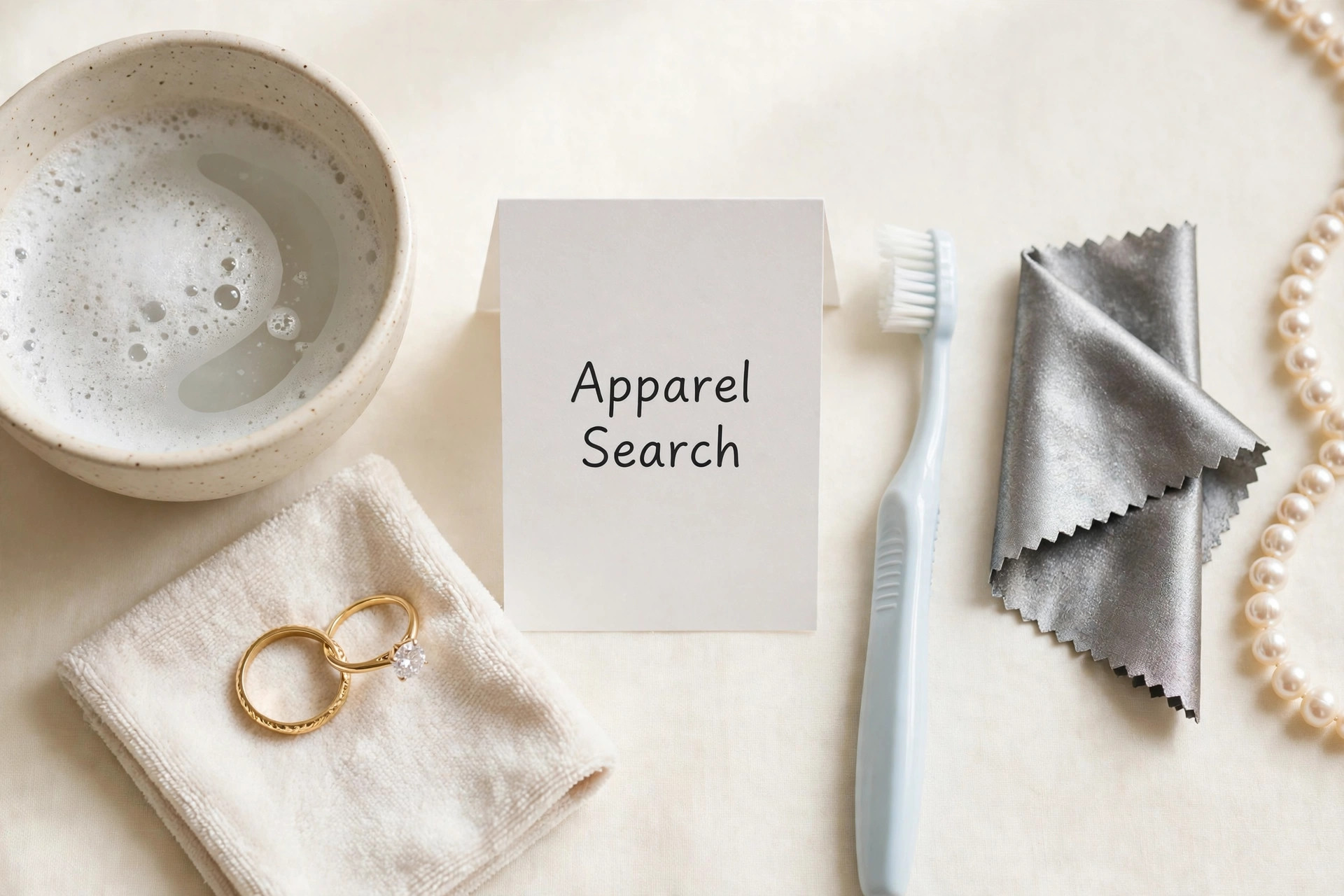
The Gentle Method, Step by Step
- Set up away from the drain. Work in a bowl on a table, not over a sink — or plug the sink and line it with a towel. More jewelry is lost down drains during cleaning than in any burglary, and it is the easiest loss in the world to prevent.
- Make the bath. Lukewarm water — never hot, which stresses stones and glue — with a small drop of mild washing-up liquid or gentle soap. That is the whole recipe; anything stronger is a risk, not an improvement.
- Soak briefly. Ten to fifteen minutes loosens the film of oil and dust. Sturdy pieces only in this step: gold, platinum, diamond, sapphire and ruby in settings that are sound. Pearls, opals, emeralds and costume jewelry skip the bath entirely, as their sections below explain.
- Brush softly. A soft baby toothbrush or a brush made for jewelry, used with almost no pressure, especially behind stones and inside settings, where the dulling film collects. Hard brushing scratches soft metals and gains you nothing.
- Rinse and dry properly. Rinse in a second bowl of clean lukewarm water (still not over an open drain), then pat dry with a soft lint-free cloth and let the piece air for a few minutes. Drying is a real step: stored damp, silver tarnishes and settings stay grubby.
- Finish with the cloth. A final buff with a clean polishing cloth brings up the shine. For silver, a cloth made for silver does double duty — it removes light tarnish as it polishes.
Cleaning by Material
Gold and platinum
The bath above, exactly as written. Gold dulls mainly from a film of soap and lotion of your own, so the brush behind stones matters more than the soak. Platinum wants the same treatment and will keep its soft patina afterwards — that patina is normal and a jeweler can polish it bright again any time. Keep both metals away from chlorine bleach and chlorinated pools, which attack gold's alloys in particular.
Silver
Start dry: a silver polishing cloth removes light tarnish on its own. For heavier tarnish, wash in the mild bath, dry very thoroughly, then polish with the cloth. Chemical dips work fast but are the harsh option — they can damage stones, glued parts and the deliberate dark shading of oxidized designs, and they strip the surface so completely that tarnish often returns faster. Why silver tarnishes, and how storage slows it, is covered in the metals guide's tarnishing page and our storage guide.
Diamonds and hard gemstones
Diamond, sapphire and ruby are the bath's best customers. A diamond attracts grease, and the dull, grey look of a neglected engagement ring is almost always a film the brush step removes in seconds. Clean hard-stone jewelry monthly if worn daily. One caution: hardness is not toughness — a sharp knock can chip even a diamond, and a setting with a loose stone should go to a jeweler, not into any cleaner, ultrasonic included.
Pearls, opals and soft stones
No bath. Wipe with a soft cloth, barely dampened for pearls if they look dull, and dry flat. Pearls' full rules — last on, first off, no perfume, no soaking — are in the care guide, and the pearl necklaces page answers their care questions too. Opals dislike heat, dry air extremes and soaking; emeralds, commonly fracture-filled, stay out of ultrasonic and steam cleaners entirely; turquoise and coral are porous and want wiping only. When a stone's treatment is unknown, treat it as treated.
Costume jewelry
Dab, do not soak. Plated metal and glued stones are costume jewelry's construction, and water is what undoes both. Wipe pieces with a cloth barely dampened in the soapy water, dry immediately and completely, and never use dips, pastes, baking soda or ultrasonic cleaners on them. Cleaned this dry way and stored dry, costume pieces keep their finish for years.
What Never to Use
Toothpaste and powdered cleansers (abrasive — they scratch). Bleach and chlorine (they attack gold alloys and finishes). Boiling water (thermal shock cracks stones and melts glue). Ammonia solutions on pearls, opals or soft stones. Ultrasonic and steam cleaners on pearls, opals, emeralds, filled or glued stones, and any loose setting. Silver dip on pieces with stones, glue or oxidized detail. If a product promises instant results, it is almost certainly removing or dissolving something you would rather keep.
How Often, Realistically
The wipe after wearing does most of the work and takes ten seconds. Beyond that: pieces worn daily, a gentle bath monthly or whenever sparkle visibly fades; pieces worn occasionally, a clean before they go back into storage after an event, so they are not put away wearing the evening; silver, polished as tarnish appears and stored so it appears slowly. And once a year, jewelry in constant wear deserves a jeweler's clean and inspection — prongs wear thin invisibly, and that visit is how stones stay in rings. If you are rebuilding the whole routine from scratch, the jewelry care and cleaning guide lays out the habits in order.
Common Questions
Can I clean jewelry with toothpaste?
Please do not. Toothpaste is an abrasive — that is what it is for, on tooth enamel — and on jewelry it scratches gold, silver and plated finishes and dulls soft stones, trading a dirty shine for a permanently hazed one. The same applies to baking soda pastes scrubbed on soft metals and to powdered cleansers. A soft cloth, mild soap and lukewarm water clean everything toothpaste can, without removing a layer of the piece in the process.
Are ultrasonic cleaners safe for jewelry?
For sturdy pieces, often: diamonds, sapphires and rubies in sound, tight settings are what home ultrasonic cleaners are made for. But the vibration is indiscriminate — it can loosen stones that were only slightly loose, and it is a firm no for pearls, opals, emeralds (which are commonly fracture-filled), turquoise, coral, and anything glued, including most costume jewelry. If a piece mixes materials, the most delicate material decides. When in doubt, the soap bath cleans nearly as well and risks nothing.
How do I clean pearl jewelry?
Barely at all, and that is the point. Wipe each pearl with a soft cloth — very slightly dampened if the strand looks dull — after wearing, then lay the strand flat to dry before putting it away. Never soak pearls, never use ultrasonic or steam, and keep them away from vinegar, perfume and hairspray, all of which attack the nacre. There is no bath for pearls; the wipe, plus storage flat in a soft pouch, is the complete and correct routine.
When should a jeweler clean a piece instead?
When anything about it is loose, damaged or uncertain: a stone that moves or rattles, prongs that catch on fabric, a bent clasp, a fraying pearl cord. Also hand over antiques, high-value pieces, and anything heavily tarnished or encrusted, where a jeweler's controlled polishing beats home effort. And make it a habit once a year for pieces you wear constantly — the jeweler's inspection catches wear while it is still cheap to fix.
Back to the Jewelry Care and Cleaning Guide
Care by material family, the universal rules, and when a piece belongs with a jeweler instead.