Apparel Search Jewelry Guides
Jewelry Storage and Tarnish Prevention
Separate, dry and out of the bathroom: the storage habits that stop scratches, tangles and tarnish before they start.
Most jewelry damage does not happen on the body. It happens in the box: a diamond ring thrown in with a pearl strand, silver left in steamy bathroom air, fine chains knotted into a single bright lump. Storage is the quiet half of the jewelry care and cleaning guide — quieter than cleaning, and more effective, because a piece stored properly needs cleaning rarely, while a piece stored badly needs it constantly and still loses. This page covers the three storage jobs: keeping pieces from damaging each other, keeping tarnish away from silver, and keeping everything intact on the road.
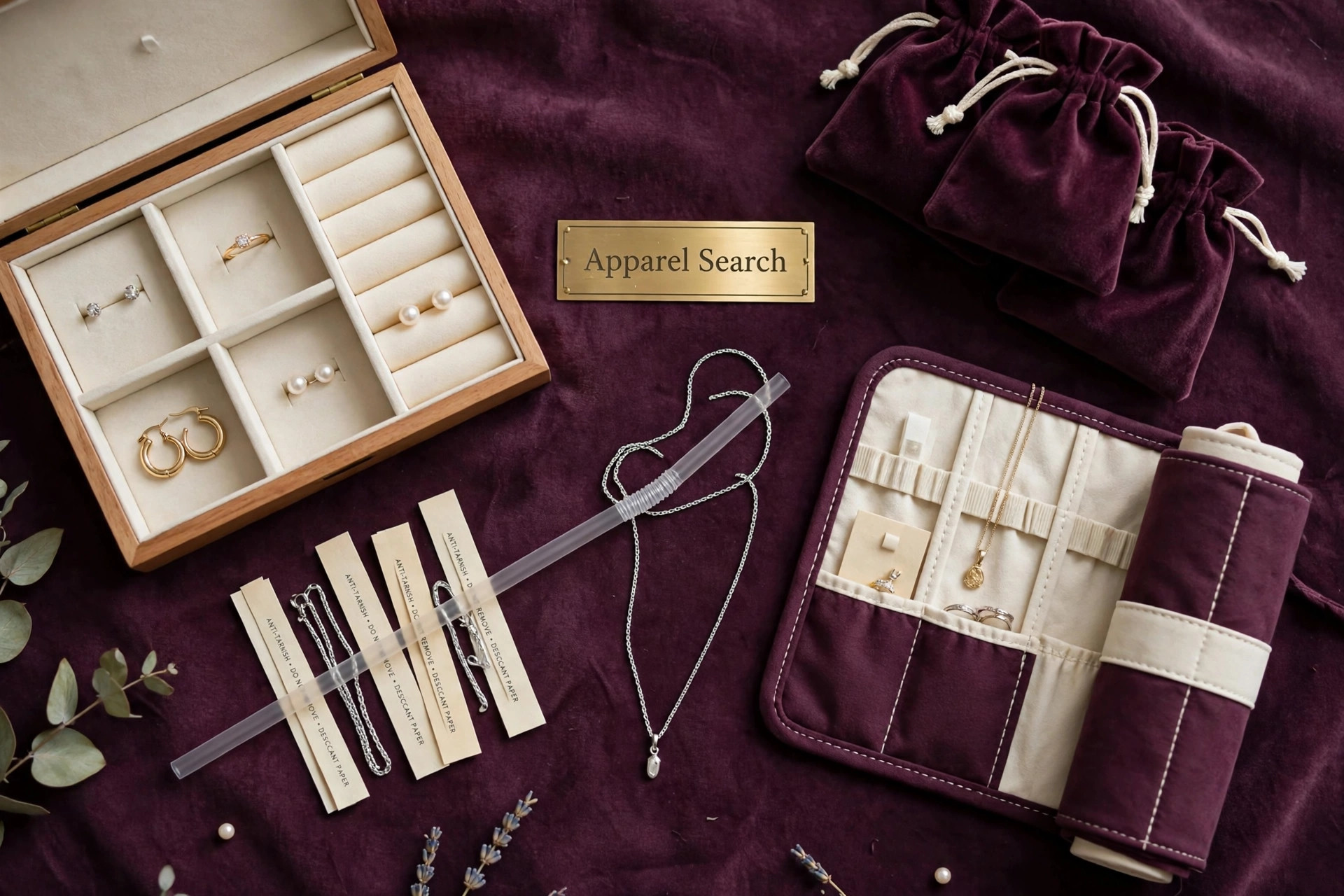
Separate Everything: The Scratching Problem
Jewelry materials are ranked by hardness, and in a shared space the harder material always wins the argument. Diamond — the hardest — will scratch gold, silver, platinum and almost every other gemstone it rubs against. Hard stones like sapphire will scratch softer ones like opal, turquoise and pearl; even metal edges scuff soft stones and plated finishes. None of this needs force: the small movements of a drawer opening and closing, repeated for months, do it gently and thoroughly.
The fix is total separation, and it is simple: one piece per soft pouch, or one piece per compartment in a lined box. Chains get their clasp closed and are laid flat or hung, never dropped in a coil onto other pieces. Pearl strands lie flat in their own pouch, away from anything harder. Earring pairs can share a compartment — they are made of the same stuff — but a pair of diamond studs still gets its own, for the sake of everything else. If your current box is one open tray, the pouches your jewelry arrived in, or even small zip bags, are a complete upgrade.
Tarnish: Prevention Beats Polishing
Tarnish is silver's surface reaction to sulfur in the air — the metals guide's page on tarnishing explains it fully. What matters for storage is that the reaction needs air, moisture and time, and all three can be reduced. Understand first why prevention is worth the effort: every polish, however gentle, removes a microscopic layer of metal along with the film. Polished rarely and stored well, a silver piece keeps its detail for generations; polished hard and often, edges soften and engraving fades. The goal is to make polishing the exception.
- Anti-tarnish strips and tabs sit in the box or pouch and absorb the sulfur compounds before they reach the silver. They are inexpensive, last a few months, and get replaced when the box starts winning again.
- Anti-tarnish bags and cloth wrap the barrier around the piece itself — a good pouch keeps a piece of silver bright far longer than an open tray does.
- Dry, then store. A piece put away damp tarnishes under its own moisture. The after-wear wipe, a few minutes of air, then the pouch — in that order.
- Mind the neighbors. Rubber bands are a classic mistake (rubber gives off sulfur and can mark silver in a line where it touched); ordinary cardboard, newspaper and some wools and felts also feed tarnish. Keep silver away from all of them.
- Wear it. The pleasant surprise: silver worn regularly tarnishes slowly, because ordinary handling wipes the film before it builds. The pieces that blacken are the ones that sit untouched — one more argument for rotation over saving for best.
Humidity and Where the Box Lives
Keep the jewelry box in a dry room at a steady temperature — a bedroom drawer or dresser — and not in the bathroom, where every shower fills the air with the moisture tarnish and corrosion feed on. In humid climates a small silica gel packet in the box helps keep its air dry; replace or dry it out periodically. Pearls are the one exception to the dryness campaign: nacre contains water and prefers normal room humidity, so pearls live in their pouch in the drawer like everything else — just never sealed away in an airtight box or a dry safe for months, where they can dry and crack.
Travel Storage
Travel compresses all the storage risks into one bag. The rules that survive it: every piece in its own pouch or small bag, no exceptions for the short trip; fine chains threaded through a drinking straw with the clasp closed, which holds them straight and untangled in any luggage; pearl strands flat in a soft pouch of their own; a small jewelry roll or hard-sided case instead of loose pouches in a wash bag; and the case in your hand luggage, always. Our necklace layering guide covers keeping chains apart on the neck; the straw and the pouch do the same job in the suitcase.
The Habits Around the Box
Storage begins before the box. Last on, first off — jewelry applied after perfume, hairspray and lotion, and removed before the evening's solvents and water — keeps the films that dull pieces from forming at all. The after-wear wipe with a soft cloth takes ten seconds and is the single most valuable habit in this whole section: pieces put away clean and dry stay clean and dry. And when you do need to clean, the home cleaning guide gives the gentle method — after which everything goes back, dry and separate, to start again.
Common Questions
Why should jewelry be stored in separate compartments?
Because jewelry damages itself. Stones and metals have different hardnesses, and in a shared heap the harder piece wins: a diamond will scratch gold, silver and most other gemstones, and metal edges will scuff soft stones like opal and pearl. Tangles do the rest — chains knot, and unknotting pulls at links and clasps. One piece per pouch or compartment, with chains fastened and laid flat, removes both problems at once and costs nothing but a few seconds each evening.
How do I stop silver from tarnishing in storage?
Slow the air down around it. Store silver dry — completely dry, after its after-wear wipe — in a soft pouch or a box with an anti-tarnish strip or tab, which absorbs the sulfur compounds that cause tarnish and is replaced every few months. A sealed bag with the air pressed out works well too. Then wear the piece regularly: frequently worn silver tarnishes noticeably slower than silver left in a drawer, because handling keeps wiping the film away before it builds.
Is the bathroom a bad place to store jewelry?
Yes — it is close to the worst room in the house for it. Bathroom air swings hot and humid with every shower, and moisture is tarnish's accelerant for silver and corrosion's friend for plated and costume pieces. Steam also works its way into settings and cords. A bedroom drawer or dresser top, dry and at a steady temperature, beats any bathroom cabinet. The one exception to remember is pearls: they dislike sealed, bone-dry storage, so their pouch lives in that same drawer, not in a safe-deposit box for months at a time.
How should I pack jewelry for travel?
One piece per small pouch or zip bag, so nothing touches anything else — that single rule prevents nearly all travel damage. Thread fine chains through a drinking straw and close the clasp to keep them straight and tangle-free, lay pearl strands flat in their own pouch, and use a small jewelry roll or a hard-sided case rather than a soft bag that gets crushed. Keep the case in your hand luggage, never in checked baggage, and unpack pieces into their usual separate storage when you get home.
Back to the Jewelry Care and Cleaning Guide
Care by material family, the universal rules, and when a piece belongs with a jeweler instead.