Lab-Grown Sapphire
Real sapphire, corundum at Mohs 9, grown in a laboratory instead of mined
A lab-grown sapphire is sapphire in the full material sense: corundum, the aluminium oxide mineral that ranks 9 on the Mohs hardness scale, grown in a laboratory instead of formed in rock. It has the same chemistry, crystal structure, hardness and way with light as a mined sapphire, because it is the same gem; only its origin, its price and the internal clues to that origin differ. Sapphire is also the most established of all grown gems. Flame-fusion corundum has been produced since the early 1900s, and the same crystal, colorless or blue, covers watch faces and scanner windows throughout industry, so the material behind a lab-grown sapphire ring is among the most thoroughly proven in all of gemology. This guide explains what sapphire is, how the grown crystal is made by each method, how gemologists tell grown from natural, what natural sapphire prices actually pay for, and how to buy a lab-grown stone well. It sits inside the wider lab-grown gemstones guide, which covers the rules and methods shared by the whole grown-gem family.
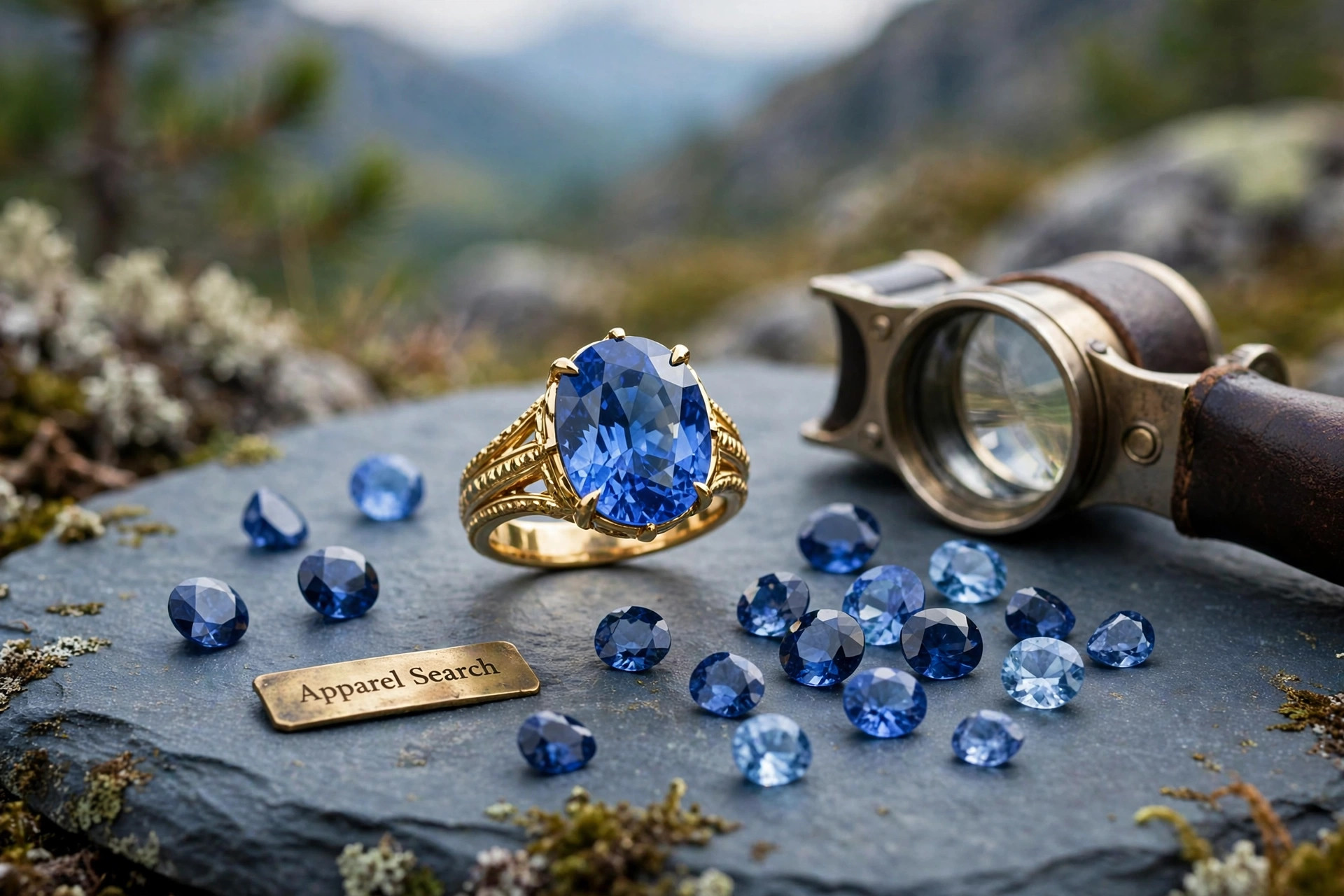
What Sapphire Is: Corundum in Every Color but Red
Sapphire is the gem variety of corundum, aluminium oxide, and corundum comes in two gem varieties divided by a single color line. Red corundum is ruby. Every other color is sapphire: blue most famously, but also pink, yellow, green, orange, purple, colorless and the rare pinkish-orange padparadscha, all of them sold as fancy sapphires when they are not blue. The colors come from trace elements inside the crystal. Blue sapphire owes its color to iron and titanium together; iron alone gives yellow and greenish tones; chromium gives pink, and enough chromium pushes the stone across the line into ruby red. Because the coloring agents are part of the crystal chemistry, a grower produces a chosen color by adding the same trace elements to the growth recipe, which is why lab-grown sapphire is available in a controlled range of blues and fancy colors.
Two properties make sapphire the workhorse gem of everyday jewelry. The first is hardness: at Mohs 9, only diamond scratches it in ordinary use. The second is toughness: corundum has no cleavage, no built-in plane along which it splits, so it tolerates knocks that would endanger more fragile gems. A lab-grown sapphire inherits both traits in full, because both belong to the mineral. Nothing about laboratory origin softens, weakens or cheapens the material itself; the differences between a grown and a natural sapphire lie in its internal features, its paperwork and its price, each covered below.
How Lab-Grown Sapphire Is Grown
More than a century of production has given sapphire more growth methods than any other colored gem, and the method matters because it sets the stone’s price tier and the clues by which a gemologist identifies it. All of them grow the same corundum; they differ in speed, cost and how natural the crystal’s interior looks.
Verneuil Flame Fusion: The Workhorse
The Verneuil process, announced in 1902, is still how most lab-grown sapphire is made. Powdered alumina, with the trace elements for the desired color, is fed through an oxyhydrogen flame hot enough to melt it. The droplets fall onto a rotating pedestal and build up a carrot-shaped crystal called a boule, which is later split and cut into stones. The method is fast and inexpensive, so flame-fusion sapphire is the material of class rings, birthstone jewelry, synthetic star sapphires and countless blue stones in affordable settings. Its speed leaves evidence: under magnification, flame-fusion corundum commonly shows curved growth lines that follow the boule’s rounded surface, and tiny spherical gas bubbles. Natural corundum never shows either; its color zoning runs straight and angular, following flat crystal faces. Those two tells make Verneuil sapphire the easiest grown gem in the trade to identify.
Flux, Czochralski and Hydrothermal Sapphire
Slower methods grow the higher-quality material. In flux growth, the corundum ingredients are dissolved in a molten flux and crystallize gradually over weeks or months, producing stones whose interiors can look convincingly natural, marked instead by wispy flux inclusions and occasional platinum platelets from the crucible. In the Czochralski process, a seed crystal is dipped into molten alumina and slowly pulled upward, drawing a long, clean crystal behind it; pulled sapphire is exceptionally pure and is grown in large sizes. Hydrothermal growth crystallizes sapphire from hot pressurized water in a sealed autoclave, imitating the conditions that form gems underground, and produces material identified by its own characteristic growth patterns. Stones from these methods cost more than flame-fusion stones, sometimes considerably more, and separating them from natural sapphire is laboratory work rather than loupe work, but the finished gem is the same corundum either way.
The Same Crystal at Work: Industrial Sapphire
Jewelry is only the visible tip of lab-grown sapphire. Because grown corundum is hard, transparent from ultraviolet into infrared, chemically resistant and stable at high temperatures, industry consumes it in quantity: as watch crystals that shrug off scratches for decades, as the windows in grocery-store barcode scanners, as camera and sensor covers, and as optical windows and semiconductor substrates. None of that material is mined; large, flawless natural crystals of the size industry needs barely exist, so engineers grow exactly the crystal they require. A shopper can take the point personally: the sapphire in a lab-grown ring belongs to a material so mature and so well understood that factories stake precision equipment on it.
Lab-Grown vs Natural Sapphire: Identical Properties, Different Paperwork
Place a fine lab-grown sapphire beside a natural stone of the same color and no one, jeweler included, can separate them by eye, because there is nothing visual to separate: same corundum, same hardness, same luster, same pleochroism, the slight color shift sapphire shows from different angles. Identification happens inside the stone. A gemologist reads inclusions and growth structure under magnification: curved striae and gas bubbles declare flame fusion; flux fingerprints and platinum platelets declare flux growth; hydrothermal graining declares the autoclave. Natural sapphires carry a different diary, mineral crystals, fine rutile needles called silk, healed fractures with fingerprint patterns, and straight, angular color zoning. Difficult stones go to a laboratory for spectroscopic and trace-element analysis, and the resulting report states identity and origin plainly. As with every grown gem, the buying rule follows: shop by disclosure and paperwork, not by eye.
Price is where the two origins part company, and natural sapphire’s price drivers are worth understanding because lab-grown stones have none of them. Natural prices pay first for color, the prized vivid cornflower and royal blues, then for origin lore: Kashmir sapphires, from a Himalayan deposit worked mainly in the 1880s, sit at the very top of the market, followed by Burmese stones and then the fine blues of Ceylon, now Sri Lanka. They pay again for treatment status, because most natural sapphires are heat-treated to improve color and clarity, and a fine stone certified as untreated commands a substantial premium over a heated equivalent. Against that structure, lab-grown sapphire commonly sells for a small fraction of the price of a natural stone of similar size and face-up appearance, with flame-fusion material at the least expensive end. What the saving gives up is not beauty or durability but rarity and resale: grown stones hold little second-hand value beyond their settings, and should be bought to wear.
Price in Practice: What the Saving Buys
Because grown sapphire carries factory costs rather than scarcity, the arithmetic of buying one is simple and favorable. The budget that purchases a small, commercial-grade natural blue stone commonly purchases a lab-grown sapphire several times its size in a rich, even color, or the same size with most of the budget left for the setting. Method explains the spread within the grown market itself: flame-fusion stones are the least expensive grown gems in the trade, while flux, pulled and hydrothermal stones, slower and costlier to produce, sell higher, though still far below comparable natural stones. Exact prices vary by seller, size and color, so compare several quotes for the same color and dimensions rather than trusting any single figure. And keep the resale reality from the comparison above in view: spend the saving on a substantial gold or platinum setting and on color you love, not on the expectation of getting the money back.
Disclosure, Treated Naturals and Buying by Color
United States disclosure rules treat sapphire exactly as they treat diamond. Under the Federal Trade Commission’s Jewelry Guides, summarized for sellers in In the Loupe: Advertising Diamond, Gemstones and Pearls, a laboratory-created stone must be described as “laboratory-grown,” “laboratory-created” or “[manufacturer name]-created,” with the qualifier immediately before the word sapphire and equally conspicuous, so no buyer mistakes it for a mined stone. The bare word “sapphire” on its own is reserved for the mined gem. Reputable sellers follow the rule in the product name itself and repeat the origin on the receipt; vagueness about origin, at any price, is a reason to shop elsewhere.
Two categories of natural sapphire must not be confused with lab-grown stones, because they are different products with different durability. Diffusion-treated sapphire is mined corundum whose color was added at the surface by heating it with coloring elements; the color layer is shallow, can be damaged if the stone is repolished, and the treatment must be disclosed and cuts the value sharply. Glass-filled sapphire is heavily fractured mined corundum held together with lead glass; the FTC bars selling such composite material under the plain gem name or as laboratory-grown, because it lacks the named stone’s characteristics and needs special care. A lab-grown sapphire, honestly disclosed, is neither of these: it is solid corundum through and through, with its color grown into the crystal and ordinary sapphire durability.
When you buy, let color lead, because color is what you will actually see for the next thirty years. The classic target is a vivid medium blue, the cornflower tone of the finest natural stones, saturated without going dark and inky or washing out pale, and lab growing’s great practical gift is that this color is available on purpose rather than by geological luck. View the stone in daylight and indoor light, check that the color is even and that the cut returns light across the whole face rather than leaving a dull window in the center, and prefer sellers who state the growth method, since it explains both the price and the inclusions a future gemologist will find. Fancy colors follow the same logic: pink, yellow and padparadscha-toned grown sapphires are all corundum, all Mohs 9, and all bought best by the same test, the color in front of you.
Lab-grown stones sit inside a wider family of grown gems covered elsewhere in this guide. The ring, bracelet, earring and necklace pages on lab created stones explain the shared background for sapphire, ruby and emerald as well as diamond: lab created gemstone rings, lab created gemstone bracelets, lab created gemstone earrings and lab created gemstone necklaces. Those pages and this one use the same vocabulary, so a reader can move between the general picture here and the jewelry forms there without relearning terms.
Care: Hard, Tough and Easy
Sapphire is among the simplest gems to live with, and lab-grown sapphire is no exception, because care follows the material. At Mohs 9 with good toughness and no cleavage, it tolerates daily wear in rings, resists scratching from everything it normally meets, and stores safely with most other jewelry, though diamond pieces should still be kept apart from it, since diamond can scratch sapphire. Cleaning is warm water, a drop of mild dish soap, a soak and a gentle pass with a soft brush, then a rinse and a pat dry; the film of soap and skin oil that collects under the stone, not damage, is what dulls it. Ultrasonic and steam cleaning are generally safe for sound, untreated grown stones, but give glass-filled or diffusion-treated natural stones, a different category entirely, gentler handling and no ultrasonic bath. Have a frequently worn ring’s prongs inspected yearly; the setting wears faster than the stone ever will. The section’s fuller guidance applies word for word: the Jewelry Care and Cleaning Guide covers cleaning and storage by material, and How to Clean Jewelry at Home walks through the at-home methods step by step.
Buying Guidance: Method, Color and Setting
Buy the paperwork first: the listing and receipt should say laboratory-grown sapphire in so many words, and for a larger center stone a report from an established laboratory confirming synthetic corundum and stating any treatment gives the piece a permanent, checkable identity. Know which growth method you are paying for, flame fusion at the accessible end, flux, pulled or hydrothermal at the premium end of the grown market, and be suspicious of any grown stone priced like a natural one or any natural-priced stone whose seller will not discuss origin in writing.
Then buy color and cut, in that order, and let the setting carry the rest of the budget. A vivid, even blue in a well-proportioned cut will outshine a larger, darker or windowed stone every day it is worn, and grown material makes that top color attainable without the untreated, celebrated-origin premiums that drive natural prices. Set it in solid gold or platinum with prongs or a bezel suited to daily wear, and the result is a ring whose stone is, in every property a wearer can test, sapphire itself: hard, tough, richly colored and honestly described. That combination, the real gem at a factory price, is exactly what lab-grown sapphire exists to offer.
Common Questions
Is a lab-grown sapphire a real sapphire?
Yes. A lab-grown sapphire is corundum, aluminium oxide, with the same crystal structure, Mohs 9 hardness and optical properties as a mined sapphire. It is sapphire in the full material sense; only its origin differs, grown in a furnace or growth vessel in days or months instead of in rock over geological time. It is not an imitation: blue glass and blue cubic zirconia only copy sapphire’s color with different, softer materials.
How can a lab-grown sapphire be told from a natural sapphire?
Under magnification, by its growth features and inclusions. Flame-fusion sapphire commonly shows curved growth lines and tiny round gas bubbles, which never occur in natural corundum, whose color zoning is straight and angular. Flux, pulled and hydrothermal sapphires are harder cases, identified by their own flux residues, growth patterns and inclusion scenes, sometimes with advanced laboratory analysis. A report from an established gemological laboratory is the reliable answer for any valuable stone.
Is lab-grown sapphire a good choice for an everyday ring?
Yes, one of the best. Sapphire is Mohs 9, second only to diamond among common gems, and corundum is hard and tough with no cleavage to split along, so a lab-grown sapphire takes daily wear as well as a natural one, because it is the same material. Warm soapy water and a soft brush keep it clean, and ultrasonic cleaning is generally safe for sound, untreated stones. As with any ring, the setting’s prongs deserve a periodic check.