Sterling Silver Necklaces
The 925 alloy: bright, workable and made to last
Sterling silver necklaces are made from sterling silver, an alloy of 92.5 percent pure silver and 7.5 percent other metals, usually copper, added because pure silver is too soft to hold a chain link or setting. The alloy keeps silver's bright white luster while giving it the strength for daily wear, and genuine pieces are stamped 925, STER or STERLING. Sterling works across the full range of necklace design, from fine cable chains and delicate pendants to hammered, satin and oxidized statement pieces, and it serves as an affordable setting metal for gemstones. Its known behavior is tarnish, a surface film from sulfur in air and contact, which is preventable in storage and removable in cleaning. This guide covers composition and stamps, finishes and styles, sizing and construction checks, and practical tarnish care for everyday wear.
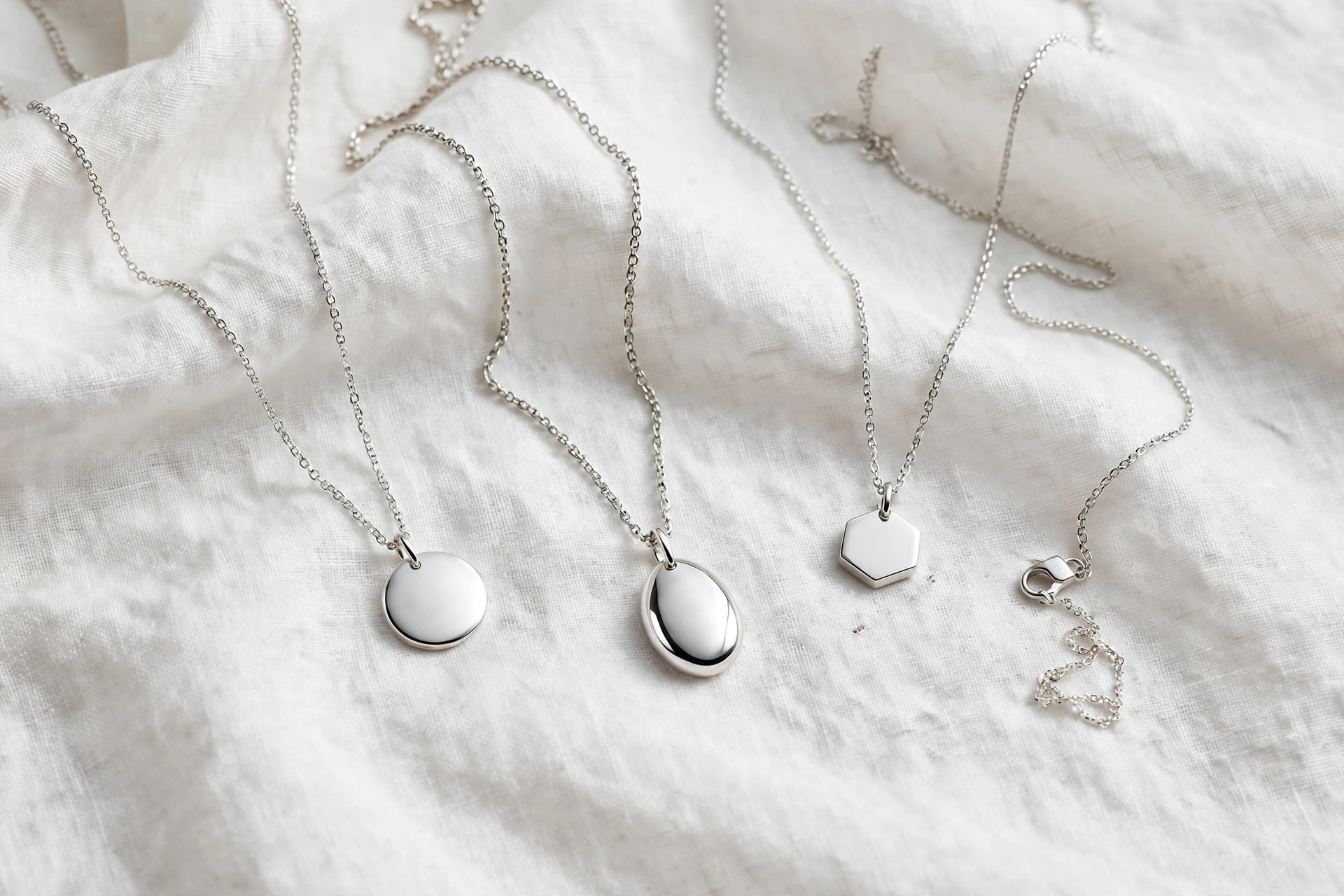
Sterling Silver Necklaces: A Timeless Elegance in Silver
Sterling silver necklaces are exquisite pieces of jewelry crafted from a silver alloy known as sterling silver. Sterling silver is an alloy made of 92.5% pure silver and 7.5% other metals, typically copper. This alloy enhances the strength and durability of the silver, making it ideal for creating a variety of jewelry, including necklaces.
Key Features and Characteristics:
Metal Composition:
Sterling silver is primarily composed of 92.5% pure silver. The remaining 7.5% is usually copper, although other metals can be used. This composition enhances the metal's strength while maintaining its inherent beauty.
Appearance:
Sterling silver has a lustrous, bright appearance that catches and reflects light, providing a captivating and elegant shine.
Over time, sterling silver may develop a patina, a darkened or tarnished layer caused by the metal's reaction with the environment. This patina can add character to the piece.
Versatility:
Sterling silver is versatile and complements a wide range of styles, outfits, and occasions. It can be crafted into various designs, from minimalistic to intricately detailed, making it suitable for both casual and formal wear.
Durability:
While not as hard as some other metals, sterling silver is durable and can withstand everyday wear and tear. With proper care, it can last for generations, making it a popular choice for heirloom pieces.
Hypoallergenic:
Sterling silver is generally hypoallergenic, making it a suitable option for individuals with sensitive skin or metal allergies. It's a safe choice for those who may have reactions to certain other metals.
Styles and Designs:
Sterling silver necklaces come in a vast array of styles and designs, including chain necklaces, pendant necklaces, choker necklaces, statement necklaces, and more. Designers often incorporate gemstones or other materials for added allure.
Finishes:
Sterling silver necklaces are available in various finishes, including polished, satin, matte, hammered, or oxidized finishes, providing different textures and appearances to suit personal preferences.
Maintenance:
Sterling silver jewelry requires regular maintenance to prevent tarnishing. Cleaning with a soft cloth and silver cleaner can restore its original shine.
Popular Sterling Silver Necklaces:
Chain Necklaces:
Classic and versatile, chain necklaces come in various styles such as cable, curb, box, and rope chains, offering different looks to suit different tastes.
Pendant Necklaces:
Featuring a pendant made of sterling silver or a combination of silver and gemstones, these necklaces allow for personalization and creative expression.
Gemstone Necklaces:
Sterling silver often serves as a setting for gemstones, enhancing their beauty and providing a complementary backdrop to the vibrant colors of the stones. Learn more about gemstones.
Properties of Silver: A Precious Metal with Versatile Attributes
Silver, a precious metal renowned for its beauty and utility, possesses a set of distinct properties that make it a coveted material in various industries, particularly in jewelry design.
Chemical Properties:
Atomic Number and Symbol: Silver is a chemical element with the symbol Ag (from the Latin word "argentum") and atomic number 47.
Purity: Pure silver is relatively soft and not suitable for jewelry; hence, it is often alloyed with other metals for added strength and durability.
Physical Properties:
Color: Silver exhibits a shiny, metallic white luster, making it highly attractive for ornamental purposes.
Density: It is a relatively dense metal, adding substance and weight to jewelry pieces.
Malleability and Ductility: Silver is highly malleable and ductile, allowing it to be easily shaped, hammered, or drawn into thin wires. This property is crucial for intricate jewelry designs.
Conductivity: Silver is an excellent conductor of heat and electricity, making it useful beyond jewelry in applications like electrical conductors.
Corrosion Resistance:
Silver possesses excellent resistance to corrosion and tarnish. However, it can tarnish over time due to exposure to sulfur compounds in the air.
Mining and Sources:
Major Sources: Silver is primarily mined as a byproduct of mining other metals such as gold, lead, zinc, and copper. Major silver-producing countries include Mexico, Peru, China, Russia, and Australia.
Mining Process: Silver is extracted from silver ores through mining operations that involve crushing, grinding, and chemical or physical separation methods to obtain silver concentrates. These concentrates are further processed to extract pure silver.
Why Sterling Silver is Popular for Jewelry Design:
Strength and Durability: Sterling silver, an alloy of 92.5% pure silver and 7.5% other metals (usually copper), is much stronger and more durable than pure silver. This makes it suitable for creating lasting and resilient jewelry pieces.
Affordability: Compared to precious metals like gold and platinum, sterling silver is more affordable while retaining a premium and luxurious look, making it accessible to a broader audience.
Versatility: Sterling silver is highly versatile and complements a wide range of gemstones and materials. Its neutral color and shine allow designers to create diverse and eye-catching jewelry designs.
Hypoallergenic Properties: For individuals with metal allergies or sensitive skin, sterling silver is often a safe choice due to its hypoallergenic nature, making it suitable for everyday wear.
Timeless Aesthetic: The bright, white, and classic appearance of sterling silver is timeless and adaptable, making it suitable for various styles and design preferences.
Overall, sterling silver's blend of durability, affordability, versatility, and hypoallergenic properties makes it a highly sought-after material for jewelry designers, allowing them to craft beautiful and enduring pieces that appeal to a wide range of consumers.
Sterling silver necklaces are cherished for their timeless beauty, versatility, and durability. Their affordability compared to other precious metals makes them a popular choice for a wide range of jewelry enthusiasts, allowing them to adorn themselves with elegance and style.
Do more research about silver necklaces.
In addition to learning more about precious metals, we suggest you also learn more about sterling silver earrings and sterling silver bracelets.
Finishes That Change Silver's Character
High polish gives sterling its mirror-bright classic look and shows scratches soonest. Satin and brushed finishes soften reflections and disguise everyday marks, hammering adds faceted texture that catches light unevenly, and oxidation darkens recesses so engraving, filigree and patterned links gain depth; oxidized areas lighten with wear on raised surfaces, which is part of the finish's appeal. Rhodium plating is sometimes applied over sterling to delay tarnish and add a whiter tone, at the cost of eventual replating as it wears at contact points.
Choosing sterling well means checking construction rather than shine alone: soldered links on chains meant for pendants, a clasp proportioned to the chain, and pendant backs finished rather than hollow and sharp-edged. Silver's malleability, the property that made it a historic craft metal for hand-hammered and granulated work, also means fine chains kink if crushed in storage, so hanging or flat separate storage keeps both chains and pendants in shape for the generations sterling can last.
Common Questions
What does the 925 stamp on a necklace actually guarantee?
The 925 stamp states the piece is 925 parts per thousand silver, the sterling standard, with the remaining 75 parts an alloying metal such as copper. In countries with hallmarking systems, an assay office mark adds independent verification; elsewhere the stamp is the maker's claim, so buy from sellers who stand behind it. Stamps usually sit on the clasp, an end tag or the pendant back.
Why does sterling silver tarnish, and is it damaged when it does?
Tarnish is a thin layer of silver sulfide formed when silver reacts with sulfur compounds in air, rubber, wool, some papers and skin products. It is a surface film only, not corrosion or damage, and polishing removes it to reveal bright metal underneath. Regular wear slows it, since handling keeps the surface bright, while unworn pieces stored openly tarnish fastest.
How should I clean and store a sterling silver necklace?
Wipe it with a soft cloth after wear and store it dry in a closed pouch or box, ideally with an anti-tarnish strip, away from bathroom humidity. Clean light tarnish with a silver polishing cloth and heavier tarnish with a wash or foam made for silver jewelry. Avoid chemical dips on necklaces with stones, pearls or deliberate oxidized detailing, which dips can harm.