Silver Necklaces
Sterling silver chains and pendants, tarnish managed
Silver necklaces are almost always sterling silver, an alloy of 92.5 percent silver with copper, stamped 925, because pure silver is too soft for chains. Sterling gives necklaces a bright white color, a moderate price that allows substantial chains and pendants, and a long craft tradition from Mexican and Native American silverwork to modern minimalist design. Its one liability is tarnish, the dark sulfur film that forms on the surface, which is manageable with ordinary habits and removable with polishing. This guide covers sterling standards and stamps, chain and pendant forms, silver with turquoise and other stones, tarnish prevention and cleaning, and the difference between sterling, silver plated and white metal necklaces.
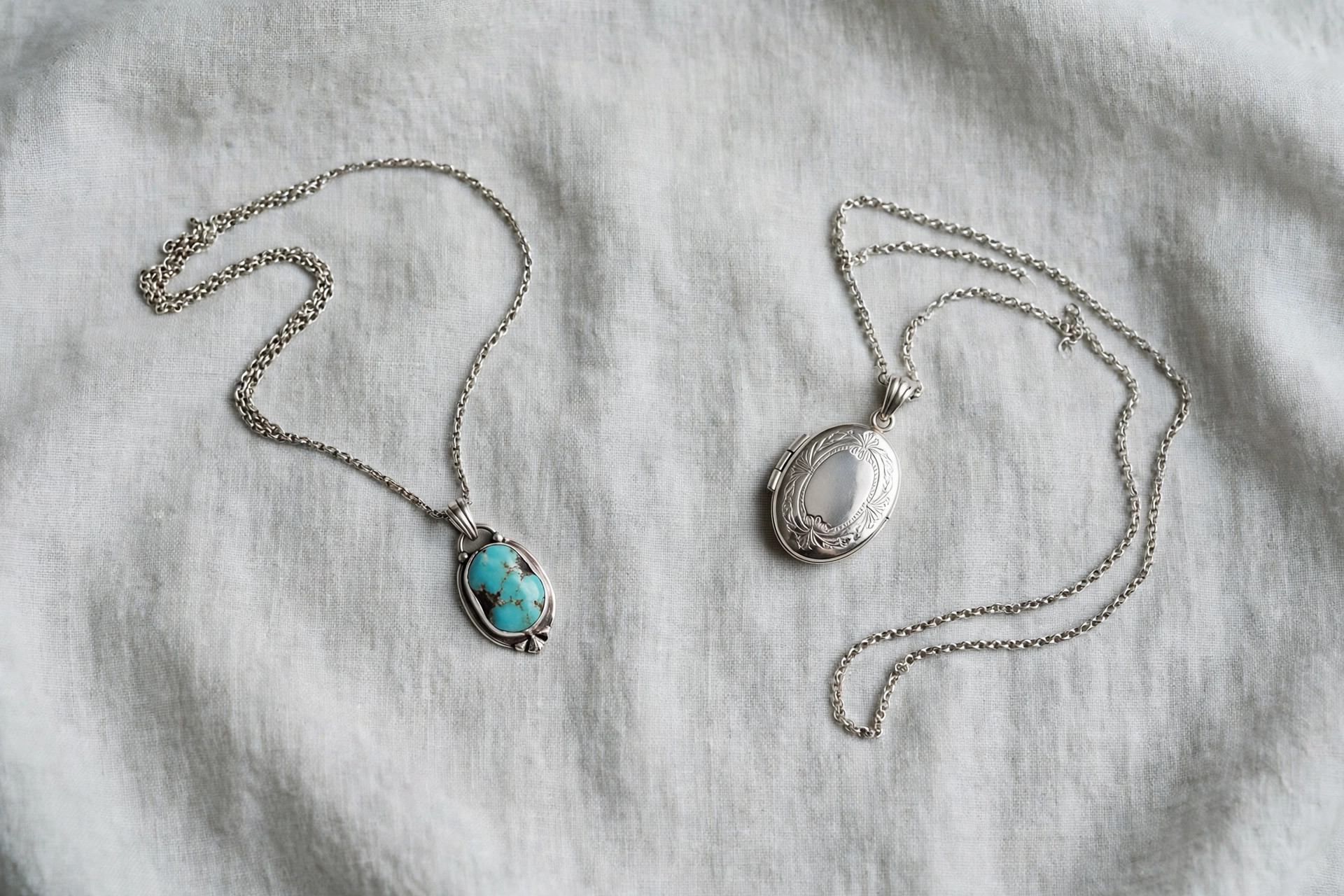
Silver Necklaces: Timeless Elegance in a Shimmering Metal
Silver necklaces are exquisite pieces of jewelry crafted from one of the world's most beloved and versatile metals. Silver has been cherished throughout history for its beauty, affordability, and malleability, making it a popular choice for necklaces and other adornments.
Silver as a Metal:
Composition: Silver is a naturally occurring metal with the chemical
symbol Ag (from the Latin word "argentum"). It is a precious metal, albeit
more abundant and affordable than gold or platinum.
Durability: While not
as hard as some other metals like gold, silver is durable and resistant to
corrosion, making it suitable for everyday wear.
Historical Significance:
Ancient Use: Silver has been used in jewelry and currency for millennia.
Ancient civilizations such as the Greeks, Romans, and Egyptians valued
silver for its aesthetic appeal and perceived protective properties.
Cultural Symbolism: Silver has been associated with purity, wealth, and
spirituality in various cultures. It has often been used in religious and
ceremonial jewelry.
Styles and Designs:
Chain Necklaces: Silver chain necklaces come in various styles, including cable chains, box chains, and snake chains, offering a range of aesthetics from delicate to bold.
Pendants: Silver pendants can feature a wide variety of designs, from classic hearts and crosses to intricate filigree or gemstone-adorned pieces.
Collar Necklaces: Collar necklaces are snug-fitting, often rigid, and add a touch of elegance and drama to the neckline.
Statement Pieces: Some silver necklaces are bold and eye-catching, designed to make a fashion statement with intricate patterns, large pendants, or multiple chains.
Appeal to Consumers:
Affordability: Silver is more affordable than gold or platinum, making silver necklaces accessible to a broad range of consumers.
Timeless Elegance: Silver's classic and timeless appearance suits a variety of fashion styles and can be worn for both casual and formal occasions.
Versatility: Silver's neutral color complements a wide range of gemstones, allowing for endless design possibilities.
Ease of Maintenance: Silver jewelry is relatively easy to clean and maintain, making it a practical choice for everyday wear.
Caring for Silver Necklaces:
To maintain the shine of silver, regular cleaning with a silver polishing cloth or gentle jewelry cleaner is recommended.
Storing silver necklaces in a cool, dry place away from direct sunlight
can help prevent tarnishing.
Avoid exposing silver to harsh chemicals or excessive moisture, as this can
cause damage.
Popularity of Silver Necklaces:
Silver necklaces remain a popular choice among jewelry enthusiasts due to their timeless beauty, versatility, and affordability. They are often chosen as gifts and cherished heirlooms.
Apparel Search does not have specific up-to-date data on the exact percentage of international jewelry production made of silver compared to gold. The percentage can vary based on various factors such as trends, economic conditions, and consumer preferences.
However, historically, silver has been a significant component of the jewelry industry. Silver is often considered more affordable than gold, making it accessible to a broader consumer base. It's a popular choice for both fashion jewelry and fine jewelry, including designer pieces and traditional adornments.
Reasons for the Importance of Silver in the Jewelry Industry:
Affordability and Accessibility:
Silver is more affordable than gold, making it a popular choice for consumers who want precious metal jewelry without the high price associated with gold.
Versatility and Aesthetic Appeal:
Silver's neutral color and shine make it a versatile metal that complements various gemstones and designs. It suits both casual and formal wear, adding to its appeal.
Trends and Fashion:
Silver often aligns with current fashion trends. Designers frequently use silver to create modern, trendy jewelry, making it appealing to a younger demographic.
Mixing with Gemstones:
Silver provides an excellent backdrop for gemstones, enhancing their color and brilliance. It is often used in combination with gemstones to create eye-catching and colorful pieces.
Craftsmanship and Detailing:
Silver is malleable and easy to work with, allowing artisans to create
intricate and detailed designs. This makes it a preferred metal for artistic
and elaborate jewelry.
Artisan and Custom Jewelry:
Many artisans and custom jewelers choose silver due to its workability, allowing them to handcraft unique pieces for their customers.
Casual and Everyday Wear:
Silver is a popular choice for everyday jewelry due to its durability and ease of maintenance. People often prefer wearing silver pieces in their day-to-day lives.
Ethical and Sustainable Choices:
In recent times, as sustainability and ethical sourcing gain importance,
silver is favored for its relatively more eco-friendly and ethical mining
practices compared to some other metals.
In summary, the affordability,
versatility, and aesthetic appeal of silver, along with its alignment with
fashion trends and its suitability for mixing with gemstones, make it a
crucial and significant material in the jewelry industry.
Silver necklaces epitomize understated elegance and have a timeless appeal that transcends fashion trends. Whether worn alone or paired with gemstones or other metals, these necklaces continue to be beloved adornments that can be passed down through generations.
Learn about sterling silver necklaces.
You may want to also research silver earrings, silver rings and silver bracelets.
Learn more about precious metals and about other metals used for jewelry.
Silver's Traditions at the Neck
Some of the strongest necklace traditions in jewelry are silver: Navajo and Southwestern squash blossom necklaces and turquoise bead strands, Mexican silver from Taxco, Balinese granulation and chain work, and Celtic pendants in the British and Irish tradition. In all of them, silver's working qualities, its softness under the hammer and file, its bright finish and its moderate cost in bold sizes, are the point. Contemporary silver necklaces run from heavy curb chains to fine chains carrying a single stone or initial, and oxidized silver, deliberately darkened in its recesses, is a finish in its own right rather than a defect.
Buying silver well is mostly buying making: links fully soldered where strength matters, clasps that match the chain's weight, pendants with finished backs, and an honest 925 stamp from a seller who stands behind it. Against white gold and platinum, silver asks for polishing and gives back scale and craft for the money, which is why it remains the default metal for statement necklaces that would be prohibitive in gold.
Common Questions
How can I tell if a necklace is sterling silver?
Look for a 925, STER or STERLING stamp on the clasp, a tag near it or the pendant's back. Sterling is not magnetic beyond a faint response from clasp springs, feels substantial for its size, and tarnishes to a soft grey-black that polishes bright. Pieces stamped EP, EPNS or silver plate carry only a silver surface over base metal, and unmarked white metal necklaces should be priced as fashion jewelry unless a jeweler tests them.
How do I stop a silver necklace tarnishing?
Wear helps, since skin contact and movement slow tarnish, while storage is where it forms fastest. Keep the necklace in a closed pouch or box, ideally with an anti-tarnish strip, away from bathroom humidity, wool, latex and paper products that carry sulfur. Put it on after perfume and hairspray, wipe it with a soft cloth after wear, and it will need only occasional light polishing instead of heavy cleaning.
What is the best way to clean a tarnished silver necklace?
A silver polishing cloth handles light tarnish on chains and smooth pendants and is the safest routine method. For heavier tarnish, a silver foam or wash made for jewelry works, used briefly and rinsed well; avoid dips on pieces with stones, oxidation detailing, pearls or turquoise, which dips can damage or strip of their intended dark recesses. Chains with intricate links may need a jeweler's ultrasonic and polish, with stones checked first.