Silver Earrings
Bright luster and everyday versatility
Silver earrings are a jewelry staple: a bright, white, highly reflective metal worked into studs, hoops, dangles, drops and intricate filigree and engraved designs, at prices well below gold and platinum. Most silver earrings are sterling silver, the 92.5 percent silver alloy covered in its own guide, and the metal takes finishes from mirror polish to matte and oxidized black detailing. This guide covers the properties that make silver so workable for earrings, the main styles and finishes, how silver pairs with gemstones and pearls, the tarnish every silver owner needs to understand, and simple care that keeps the luster bright. Silver's softness as a pure metal is handled by alloying, so buying well starts with knowing which silver is actually in the earring.
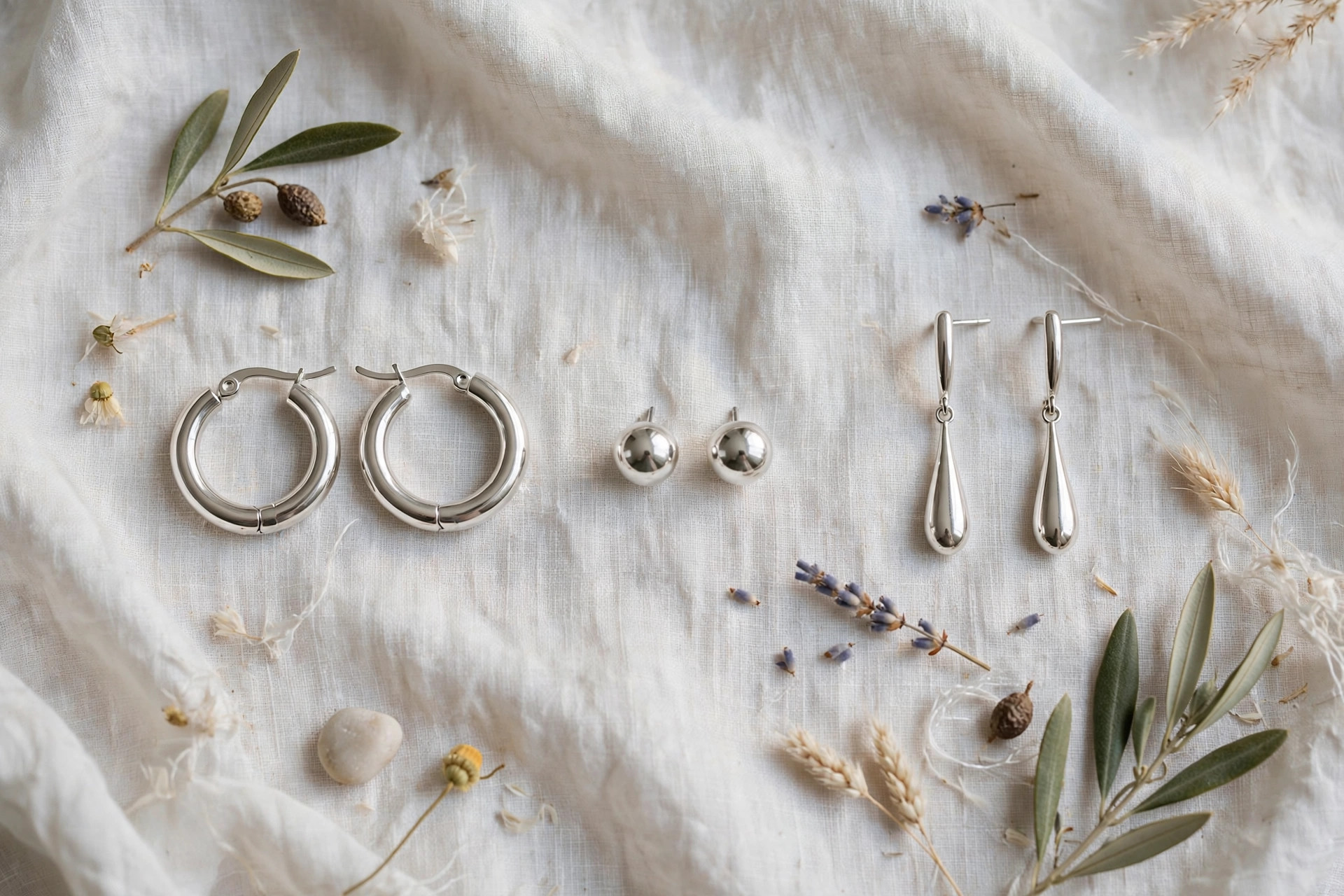
Silver Earrings: Timeless Elegance and Versatility
Silver earrings have been a beloved form of jewelry for centuries, appreciated for their timeless beauty, versatility, and accessibility. As one of the most popular and affordable metals for jewelry making, silver allows designers to craft a wide range of earring styles, catering to various tastes and occasions. Whether chosen for their lustrous sheen, affordability, or meaningful designs, silver earrings hold a special place in the world of fashion and adornment.
Properties of Silver:
Lustrous Appearance: Silver is celebrated for its bright, white, and reflective surface, often referred to as its "luster." This quality enhances the visual appeal of silver earrings, making them shimmer and catch the light.
Affordability: Silver is considerably more affordable than precious metals like gold and platinum. This affordability makes silver earrings accessible to a wide range of consumers.
Durability: Sterling silver, which is the most common alloy used in silver jewelry, is a durable material suitable for everyday wear. It is mixed with other metals (usually copper) to increase its strength and resilience.
Versatility: Silver is highly malleable and easy to work with, allowing jewelry designers to create intricate and detailed earring designs. It can be polished to a high shine or given various finishes, such as matte or oxidized, to achieve different looks.
Styles and Designs:
Silver earrings come in a multitude of styles to suit various preferences and occasions:
Silver Stud Earrings: Simple and classic, stud earrings feature a single silver element, often in geometric shapes like circles, squares, or hearts. They are ideal for everyday wear.
Silver Hoop Earrings: Hoop earrings can be small and subtle or large and dramatic, depending on the design. They are versatile and can add a touch of glamour to any outfit.
Silver Dangle Earrings: Dangle earrings feature elements that hang gracefully from the earlobe. They come in a wide range of designs, from minimalist to ornate, and are suitable for both casual and formal occasions.
Chandelier Earrings: Chandelier earrings are characterized by their elaborate, multi-tiered designs. They are often chosen for special events and evenings out.
Gemstone and Silver Earrings: Silver is frequently paired with gemstones such as sapphires, amethysts, or turquoise, adding color and depth to the designs.
Symbolism and Meaning:
Silver has symbolic significance in various cultures and traditions:
Purity: Silver is often associated with purity and clarity, making it a meaningful choice for weddings and other significant life events.
Protection: In some cultures, silver is believed to have protective properties against negative energies and influences.
Adaptability: The versatility of silver earrings symbolizes adaptability and openness to change.
Feminine Energy: Silver is sometimes associated with feminine energy and the moon, making it a choice for jewelry that celebrates the feminine aspects of life.
Care and Maintenance:
- To keep silver earrings looking their best:
- Clean them regularly with a soft cloth to remove tarnish and dirt.
- Store them in a dry, cool place, away from direct sunlight, to prevent tarnishing.
Understanding the Quality of Silver and Silver-Toned Metals:
When it comes to silver jewelry, different qualities and types of silver can impact its appearance, durability, and cost. Additionally, there are other metals that resemble silver in color but are not actual silver. Here's a comparison of various silver qualities and similar silver-toned metals:
1. Sterling Silver:
Composition: Sterling silver is a popular choice for jewelry. It consists of 92.5% pure silver and 7.5% other metals, typically copper. This alloy is known for its lustrous appearance.
Quality: Sterling silver is durable and ideal for jewelry that's meant for everyday wear. It doesn't tarnish quickly and is often used for fine jewelry.
Hallmarks: Look for hallmark stamps like "925" or "sterling" to verify the quality of sterling silver jewelry.
2. Fine Silver:
Composition: Fine silver is nearly 100% pure silver, containing 99.9% silver. It is highly malleable and has a brighter shine than sterling silver.
Quality: Fine silver is soft and not as commonly used for jewelry as sterling silver. It's more susceptible to scratching and bending, making it better suited for pieces that aren't subjected to wear and tear.
3. Silver Plated:
Composition: Silver-plated jewelry consists of a base metal (e.g., copper or brass) coated with a thin layer of silver. It has the appearance of silver but is less valuable.
Quality: Silver-plated jewelry is affordable but less durable. The silver layer can wear off over time, revealing the base metal underneath.
4. Silver-Toned Metals (Aluminum, Stainless Steel, etc.):
Composition: These metals, like aluminum and stainless steel, are not silver but are often used to create jewelry with a silver-like appearance.
Quality: Silver-toned metals are durable and do not tarnish easily. They can be a budget-friendly alternative to genuine silver for those looking for a silver-like aesthetic without the cost.
5. White Gold and Platinum:
Composition: White gold is an alloy of gold and other white metals like nickel or palladium. Platinum is a dense, naturally white metal.
Quality: White gold and platinum are more valuable and durable than silver. They have a similar silver-like color but are often used for higher-end jewelry. White gold is typically plated with rhodium for a bright white finish.
6. Other Silver Alloys (Mexican Silver, Tibetan Silver, etc.):
Composition: These alloys can vary significantly and may not always contain a high percentage of silver. The composition can include other base metals like zinc, nickel, or tin.
Quality: The quality of these alloys can vary widely, and some may not be suitable for jewelry that comes into direct contact with the skin due to potential skin allergies or discoloration.
In summary, the quality and durability of silver jewelry can vary based on the type of silver used. Sterling silver and fine silver are the most common choices for high-quality, long-lasting silver jewelry. Silver-toned metals offer an alternative for those seeking a silver appearance but without the cost associated with genuine silver. It's important to consider the specific alloy and its composition when evaluating the quality and characteristics of silver jewelry or silver-toned alternatives.
Silver earrings are a timeless and versatile addition to any jewelry collection. Their affordable elegance, adaptability to various styles, and meaningful symbolism make them cherished pieces that can be worn and enjoyed for years to come.
Learn about sterling silver earrings.
Learn about precious metals often used for jewelry.
Learn about silver bracelets, silver rings and silver necklaces.
The Metal That Carries Every Style
Few metals cover as much design ground as silver. The same material produces a tiny polished stud, a sculptural modernist drop, a traditional filigree dangle and a bold oxidized statement earring, and its cool white color flatters nearly every gemstone set into it, from garnet and turquoise to pearl and cubic zirconia. That range, at accessible prices, is why silver earrings are often the largest section of a personal jewelry box and the first metal many buyers collect seriously.
The one discipline silver asks is storage and an occasional polish. Keep pairs in a lined box, separated so they do not scratch each other, and give them a quick wipe with a polishing cloth when the luster dulls. The guides to tarnishing and precious metals in the metals section explain the chemistry and the alloy in full. Treated that way, silver earrings keep their bright finish for decades, and designs bought for a season often end up worn for a lifetime, since the classic shapes, hoops, studs and simple drops, never really leave fashion.
Common Questions
Why do silver earrings tarnish, and how is tarnish removed?
Silver reacts with sulfur compounds in air and on skin, forming a dark surface layer called tarnish. It is a surface effect, not damage. A silver polishing cloth removes light tarnish; warm water with mild soap handles everyday grime. Storing earrings in a dry, closed box or anti-tarnish pouch slows tarnish considerably, and wearing silver regularly also helps, since friction keeps the surface bright.
What finishes do silver earrings come in?
High polish gives a mirror shine, matte and satin finishes soften the reflection for a modern look, and oxidized silver is deliberately darkened in recesses so engraved and textured detail stands out. Hammered and brushed textures are also common. The finish is part of the design: an oxidized filigree earring and a polished hoop are both silver, but they read as entirely different pieces.
Are silver earrings suitable for everyday wear?
Yes, in sterling form silver is durable enough for daily earrings, and its light weight suits even large hoops and dangles. Keep earrings away from household chemicals, remove them for swimming and heavy exercise, and check hooks and posts periodically. Pure fine silver is softer and less common in earrings; sterling is the standard everyday alloy.