Heart Shaped Necklaces
The classic love token, in pendant form
The heart pendant is the most gifted necklace form in jewelry: a heart outline or solid heart hung on a chain, given for romantic occasions, anniversaries, Valentine's Day, birthdays and between parents and children. Designs divide into solid polished hearts, open-heart outlines, pavé and gem-set hearts, heart lockets that open, floating hearts inside glass or crystal, and double-heart and two-stone designs where paired hearts or stones stand for two people. This guide covers the main heart necklace forms, scale and chain pairing, engraving and personalization, and care for the polished surfaces hearts depend on.
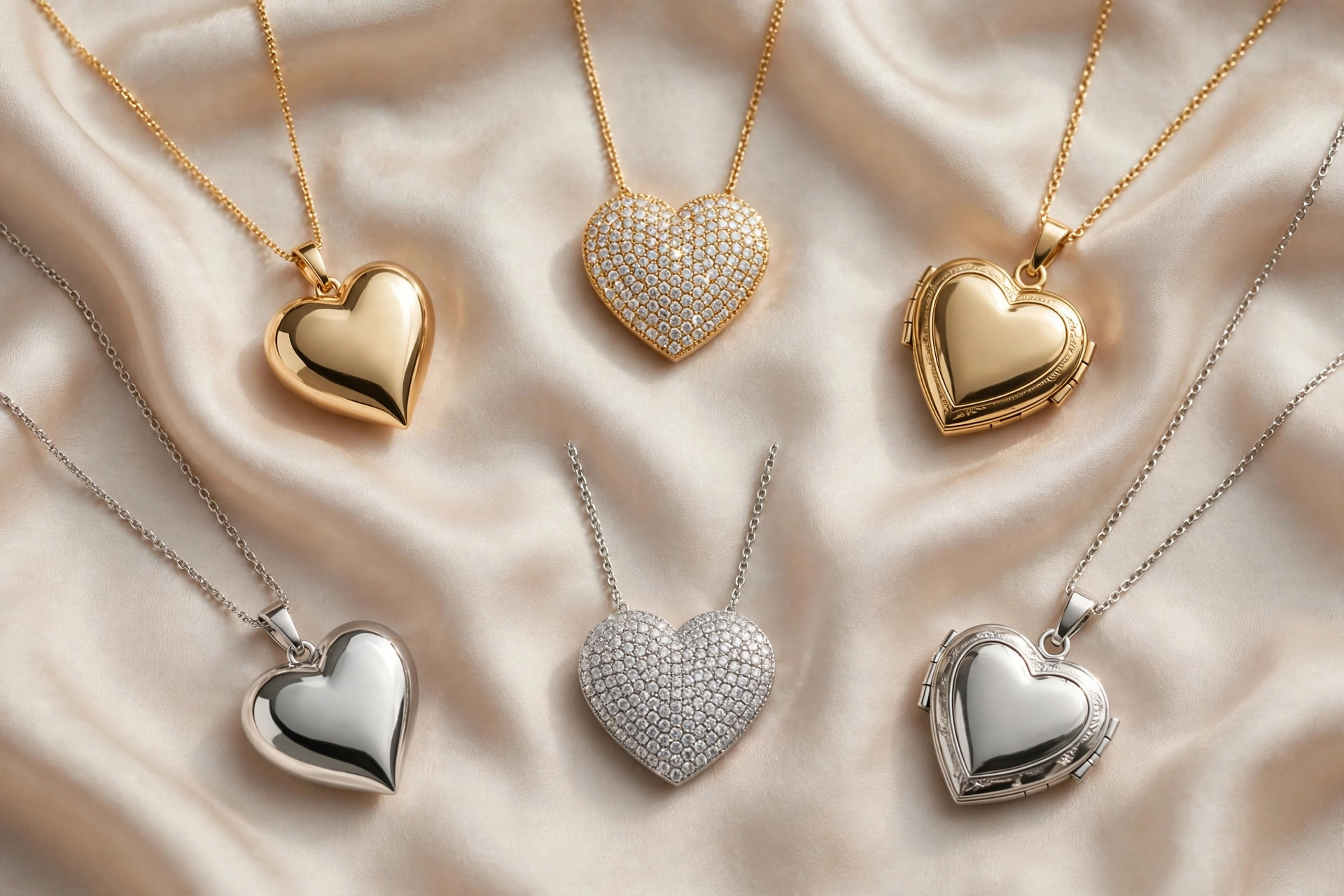
A heart design necklace is a jewelry piece that prominently features the symbol of a heart. The heart, a universal symbol of love, affection, and compassion, is an enduring motif in jewelry, often used to convey deep emotional connections and sentiments.
Key Features and Design Elements:
Heart Pendant:
The central feature of a heart design necklace is the heart-shaped pendant, crafted from various materials such as gold, silver, platinum, or adorned with gemstones.
Metal Choice:
The pendant and chain are typically made of precious metals like gold or silver. The choice of metal can influence the overall appearance and cost of the necklace.
Gemstone Embellishments:
Gemstones such as diamonds, rubies, sapphires, or even birthstones can be incorporated into the pendant to add sparkle and color.
The necklace can have different chain styles, such as a cable chain, rolo chain, box chain, or a delicate chain with links, depending on the design and desired aesthetics.
Size and Dimensions:
Heart pendants can vary in size, from small and dainty to bold and oversized, catering to different preferences.
Design Variations:
Classic Solid Heart:
A simple, solid heart-shaped pendant without gemstones or elaborate designs, showcasing the beauty of the heart shape.
Open Heart Design:
The heart pendant is 'open' or not fully enclosed, representing an open heart, often associated with being receptive to love and possibilities.
Heart Locket:
A heart-shaped pendant that opens to reveal a space for holding a small photo or keepsake, adding a personal touch.
Interlocking Hearts:
Two or more hearts intertwined or interlocked, symbolizing the connection and bond between individuals, often used in couple or friendship necklaces.
Heart and Key:
A heart-shaped pendant alongside a key, symbolizing unlocking love or secrets of the heart.
Symbolism and Occasions:
Love and Affection:
The heart symbolizes love, affection, and the deep emotional bond between individuals. It is often exchanged as a symbol of romantic love or platonic affection.
Gifts and Special Occasions:
Heart design necklaces are popular gifts for birthdays, anniversaries, Valentine's Day, Mother's Day, and other special occasions to express love and appreciation.
Self-Love and Empowerment:
Some individuals wear heart design necklaces as a symbol of self-love, empowerment, and a reminder to prioritize their own well-being and happiness.
A heart design necklace is a timeless and meaningful piece of jewelry that holds a special place in the hearts of many, symbolizing love, connection, and cherished relationships.
You may want to also learn about heart shape bracelets, heart shape rings and heart earrings.
Learn more about heart shaped jewelry and about Valentines Day jewelry.
Forms of the Heart
A puffed heart, rounded on both faces, catches light softly and suits younger wearers and casual chains, while a flat polished heart reads more tailored and takes engraving on its back. Pavé hearts cover the face with small diamonds or crystals for evening sparkle, and birthstone hearts, one stone per child or family member, turn the pendant into a family record. Victorian-style hearts add crowns, bows or floral engraving, and antique heart pendants and charms remain a collected category in their own right.
Scale decides the mood: a small heart of 10 to 15 millimeters is an everyday token that layers easily, while a large heart is a statement pendant that wants a simple chain and a plain neckline. Check that the bail is centered so the heart hangs level, a small defect that is obvious in this symmetrical form, and that polished faces, which show every scratch, will be stored in a pouch rather than loose with other jewelry.
Common Questions
What occasions suit a heart necklace gift?
Romantic milestones are the classic occasions: Valentine's Day, anniversaries, engagements and birthdays, and hearts are also given by parents to children and between close friends. Because the heart reads instantly as affection, the occasion needs little explanation, which is part of the form's staying power. A card or engraving can name the specific meaning the giver intends.
What is an open heart necklace?
An open heart pendant shows the heart as an outline, with the interior empty, often tilted or flowing asymmetrically, and frequently set with small diamonds or left in plain polished gold or silver. The open form wears lighter and more modern than a solid heart and layers well with other chains, since its center does not compete with a second pendant.
Can a heart pendant be engraved?
Solid hearts with a flat back engrave well with initials, a date or a short word; the back is the usual place, keeping the face clean. Pavé and open hearts have little engravable surface, and locket hearts personalize better with the photo or note placed inside. Ask the jeweler before purchase if engraving matters, since stone settings and hollow construction limit some designs.