Heart Shaped Rings
A heart-cut stone or a heart worked into the band
A heart shaped ring puts the heart at the center of the design, either as a heart-cut gemstone with a pointed tip and a cleft at the top, or as a heart motif formed in the band, shoulders or gallery. A cut stone lives or dies by symmetry: the two lobes must match, the point must sit centered, and uneven cutting shows at once in a shape this familiar. The point and cleft are also the vulnerable places, needing a setting that shields the tip without hiding the outline. As a universal sign of love, the heart suits promise, engagement and anniversary rings and is the classic choice for Valentine's Day. This guide covers the heart cut, motif designs, setting protection, proportions and care, and how to judge a well-made heart at a glance.
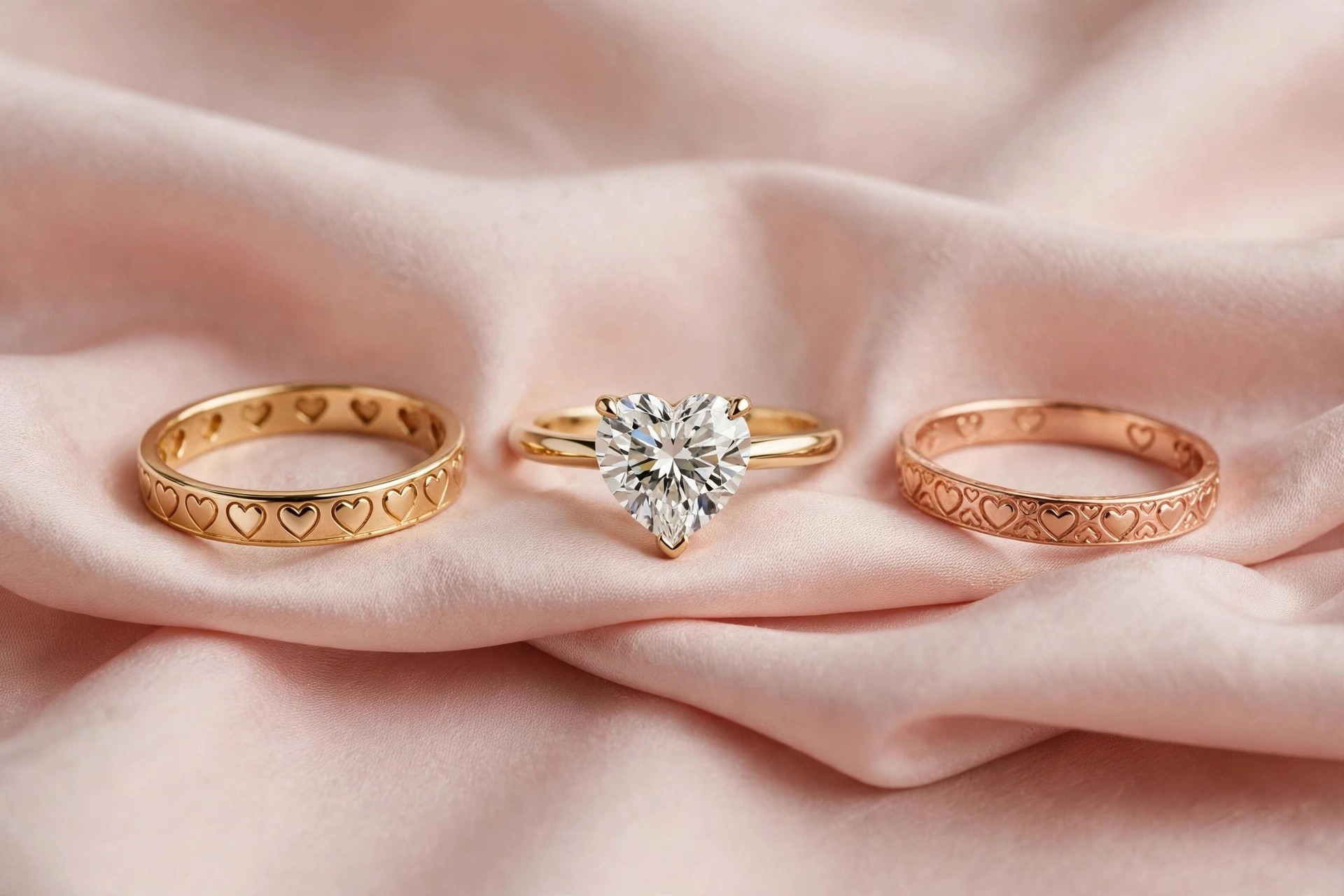
Heart Shape Design Rings: Symbolism and Cultural Significance
Symbolism:
Heart shape design rings are iconic symbols of love, romance, and affection. The heart is universally recognized as a representation of love and emotion, making heart-shaped rings a powerful and popular choice to express one's feelings for another. The design itself, resembling the silhouette of a heart, symbolizes not only romantic love but also compassion, care, and unity. It's a timeless emblem that conveys deep affection and emotional attachment.
Cultural Significance:
Western Culture: In Western cultures, the heart shape has long been associated with love and devotion. It gained immense popularity during the Middle Ages and the Renaissance. The heart symbol as we know it today became firmly entrenched in Western culture during the 18th century.
Eastern and Asian Cultures: The heart shape is also becoming more prevalent in Eastern cultures due to globalization and the influence of Western media. It is particularly popular among younger generations and in the context of modern expressions of love and affection.
Historical and Traditional Contexts: While the heart shape is now a universal symbol of love, historically, its origins are debated. Some believe it originated from the ancient silphium plant's seed, which was used as a contraceptive in ancient times, and was associated with love and sexuality.
Heart shape design rings are often chosen for engagements, weddings, anniversaries, and other special occasions to symbolize the deep love and commitment between individuals. They serve as a visible and heartfelt reminder of the bond and affection shared between couples. Whether in the form of a solitaire heart-shaped gemstone or intricate heart-inspired designs, these rings hold a special place in the world of jewelry, carrying the timeless sentiment of love and connection.
Popularity of Heart Shape Rings and Jewelry for Valentine's Day
Heart shape rings and other heart-themed jewelry are incredibly popular for Valentine's Day, and there are several reasons for this:
Symbolism of Love: The heart is universally recognized as a symbol of love and affection. Gifting a heart-shaped ring or jewelry on Valentine's Day is a way to visually represent the love and deep emotional connection between partners.
Romantic Gesture: Valentine's Day is a celebration of love and romance. Heart-shaped jewelry, especially rings, are considered romantic and thoughtful gifts, perfect for expressing love on this special occasion.
Timeless and Classic Design: Heart-shaped jewelry, particularly rings, is timeless and classic in design. The enduring appeal of this design makes it a popular choice, not just for Valentine's Day, but for expressing love throughout the year.
Variety and Versatility: Heart shapes can be incorporated into various types of jewelry, including rings, pendants, earrings, and bracelets. This versatility allows for a wide range of gift options, catering to different preferences and styles.
Sentimental Value: Heart shape rings are not just aesthetically pleasing; they also carry a strong emotional and sentimental value. They signify the deep love and emotional connection between the giver and the recipient, making them a meaningful gift for Valentine's Day.
Gifting Tradition: Over the years, heart-shaped jewelry has become a traditional and expected gift for Valentine's Day. The tradition is perpetuated by jewelry stores and retailers, emphasizing the association between hearts and love during this romantic holiday.
Expressing Commitment: Rings, in particular, are often associated with commitment and promises. Giving a heart-shaped ring on Valentine's Day can symbolize a commitment to love and cherish the other person, reinforcing the bond between the couple.
In summary, heart-shaped rings and jewelry are popular for Valentine's Day because they encapsulate the essence of love and romance, making them ideal gifts to celebrate and express affection on this special day dedicated to love.
Learn about heart shape necklace designs, heart shape earrings, and heart shape bracelets.
You may want to learn more about heart shaped jewelry which may also be considered as Valentines Day design jewelry.
That might be love ringing in your ears.
Motif Hearts and Proportions
Not every heart ring carries a heart-cut stone. Motif designs form the heart in metal: a heart-shaped bezel around a round stone, hearts cut or engraved into the shoulders, interlocking hearts in the gallery, or a band that curves into a heart at its center. Motif hearts keep a round or oval stone's easier sparkle and durability while still carrying the symbol, and they suit promise rings and stackable bands especially well. The Irish Claddagh ring, with its heart held by two hands beneath a crown, is the best-known traditional form, standing for love, friendship and loyalty.
For a cut stone, proportions decide whether the heart looks classic, plump or elongated. A length-to-width ratio near 1 to 1 gives the familiar full heart; slightly wider stones look sweet and show the cleft well, while longer, narrower hearts look elegant but risk a pinched point and a less distinct notch. Table and depth percentages in line with good round cutting help brightness, and a visible dark bow-tie across the center is common in hearts, so choose a stone whose bow-tie stays faint in normal light.
Common Questions
What should I check in the symmetry of a heart-cut stone?
Viewed face up, the two rounded lobes should be the same size and height, the cleft between them sharp and centered, and the point directly opposite the cleft on the stone's center line. The outline should curve smoothly with no flat spots or bulges, and the wings should not look pinched or overly round. Even small mismatches are obvious in a heart, so compare several stones and reject any that looks lopsided at arm's length.
How should a heart-cut stone be set to protect it?
The point is the fragile part and the first place to chip, so a good setting guards it with a V-shaped prong or a small bezel cap that follows the tip. The cleft also needs a prong placed to hold it without sitting down inside the notch and splitting the stone. A low, secure setting suits daily wear better than a high one, and the prongs should frame the outline rather than distort it.
Is a heart shaped ring suitable as an engagement ring?
Yes, for a wearer who loves the shape: a heart-cut diamond or colored stone in a protective setting works as an engagement ring and reads unmistakably as a romantic choice. Practical points are size, since a heart needs enough width, usually at least half a carat in diamond, for the shape and cleft to read clearly, and orientation, with the point worn toward the fingertips or toward the wrist by preference.