Semi-Precious Gemstone Necklaces
The wide world of color beyond the precious four
Semi-precious is the traditional label for every gem except diamond, sapphire, ruby and emerald, a large family that includes amethyst, citrine, garnet, peridot, topaz, tourmaline, aquamarine, opal, turquoise, jade and dozens more. In necklaces this family does the colorful work: because the stones are more plentiful, pendants can be large, strands and beads affordable, and a wardrobe of necklaces in different colors realistic. The stones differ widely in hardness and care needs, from hard quartz and topaz to soft opal and turquoise. This guide surveys the main semi-precious necklace stones, how to choose among them by color, durability and price, common treatments, and care by family.
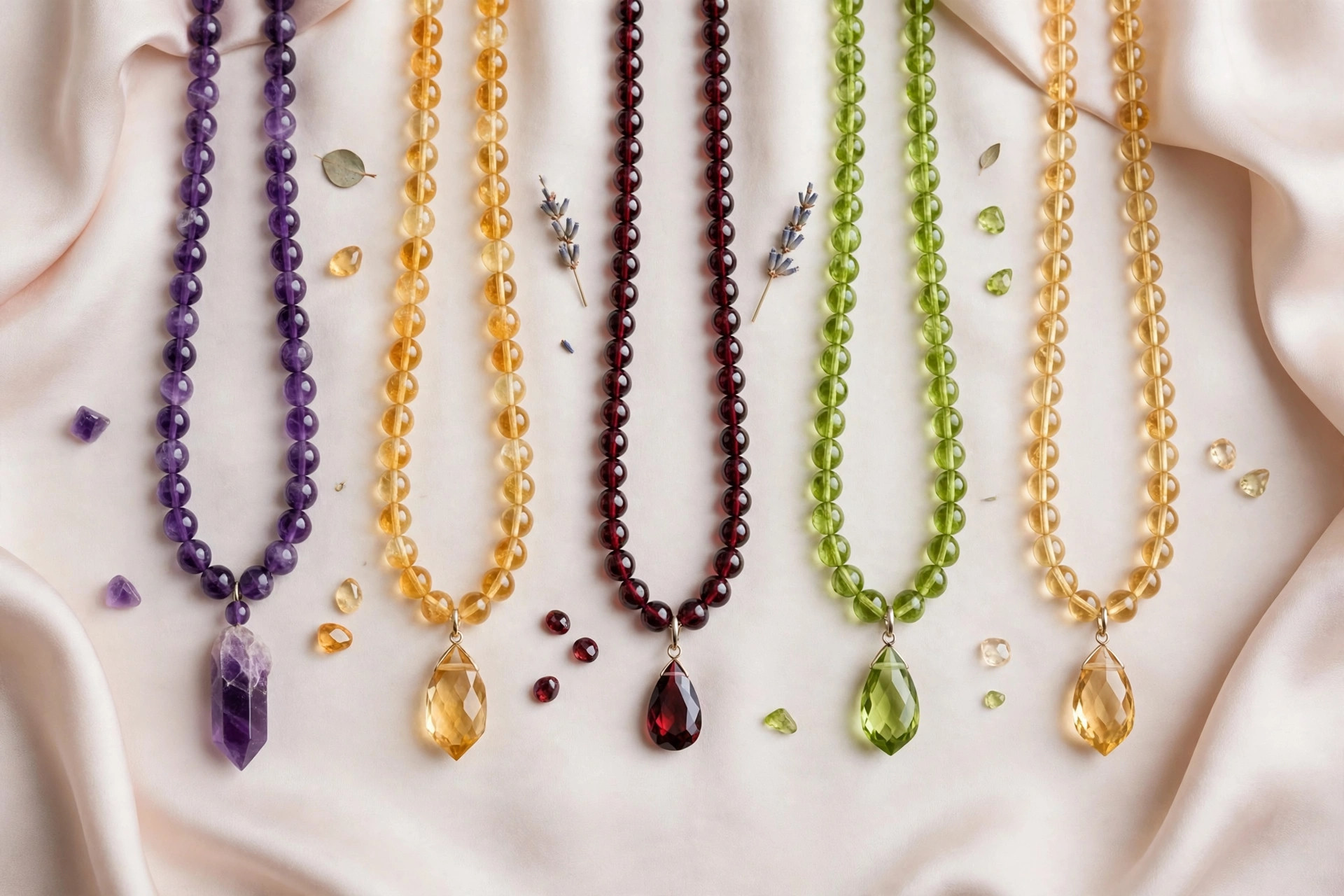
Semi-Precious Gemstone Necklaces: A World of Colors and Variety
Semi-precious gemstone necklaces are jewelry pieces adorned with gemstones that are esteemed, though not as rare or valuable as precious gemstones like diamonds, rubies, sapphires, or emeralds. Despite being termed "semi-precious," these gemstones are prized for their beauty, unique characteristics, and versatility in jewelry design.
Variety of Semi-Precious Gemstones:
Semi-precious gemstones encompass a wide array of minerals, each with distinct colors, patterns, and properties. Some popular semi-precious gemstones include amethyst, garnet, citrine, peridot, turquoise, agate, jade, moonstone, and quartz, among many others.
Color and Aesthetics:
Semi-precious gemstones offer a diverse palette of colors, ranging from vivid and vibrant to subtle and pastel tones. These hues provide endless possibilities for creating jewelry that complements different outfits and occasions.
Historical and Cultural Significance:
Throughout history, various cultures have valued semi-precious gemstones for their symbolic and healing properties. For instance, ancient Egyptians revered amethyst for its spiritual significance, and jade was highly esteemed in Chinese and Mesoamerican cultures.
Designs and Styles:
Semi-precious gemstone necklaces come in a wide range of designs, catering to various tastes and preferences. Some popular styles include:
Beaded Necklaces: Strands of semi-precious gemstone beads, often with graduated sizes, creating a classic and versatile design.
Pendant Necklaces: Featuring a single semi-precious gemstone or a cluster of gemstones set in a pendant, enhancing the focus on the gemstone's beauty.
Multi-Stone Necklaces: Incorporating multiple semi-precious gemstones, either in a pattern or randomly arranged, adding visual interest and variety to the necklace.
Appeal to Consumers:
Affordability: Semi-precious gemstone necklaces are generally more affordable than those adorned with precious gemstones, allowing consumers to own and enjoy a variety of gemstone jewelry.
Personal Connection: Many individuals are drawn to specific semi-precious gemstones due to their symbolism, perceived healing properties, or personal resonance with the gemstone's energy.
Fashion and Versatility: Semi-precious gemstone necklaces align with fashion trends and can be easily incorporated into everyday wear, providing a versatile accessory for different occasions.
Craftsmanship and Creativity:
Jewelry designers often enjoy working with semi-precious gemstones due to their abundance and versatility. They have the creative freedom to experiment with various colors, shapes, and sizes, allowing for diverse and imaginative designs.
Pros and Cons for Jewelry Designers and Manufacturers: Semi-Precious Gemstones vs. Precious Gemstones in Necklaces
Working with Semi-Precious Gemstones:
Pros:
Affordability: Semi-precious gemstones are generally more affordable than precious ones, making them a cost-effective choice for designers to experiment with various designs and cater to a broader market.
Variety: Semi-precious gemstones offer a vast array of colors, shapes, and textures, allowing designers to create diverse and eye-catching pieces. This variety provides ample room for creativity.
Versatility: Semi-precious gemstones can be incorporated into both casual and formal jewelry, making them versatile materials for creating necklaces suitable for various occasions.
Ease of Sourcing: Semi-precious gemstones are often more readily available and accessible from a wider range of suppliers, reducing lead times and production challenges.
Customization: Jewelry designers can collaborate with clients to create personalized pieces using semi-precious gemstones that hold personal significance or meaning.
Cons:
Durability: Semi-precious gemstones are generally softer and less durable than precious ones, which can affect the longevity of the jewelry. Designers need to consider this when creating pieces that may be subject to wear and tear.
Value Perception: The lower market value of semi-precious gemstones may affect how the jewelry is perceived in terms of quality and exclusivity, potentially limiting pricing options.
Working with Precious Gemstones:
Pros:
Luxury Appeal: Precious gemstones like diamonds, rubies, sapphires, and emeralds are synonymous with luxury and prestige. Jewelry featuring these stones often commands higher prices and is associated with high-end brands.
Investment Value: Precious gemstones can appreciate in value over time, making them attractive for both designers and consumers as potential investments.
Durability: Precious gemstones are usually harder and more durable, ensuring that the jewelry remains in good condition for longer periods, even with regular wear.
Heritage and Tradition: Precious gemstones have a rich history of being used in jewelry, which can add cultural and historical significance to the pieces, making them more appealing to certain buyers.
Cons:
Cost: The primary drawback of working with precious gemstones is their high cost. This can limit the affordability and accessibility of the jewelry, potentially narrowing the target market.
Limited Variety: Precious gemstones have a more limited range of colors compared to semi-precious ones. Designers may need to rely on the intrinsic appeal of these stones rather than their color diversity.
Ethical and Environmental Concerns: The mining and sourcing of precious gemstones can raise ethical and environmental concerns, which may affect the reputation and practices of designers and manufacturers.
In summary, the choice between semi-precious and precious gemstones for necklace design involves a balance of factors related to cost, aesthetics, durability, and market positioning. Designers and manufacturers often consider their target audience, budget, and design vision when deciding which category of gemstones to work with in their jewelry creations. Both semi-precious and precious gemstones offer unique opportunities for creativity and craftsmanship in the world of jewelry design.
Shopping for Semi-Precious Gemstone Necklaces:
Semi-precious gemstone necklaces can be found in jewelry stores, boutiques, craft fairs, and online platforms. Look for reputable sellers who provide information about the gemstones, their origin, and any treatments they may have undergone.
Semi-precious gemstone necklaces offer an affordable and vibrant way to add color and style to one's jewelry collection. With an extensive array of gemstones to choose from, each with its own unique allure, these necklaces allow individuals to express their personality and preferences through the beauty of gemstones.
You may want to read more about semi-precious gem earrings and semi-precious gemstone bracelets.
Learn more about the meaning of semi-precious gemstones here in the Apparel Search jewelry guide.
Choosing by Color and by Stone
The practical way into this family is by the color wanted, then by the stone that gives it best at the budget: purple from amethyst, gold-yellow from citrine, red from garnet, green from peridot or tourmaline, blue from topaz, aquamarine or tanzanite, pink from tourmaline, rose quartz or morganite. Each of those stones has its own guide in this section where it is a necklace stone in its own right, covering its color range, treatments and care, because the differences, topaz's cleavage, opal's water sensitivity, turquoise's porosity, decide how a necklace should be made and kept.
Formats favor this family: big faceted pendants, cabochon drops, tumbled and faceted bead strands, and multi-stone necklaces that run a rainbow of small stones along a chain, a design precious stones could rarely justify. Mixed-metal settings and silver keep prices in the gift range, while gold work turns the same stones into fine jewelry. For most buyers, semi-precious necklaces are where a jewelry collection actually gets built.
Common Questions
Which semi-precious stones suit a necklace worn daily?
The quartz family, amethyst and citrine at hardness 7, and topaz at 8, take daily pendant wear well, as do garnet and tourmaline with ordinary care. Softer or more sensitive stones, opal, turquoise, lapis and pearl-like materials, are better in occasional-wear pendants or protected settings. A pendant always has an easier life than a ring, so the daily-wear list at the neck is longer than for other jewelry.
Are semi-precious stones treated?
Many are, as a normal part of the trade: citrine is usually heat treated, blue topaz is irradiated and heated, tanzanite is heated, and turquoise is often stabilized. These treatments are accepted when disclosed, and most are permanent. The stones in this section's individual guides each name their usual treatments, which is the right level of detail to ask a seller about before buying a significant piece.
Why do semi-precious necklaces cost so much less than precious ones?
Supply. Most semi-precious stones occur in far larger quantities and sizes than fine diamond, sapphire, ruby and emerald, so material cost is low and the price of a necklace sits mainly in its metal and making. That is a buyer's advantage: color, scale and design are affordable, and the exceptions, fine tsavorite, demantoid garnet, red tourmaline and top natural stones, prove the rule by commanding precious-level prices.