Peridot Necklaces
The yellow-green August birthstone
Peridot is the gem variety of olivine, a magnesium iron silicate colored by iron itself, so its color is always in the yellow-green range, from pale lime to a deep bottle green in the finest stones. It is the August birthstone, historically mined on Zabargad island in the Red Sea and today supplied mainly by Arizona, China, Pakistan and Myanmar. Peridot has strong double refraction, visible as a doubling of the back facets in larger stones, and a characteristic oily luster. This guide covers peridot color judgment, necklace styles, its moderate hardness and what that means for settings, and care, including why peridot is an evening stone in old jeweler's language.
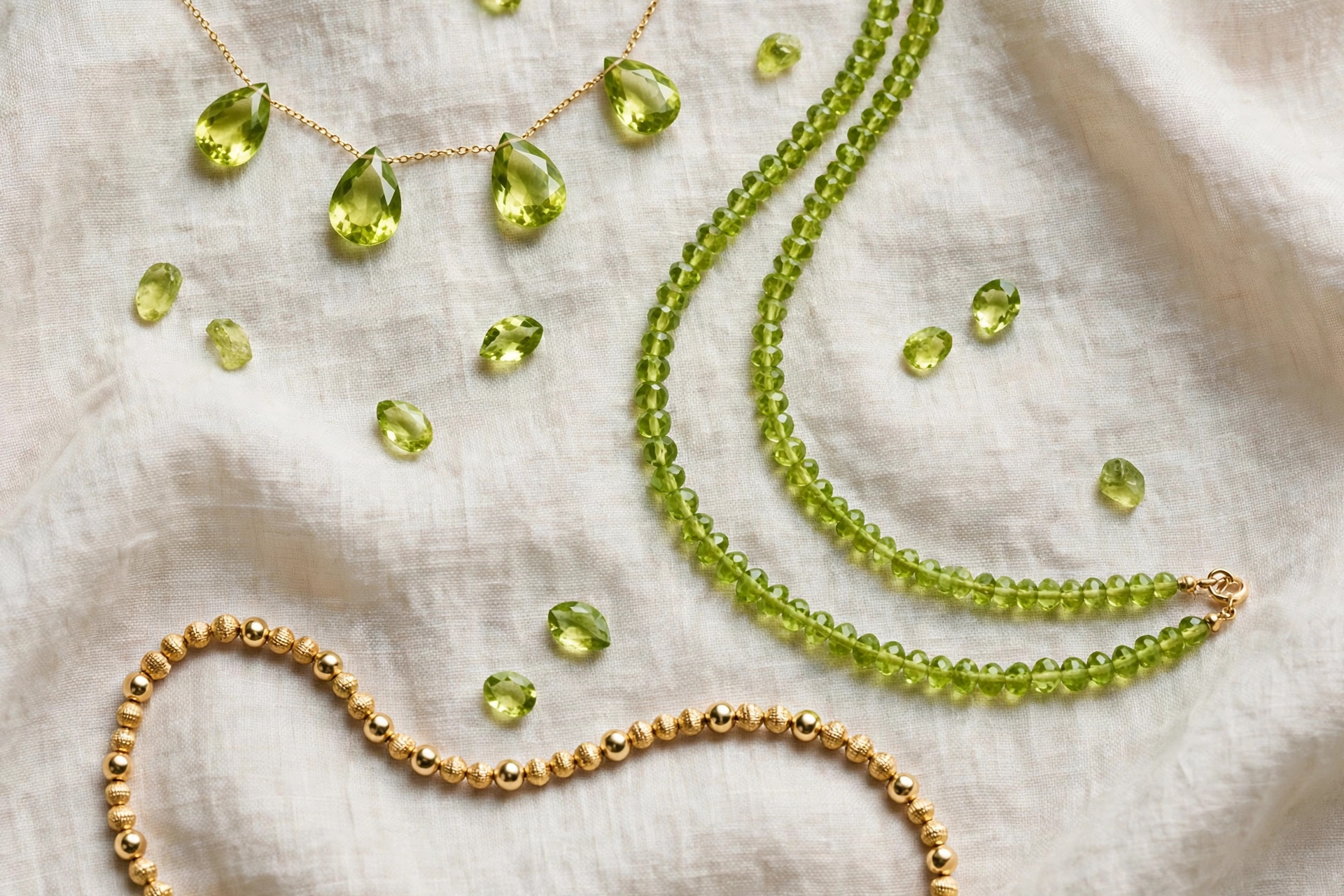
Peridot Necklaces: The Green Gem of Light and Prosperity
Peridot necklaces feature the enchanting gemstone peridot, known for its vibrant green hue and historical significance. These necklaces showcase the natural beauty of peridot and are beloved for their elegant and eye-catching appeal.
Geological Properties of Peridot:
Peridot, a variety of the mineral olivine, is a silicate mineral with a chemical composition of (Mg,Fe)2SiO4. Its green color comes from the presence of iron in its crystal structure. Peridot is one of the few gemstones that only occurs in one color: green. It typically forms in igneous rocks such as basalt, as well as in some metamorphic rocks.
Occurrence and Mining:
Peridot is found in various parts of the world, including the United States (Arizona and Hawaii), Egypt, Pakistan, China, Myanmar, and Mexico. It's often mined from volcanic rocks and is sometimes extracted from meteorites. The mining process involves locating and excavating peridot-rich areas, followed by extraction, cutting, and polishing to create gem-quality peridot for use in jewelry.
Historical Significance:
Peridot has a rich history dating back thousands of years. It was prized by ancient civilizations, including the Egyptians, Greeks, and Romans. The Egyptians called it the "gem of the sun" and believed it brought protection and good luck. Cleopatra was said to have adored peridot, considering it her favorite gemstone. In ancient times, peridot was often used to adorn religious artifacts and royal jewelry.
Symbolism and Significance:
Peridot is associated with prosperity, good fortune, and happiness. It is believed to promote balance and harmony, alleviate stress, and inspire creativity. Its vivid green color is reminiscent of nature, making it a symbol of renewal and growth. Peridot is also the birthstone for August, further enhancing its symbolic meaning and popularity.
Peridot Necklaces:
Peridot necklaces often feature a variety of cuts, including round, oval, pear, and cushion cuts, allowing for diverse designs. Peridot is usually set in gold or silver settings to accentuate its vibrant green color. The gemstone can be used in single-stone pendants, multi-stone designs, or combined with other gemstones for added brilliance.
Jewelry designers utilize peridot for several compelling reasons, and its appeal to consumers is multifaceted, encompassing both aesthetic and symbolic aspects.
Vibrant Green Color:
Peridot's vibrant green color is its primary allure. The hue ranges from a lively, bright green to a deeper, more intense green. This color is unique among gemstones, and its vibrant nature immediately catches the eye. The green of peridot is associated with vitality, growth, and renewal, making it an appealing choice for those who appreciate the connection to nature.
Affordable Elegance:
Peridot is relatively affordable compared to some other gemstones, making it an accessible option for a wide range of consumers. It offers an opportunity for individuals to adorn themselves with a beautiful gemstone without breaking the bank, making it particularly popular among budget-conscious consumers.
Versatility in Design:
Peridot's versatility allows jewelry designers to use it in various styles and settings. Whether it's a delicate pendant, a bold statement necklace, or even incorporated into vintage-inspired designs, peridot complements a range of settings and metal types, providing designers with creative freedom to craft unique and appealing pieces.
Widely Available:
Peridot is found in various parts of the world, making it more accessible to both designers and consumers. This widespread availability ensures a steady supply and a variety of quality options for consumers to choose from, contributing to its popularity in jewelry.
Birthstone Appeal:
Peridot is the birthstone for August, making it a popular choice for individuals born in this month or those looking for meaningful gifts. Birthstone jewelry holds sentimental value and is often sought after as a personal and thoughtful gift.
Overall, the appeal of peridot lies in its mesmerizing green color, its affordability without compromising elegance, its symbolic significance, and its versatility in design. Consumers are drawn to peridot for its unique beauty and the opportunity to own a striking gemstone that aligns with their style, beliefs, or simply their love for the color green.
Peridot necklaces represent more than just jewelry; they embody centuries of tradition, symbolism, and beauty. With its captivating green hue and historical significance, peridot continues to be a favored gemstone for creating stunning necklaces that resonate with wearers seeking a blend of elegance and meaning.
You may also have interest in peridot earrings, peridot rings and peridot bracelets.
Green at Moderate Cost
Peridot's commercial virtue is size: clean, well-colored stones exist in pendant sizes at prices far below emerald, so peridot necklaces can carry a single large faceted stone, a cluster, or a strand of peridot beads and rondelles that give a whole neckline of green. Arizona material tends to lighter yellow-green, Pakistani and Burmese stones to the deepest greens, and origin is a matter of color preference rather than a quality grade in itself.
Yellow gold is the classic pairing, warming the green; silver and white gold cool it toward lime. In multi-stone necklaces peridot sits naturally with citrine and amethyst, its fellow quartz-era companions in birthstone jewelry, August with November and February. Judge a peridot pendant for even color through the stone, a cut that returns light to the face rather than leaking it at the edges, and a setting that guards a stone which, while not fragile, rewards ordinary care.
Common Questions
What color peridot is most valued?
A saturated, pure green with only a light yellow modifier and no brown, at a medium depth that still flashes in low light. Pale lime stones cost less and suit delicate pendants; very dark stones can go inky. Peridot color does not vary by lighting type as dramatically as some gems, which makes it easy to judge in a shop, but its green should stay lively against the skin at the neck.
Is peridot durable enough for a necklace?
Peridot is about 6.5 to 7 on the Mohs scale with fair toughness, so a pendant, which avoids knocks, is a safer setting than a ring. Bezel and halo settings protect its edges. It dislikes sudden temperature change and acids, so clean it in lukewarm soapy water only, never steam or ultrasonic cleaners, and take it off for swimming and household cleaning.
Why is peridot called an evening emerald?
The nickname comes from its behavior in lamplight: peridot keeps its green bright under artificial light where some emeralds darken, so it was favored for evening jewelry in earlier centuries. The name is a compliment, not a classification: peridot is olivine, an entirely different and far less costly stone than emerald, and it should always be sold under its own name.