Stainless Steel Necklaces
Hard, non-tarnishing chains built for daily wear
Stainless steel necklaces are made from an iron alloy containing chromium, which forms an invisible protective layer that resists rust, corrosion and tarnish. Jewelry commonly uses 316L surgical-grade steel, valued for its hardness, scratch resistance and low nickel release, which makes it suitable for most people with sensitive skin. Steel holds a bright silver-grey finish without plating, polishing or special storage, and it costs a fraction of precious metal, so substantial curb, box, rope and Figaro chains are affordable in bold widths. That combination has made steel a mainstay of men's necklaces and everyday unisex chains, often paired with pendants in brushed, matte, polished or black ion-plated finishes. This guide covers steel grades, chain styles, skin suitability, the honest limits of the metal, including its lower intrinsic value, and the simple cleaning it needs.
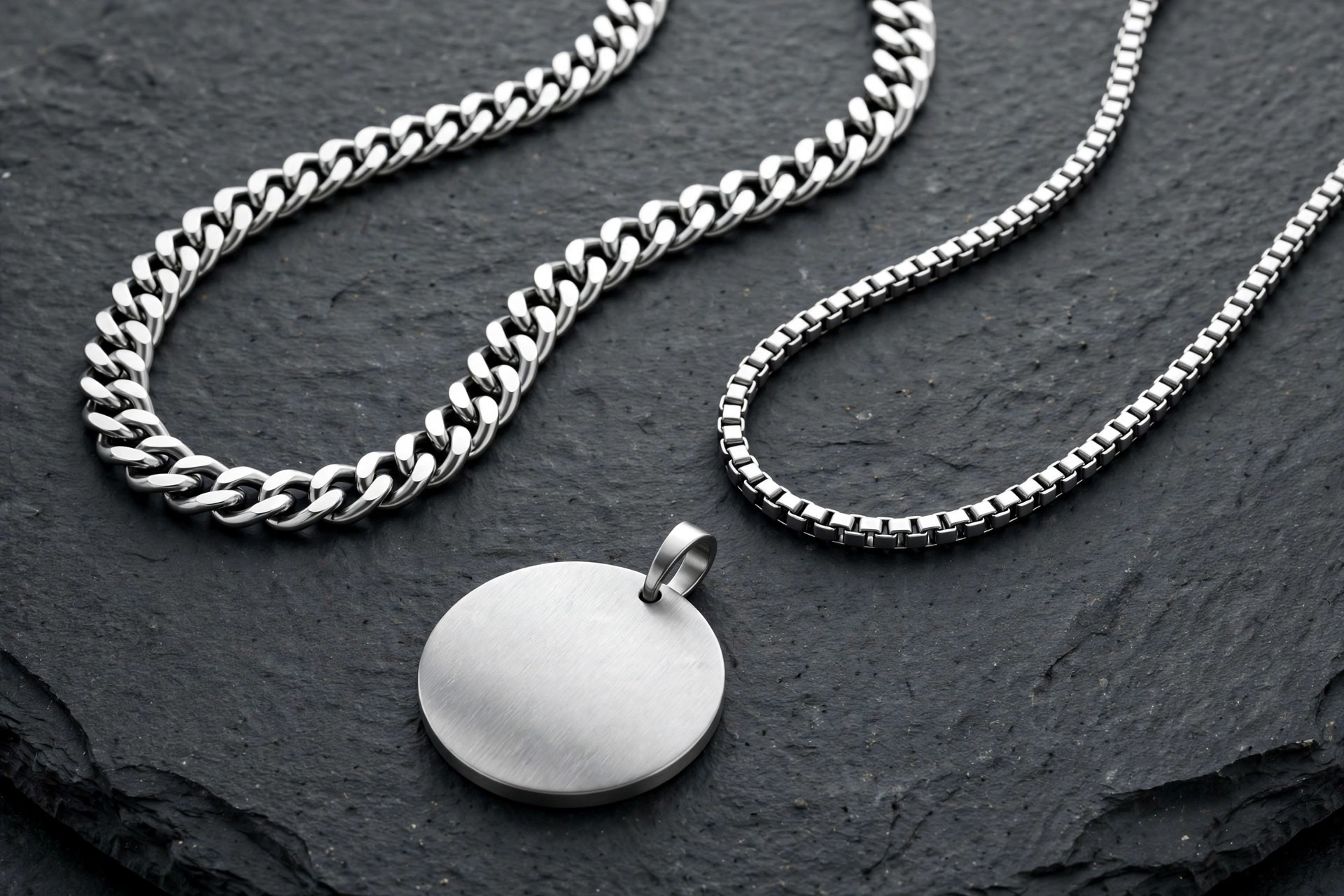
Stainless Steel Necklaces: A Modern Twist on Jewelry
Stainless steel necklaces have gained popularity as a modern and affordable alternative to traditional precious metal necklaces. Made from an alloy of iron, carbon, and other elements, stainless steel has become a favored material in jewelry due to its unique characteristics and versatility.
Pros of Stainless Steel Necklaces:
Durability and Longevity:
Stainless steel is highly durable and resistant to tarnish, rust, and corrosion. It retains its shine and appearance over time, making stainless steel necklaces a long-lasting choice.
Affordability:
Stainless steel is significantly more affordable than precious metals like gold, silver, platinum, and titanium, making it accessible to a broader range of consumers.
Hypoallergenic:
Stainless steel is hypoallergenic and safe for most individuals with metal allergies or sensitive skin. It's a suitable choice for those who cannot wear jewelry made from certain other metals.
Versatility:
Stainless steel can be easily manipulated into various designs, from
simple and classic styles to bold and intricate patterns. It allows for a
wide range of design options in jewelry.
Low Maintenance:
Stainless steel necklaces require minimal maintenance. They can be cleaned using warm water and mild soap, making them a practical choice for everyday wear.
Resistance to Damage:
Stainless steel is highly scratch-resistant, making it ideal for those leading an active lifestyle or working in environments that might expose the necklace to potential damage.
Cons of Stainless Steel Necklaces:
Lack of Value Appreciation:
Unlike precious metals, stainless steel does not appreciate in value over
time. It's considered more of a fashion accessory rather than an investment.
Less Prestige:
Stainless steel, while durable and practical, does not carry the same prestige and status associated with precious metals like gold, silver, or platinum.
Weight and Feel:
Some individuals prefer the weight and feel of precious metals, which can be different from stainless steel. Stainless steel might feel lighter or less substantial compared to heavier precious metal necklaces.
Limited Color Options:
Stainless steel primarily comes in a silver-gray color, limiting the options for those seeking a different color or hue in their jewelry.
Comparison with Precious Metal Necklaces:
Cost:
Precious metal necklaces, such as gold and platinum, tend to be more
expensive compared to stainless steel. Stainless steel offers a
budget-friendly option while maintaining durability and appearance.
Durability:
Stainless steel is highly durable and does not tarnish, making it more resilient to wear and tear compared to some precious metals.
Aesthetics:
Precious metal necklaces often carry a traditional and elegant appeal, while stainless steel necklaces offer a modern and contemporary look suitable for various styles.
In summary, stainless steel necklaces provide a durable, affordable, and stylish option in the world of jewelry. While they may lack the intrinsic value and prestige associated with precious metals, they offer a practical and attractive choice for those seeking fashion-forward accessories without breaking the bank.
You may want to also learn about steel bracelets and steel earrings.
Learn about jewelry base metals.
Learn more about metals used for jewelry.
It is good to use steel, but please don't ever steal necklaces.
Chain Styles Where Steel Excels
Steel's hardness suits precisely machined chain links. Curb and Cuban chains in 5 to 12 millimeter widths are the dominant men's styles, lying flat with a weight silver would make expensive and gold prohibitive; box, wheat and rope chains give finer options for pendants. Because steel is hard to resize and repair compared with precious metals, length at purchase matters: 20 to 22 inches is the common men's middle, sitting below the collarbone, while 18 inches reads as a close collar fit.
Finishes extend the range beyond silver-grey. Polished steel is bright and reflective, brushed and matte finishes hide fingerprints and read more industrial, and ion plating adds black, gold-tone and rose-tone surfaces that are considerably more durable than conventional plating on soft metals, though they can still wear at clasp and link contact points over years. Clasps deserve a check: a solid lobster or box clasp matched to the chain's weight is a reliable sign the necklace was built for the daily wear steel promises.
Common Questions
Is stainless steel really hypoallergenic for necklaces?
Jewelry-grade 316L stainless steel releases very little nickel and is tolerated by most wearers, including many who react to costume jewelry and some silver alloys. It is not completely nickel-free, so someone with a confirmed severe nickel allergy should test a piece against the skin or choose titanium or niobium instead. Unspecified fashion steel varies more, so the grade marking matters.
Will a stainless steel necklace tarnish or rust?
In normal wear, no. The chromium oxide layer reforms when scratched and blocks the tarnish and rust that affect silver and plated metals. Prolonged exposure to seawater, chlorinated pools or harsh chemicals can still stain lower grades, so rinse after swimming and dry the chain. Quality 316L necklaces routinely keep their finish for years with only soap-and-water cleaning.
Why do stainless steel necklaces cost so much less than silver?
Steel is an industrial metal produced in large volume, so material cost is low and most of the price reflects machining, polishing and finishing rather than metal value. That means a heavy, well-made steel chain can sell for less than a fine silver one. The trade-off is resale and intrinsic value: steel necklaces are bought for wear, not investment.