Stainless Steel Earrings
Durable, tarnish-resistant and easy to wear
Stainless steel earrings use an iron alloy containing chromium, often with nickel or molybdenum, that resists tarnishing, corrosion and scratching far better than softer jewelry metals. The result is a hard-wearing, affordable earring suited to daily wear: studs, hoops, barbells and modern geometric designs in polished, brushed and black or gold-tone coated finishes. Surgical-grade steels are widely used for posts and for sensitive ears. This guide covers what stainless steel is, the hypoallergenic question and what grade to look for, the main earring styles and finishes, how steel compares with titanium and sterling silver, and the minimal care steel needs. Weight is the one trade-off to check: steel is denser than titanium, so very large designs should be tried for comfort.
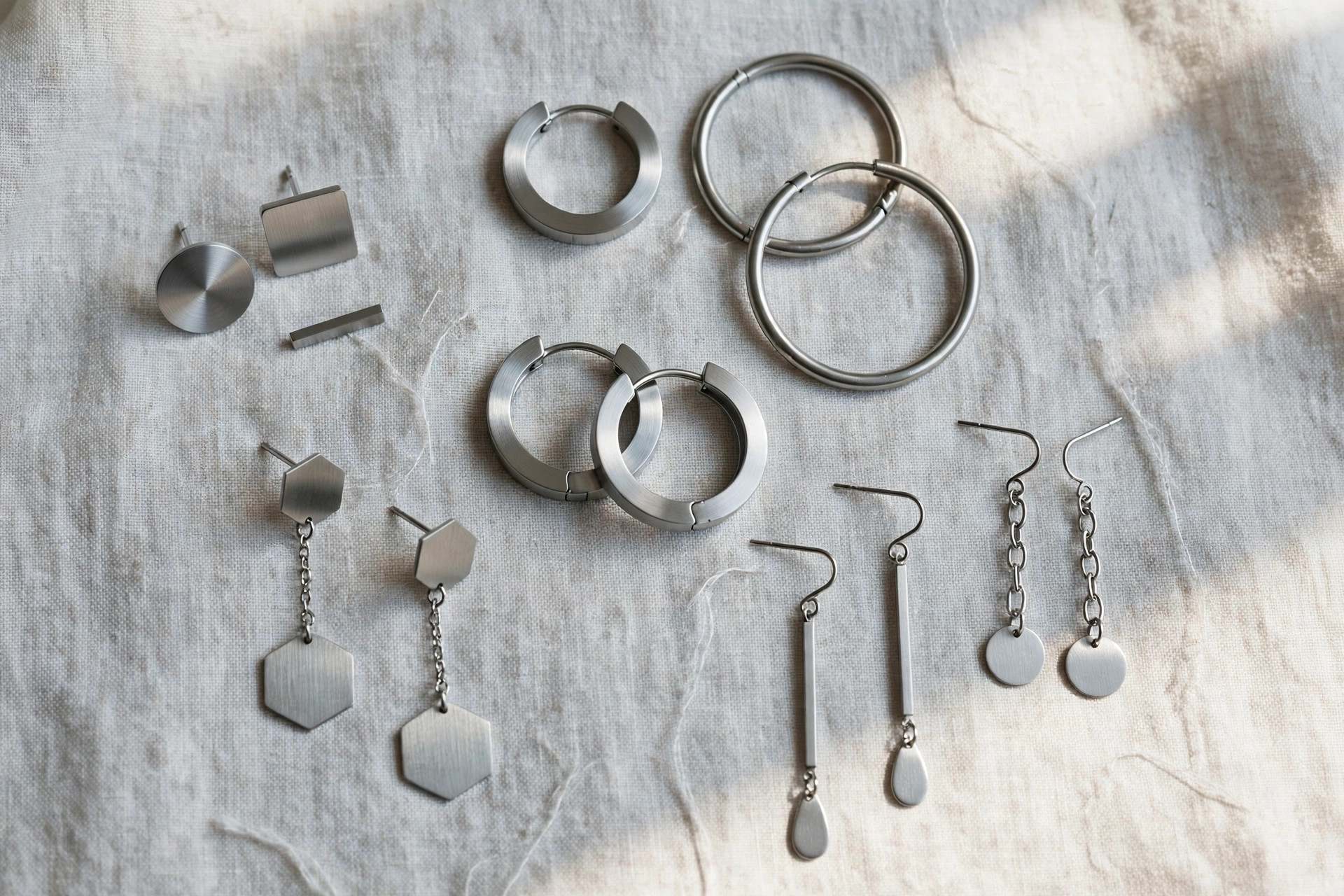
Stainless Steel Earrings: Durable, Stylish, and Hypoallergenic
Stainless steel earrings have gained popularity in the world of fashion and jewelry due to their impressive combination of durability, style, and hypoallergenic properties. These earrings are favored by individuals who appreciate high-quality jewelry that can withstand the test of time, offer a range of designs, and provide a safe and comfortable wearing experience.
Properties of Stainless Steel:
Stainless steel is a metal alloy primarily composed of iron, chromium, and varying amounts of nickel, molybdenum, and other elements. The properties of stainless steel that make it a desirable material for earrings include:
Durability: Stainless steel is exceptionally durable and resistant to tarnishing, corrosion, and scratches. This makes it well-suited for everyday wear and long-lasting jewelry.
Hypoallergenic: High-quality stainless steel used in jewelry is often hypoallergenic, making it an ideal choice for individuals with sensitive skin or nickel allergies. It does not typically cause skin reactions or irritation.
Versatility: Stainless steel can be crafted into a wide range of earring designs, from simple studs to elaborate dangles and hoops. It is highly malleable, allowing for intricate and detailed designs.
Lustrous Finish: Stainless steel has a natural, lustrous finish that resembles white gold or platinum. It maintains its shine over time and does not require frequent polishing.
Affordability: Stainless steel earrings are often more affordable than precious metal alternatives like gold or platinum, making them accessible to a broad range of consumers.
Designs and Styles:
Stainless steel earrings offer an array of design possibilities to suit various preferences and occasions:
Stainless Steel Stud Earrings: These classic earrings feature a single stainless steel element, often in geometric shapes or adorned with gemstones. They are perfect for everyday wear.
Stainless Steel Hoop Earrings: Hoop earrings made of stainless steel can come in various sizes and designs, adding versatility and a touch of elegance to any outfit.
Stainless Steel Dangle Earrings: Dangle earrings showcase elements that hang gracefully from the earlobe, offering movement and sophistication. They come in a wide range of designs, from minimalist to artistic.
Stainless Steel Huggie Earrings: Huggie earrings have a close-fitting design that "hugs" the earlobe. They are comfortable and stylish, often used for casual or formal occasions.
Stainless Steel Statement Earrings: Statement earrings made of stainless steel can be bold and artistic, featuring unique shapes, patterns, and textures.
Care and Maintenance:
- Maintaining the beauty of stainless steel earrings is relatively simple:
- Clean them with mild soap and water or a specialized jewelry cleaner to remove dirt and oils.
- Avoid using abrasive materials or harsh chemicals that may scratch or damage the metal.
Pros and Cons of Using Stainless Steel vs. Precious Metals for Earring Manufacturing:
Stainless Steel:
Pros:
Durability: Stainless steel is highly durable, resistant to tarnish, corrosion, and scratches. This durability makes stainless steel earrings suitable for everyday wear.
Hypoallergenic: High-quality stainless steel is hypoallergenic and does not typically cause skin reactions, making it an excellent choice for individuals with sensitive skin or nickel allergies.
Affordability: Stainless steel is more budget-friendly than precious metals like gold or platinum, making it accessible to a broader range of consumers.
Versatility: Stainless steel can be easily manipulated and crafted into a variety of earring designs, allowing for intricate and detailed styles.
Low Maintenance: Stainless steel earrings require minimal maintenance. They maintain their lustrous finish over time and do not require frequent polishing.
Cons:
Not as Valuable: Stainless steel does not hold intrinsic value like precious metals. It may not be a suitable choice for those looking for investment pieces.
Limited Preciousness: While stainless steel has a lustrous appearance, it lacks the prestige and value associated with precious metals like gold, silver, or platinum.
Precious Metals (e.g., Gold, Silver, Platinum):
Pros:
Intrinsic Value: Precious metals have intrinsic value and can serve as investment pieces, maintaining or increasing in value over time.
Prestige: Precious metals are often associated with luxury, wealth, and prestige, making them desirable for high-end jewelry.
Timeless Appeal: Precious metals have a timeless and classic appeal that transcends fashion trends, making them suitable for heirloom pieces.
Variety: Precious metals come in various colors (e.g., white gold, rose gold, yellow gold) and purities, offering a range of options for customization.
Cons:
Cost: Precious metals are more expensive than stainless steel, which can limit accessibility for some consumers.
Tarnish and Wear: Precious metals, especially silver, can tarnish over time and may require regular cleaning and maintenance.
Potential Allergies: Some individuals may be allergic to certain metals used in precious metal alloys (e.g., nickel in white gold). Hypoallergenic versions are available but can be more costly.
Scratches: Precious metals are softer than stainless steel and are more susceptible to scratches and dents in everyday wear.
In summary, the choice between stainless steel and precious metals for earring manufacturing depends on individual preferences, budget, and the intended use of the jewelry. Stainless steel offers durability, affordability, and hypoallergenic properties, while precious metals offer intrinsic value, prestige, and timeless elegance. Both options have their merits, and the decision should be based on the wearer's priorities and needs.
Stainless steel earrings are an excellent choice for individuals seeking durable, stylish, and hypoallergenic jewelry. Their versatility, affordability, and resistance to tarnish and corrosion make them a popular and practical addition to any jewelry collection.
Learn about stainless steel bracelets.
Everyday Jewelry That Asks Almost Nothing
Stainless steel earned its place in earrings by being practical: put a pair of steel studs or hoops in, wear them through work, sport and showers, and they come out looking the same. Modern steel jewelry uses that reliability as a design base, adding brushed and matte textures, black ion-plated finishes, gold-tone coatings and inlaid patterns that would be fragile in softer metals. Body jewelry and men's earrings lean heavily on steel for the same reasons.
Buying checks are simple. Look for a stated surgical grade, smooth posts with no rough edges, backs that grip firmly, and coatings described honestly, since a gold-tone surface over steel will eventually wear at contact points while the steel beneath stays sound. Clean with soap and water and a soft cloth; no special polishes are needed. For wearers who want one dependable pair rather than a rotation of delicate pieces, stainless steel studs and hoops are among the most sensible purchases in the whole earrings category.
Common Questions
Are stainless steel earrings hypoallergenic?
Surgical-grade stainless steel, commonly 316L, is considered hypoallergenic for most wearers and is widely used for initial piercing jewelry. However, stainless steel does contain some nickel bound into the alloy. People with a strong nickel allergy should choose titanium instead, and any wearer who reacts to a steel earring should stop wearing it and switch metals. Reputable sellers state the steel grade; ungraded steel is a gamble for sensitive ears.
Do stainless steel earrings tarnish or rust?
No, in normal wear. The chromium in the alloy forms an invisible protective oxide layer that resists tarnish, corrosion and rust, which is why steel earrings keep their finish with almost no maintenance. Prolonged exposure to harsh chemicals can still mark any metal, so rinse steel earrings after swimming in chlorinated or salt water and dry them before storage.
How do stainless steel earrings compare with titanium and silver?
Steel is harder and more scratch-resistant than sterling silver and needs no polishing, but it is heavier than titanium, which matters in large earrings. Titanium is the lightest and the safest choice for nickel allergy. Silver is softer, warmer in color and more traditional in fine designs, but it tarnishes and needs care. Steel wins on durability per dollar for everyday studs and hoops.