Gold Plated Rings
The look of gold in a thin surface layer
A gold plated ring is a base metal ring, commonly brass, copper alloy or stainless steel, and sometimes sterling silver, coated with a thin layer of gold applied by electroplating. The layer gives the color and surface of gold at a fraction of the cost of a solid gold ring, which makes plated rings popular for fashion styles, large designs and trying a new look before committing. That thinness is also the limit: plating wears through first on edges, prongs and the underside where a ring rubs, exposing the metal beneath, and it cannot be polished back. This guide explains plating thickness and the terms vermeil and gold filled, how long plating lasts in real wear, replating, and care that slows wear. It also covers skin reactions, storage and what to check before buying.
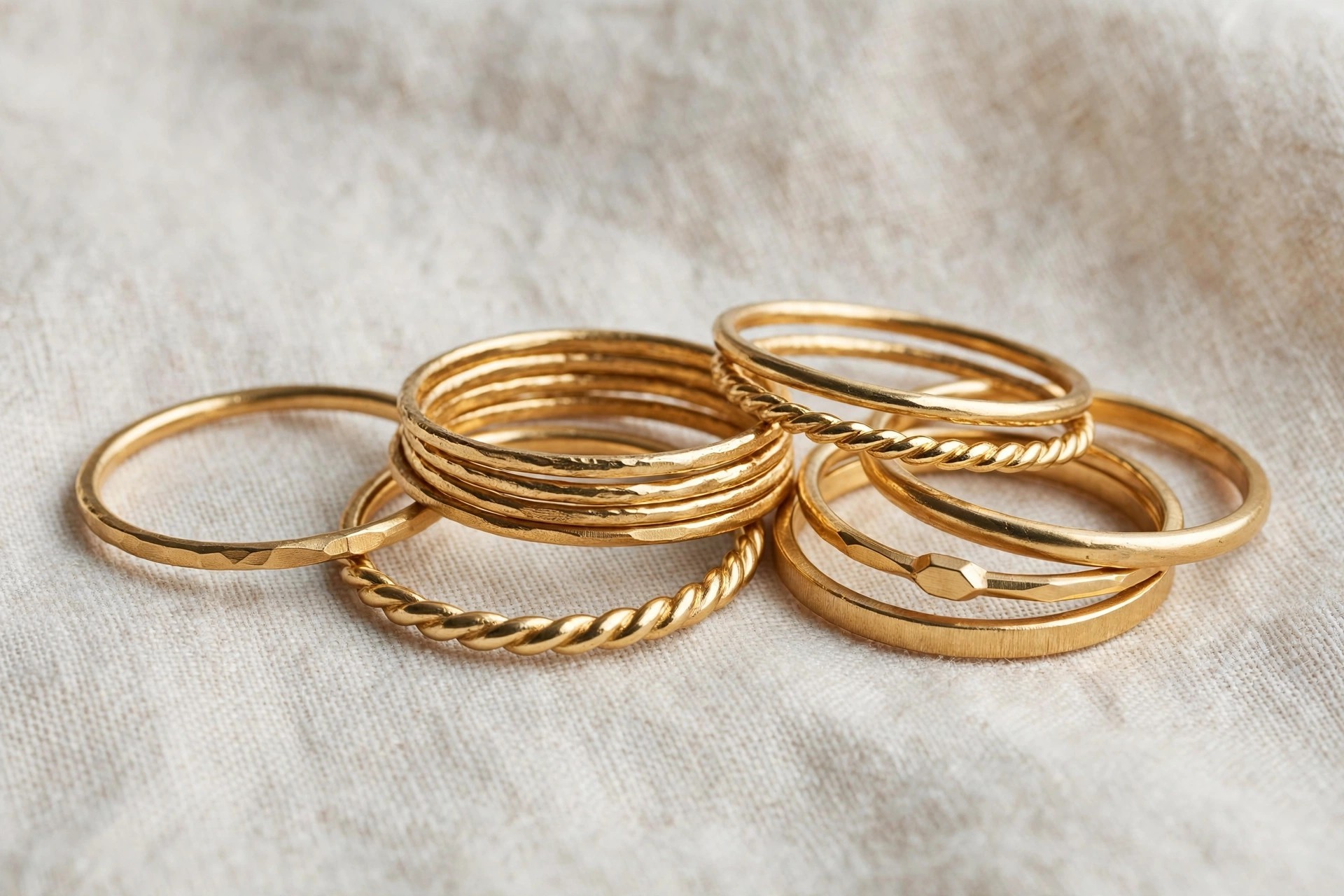
Gold-Plated Rings: Affordable Elegance and Versatility
Why Choose Gold-Plated Rings?
Gold-plated rings offer an appealing alternative to solid gold rings, primarily due to their affordability without compromising on aesthetics. Here's why both jewelry designers and consumers might opt for gold-plated rings:
Cost-Effective: Gold-plated rings are more budget-friendly compared to solid gold rings, allowing consumers to enjoy the look of gold at a fraction of the cost.
Versatility: The base metal used for gold-plated rings can vary, enabling a wide range of design options and styles to suit different preferences.
Trendy and Fashionable: As fashion trends evolve, gold-plated rings offer an affordable way to stay current with the latest styles and designs.
Layering and Mixing: Gold-plated rings are excellent for layering with other jewelry or mixing metals, creating a personalized and fashionable statement.
History of Gold-Plated Rings:
The history of gold plating dates back to ancient civilizations, including Egypt and China. In Egypt, gilding with gold leaf was practiced as early as 2600 BCE. Over the centuries, gold plating techniques evolved, and artisans developed more sophisticated methods to create finely plated jewelry. By the 19th century, gold electroplating emerged as a popular method, allowing for a more uniform and durable gold layer on base metals.
Gold-plated jewelry gained significant popularity in the mid-20th century, especially during economic downturns, when affordability became a key consideration. Today, gold plating is a widespread practice in the jewelry industry, providing consumers with a wide range of attractive and cost-effective options while maintaining the allure of gold.
Consumers can find trendy gold-plated rings at a variety of retail locations, both online and in physical stores. Here are some popular options to shop for trendy gold-plated rings:
Online Retailers:
Amazon: Offers a vast selection of gold-plated rings from various brands
and sellers.
Etsy: A platform known for unique and handcrafted jewelry,
including gold-plated rings created by independent artisans.
ASOS: An online fashion retailer that often features trendy gold-plated rings along with other accessories.
Swarovski: Known for their high-quality jewelry, including gold-plated rings with crystal accents.
Revolve: An online retailer with a curated selection of fashion-forward jewelry, including gold-plated rings.
Specialty Jewelry Stores:
Local Jewelry Boutiques: Check out local jewelry boutiques in your area, as they often carry trendy and unique gold-plated rings.
Jewelry Store Chains: Major jewelry store chains often have a variety of gold-plated rings, providing both classic and trendy designs.
Fashion and Accessory Retailers:
H&M, Forever 21, Zara, etc.: Popular fashion retailers often have trendy, affordable gold-plated rings as part of their accessory collections.
Accessories-Only Stores: Stores specializing in accessories may have a wide range of gold-plated rings in current styles.
Online Marketplaces:
eBay: Offers a broad selection of gold-plated rings, from vintage to modern styles, often at competitive prices.
AliExpress: Features a variety of gold-plated rings
from different sellers and brands at varying price points.
Designer
Websites:
Explore the official websites of jewelry designers or brands that offer gold-plated rings. Many designers have online stores where you can purchase their latest collections.
Before purchasing, ensure to check customer reviews, product descriptions, and return policies to ensure a satisfactory shopping experience. Additionally, consider your budget, style preferences, and desired quality when shopping for trendy gold-plated rings.
Gold-plated rings offer a balance of elegance and affordability, making them an appealing choice for both jewelry designers and consumers. With a rich historical background and evolving manufacturing techniques, gold plating continues to be a popular method to create beautiful and accessible gold-inspired jewelry.
You may also want to learn about solid gold rings.
Learn about gold plated earrings, gold plated necklaces and gold plated bracelets.
Buying Plated Rings With Eyes Open
A plated ring is a sound purchase when it is priced and expected as fashion jewelry: a bold shape, a color of gold you are testing, or a style you want for a season or an occasion. Problems come from paying solid-gold expectations, or near solid-gold prices, for a surface finish. Read the listing for the base metal, since brass and copper alloys can discolor skin and trigger nickel reactions in some wearers, while plating over stainless steel or sterling silver is usually kinder and wears more evenly.
Thickness language is the buyer's main protection. A stated micron thickness, a vermeil claim that names sterling silver underneath, or a gold filled marking all describe measurable gold; a bare claim of gold plated with no thickness and no base metal named describes the thinnest commercial finish. Check edges, claw tips and the back of the shank on arrival, because thin or missed plating shows there first, and keep proof of any thickness claim in case the finish fails early.
Common Questions
What is the difference between gold plated, vermeil and gold filled?
Gold plated means a very thin electroplated gold layer over any base metal, measured in fractions of a micron. Vermeil is a thicker plating, at least 2.5 microns of gold over sterling silver, so both the layer and the core are precious metal. Gold filled is not plated at all: a much thicker gold sheet is bonded to a base core, giving far more gold and far longer wear than either plated form.
How long does gold plating last on a ring?
On a ring, the hardest-worn piece of jewelry, ordinary thin plating often shows wear at edges and the underside within months of daily wear, and sooner with handwashing, sanitizer, sweat and abrasion against hard surfaces. Occasional wear stretches the same plating to years. Vermeil lasts longer than standard plate because the layer is thicker, but no plated ring should be bought as a lifetime, everyday band.
Can a gold plated ring be replated, and how do I slow the wear?
Yes, a jeweler can strip and replate most plated rings, restoring the color for a fee that makes sense for a liked design but not for the cheapest fashion pieces. To slow wear, take the ring off for washing, cleaning, exercise and swimming, keep it away from perfume and sanitizer, wipe it after wear, and store it dry and separate. Never buff a plated ring with polishing compounds, which remove gold.