Gold Plated Earrings
A thin layer of real gold over base metal, at a gentler price
Gold plated earrings are base metal earrings, usually brass, copper alloy or sterling silver, coated with a thin layer of real gold by electroplating. The layer gives studs, hoops, drops and fashion earrings the color and look of solid gold at a fraction of its price, but the gold itself is measured in fractions of a micron and wears with friction, sweat and time. Better plated pieces state their plating thickness and karat, and vermeil, a heavier gold layer over sterling silver, sits at the durable top of the category. This guide covers how plating works, thickness and vermeil, how plated earrings tarnish and wear, honest value, and care that keeps the gold surface intact longest.
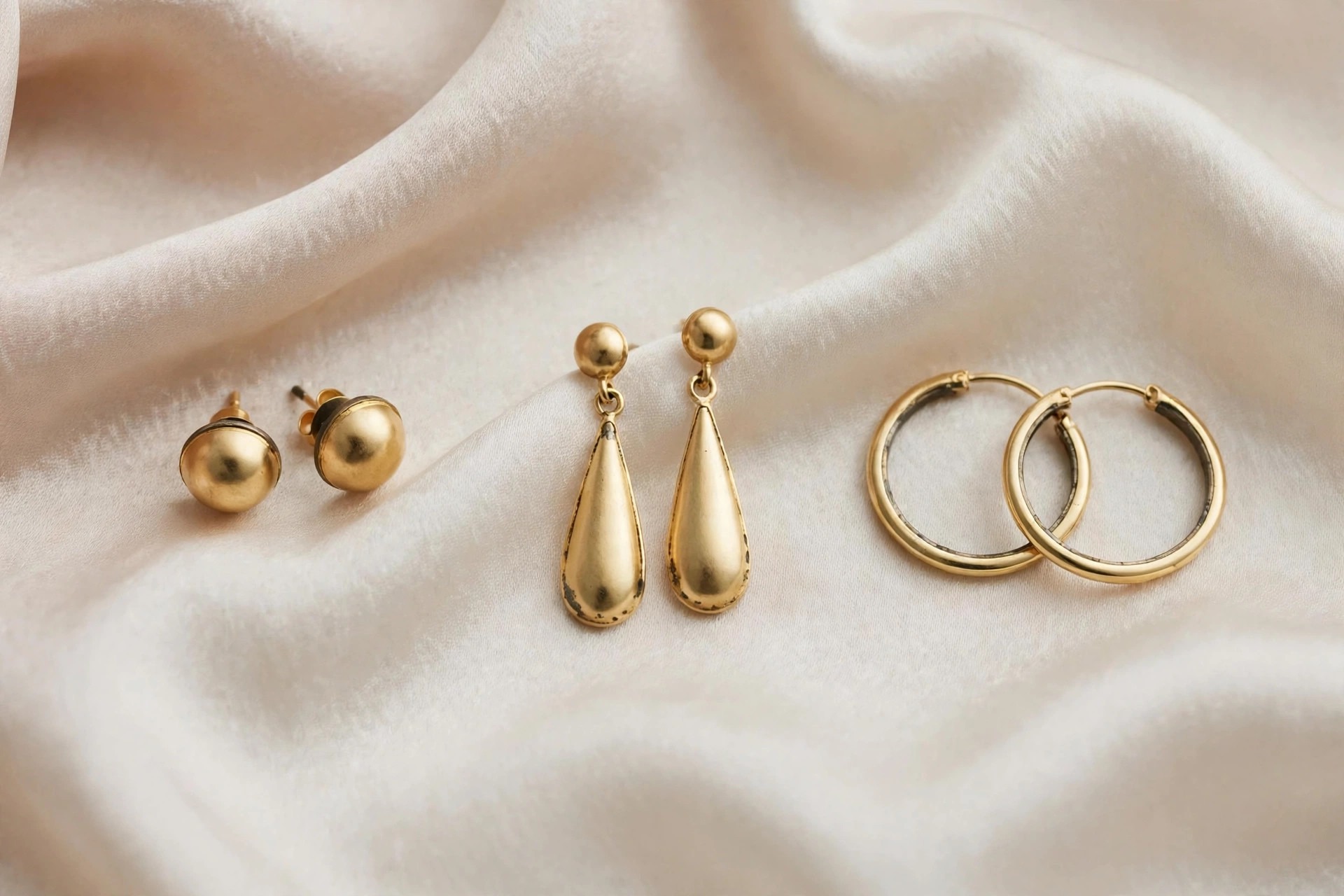
Gold-Plated Earrings: A Touch of Luxury
Gold-plated earrings are a popular and accessible option for those who desire the lustrous beauty of gold without the high cost of solid gold jewelry. These earrings offer a touch of luxury and elegance to your style while being more budget-friendly. Let's explore the world of gold-plated earrings, their features, advantages, and considerations.
What Is Gold Plating?
Gold plating is a process in which a thin layer of gold is electrochemically deposited onto the surface of another metal, often a base metal such as copper, brass, or sterling silver. The result is a piece of jewelry that has the appearance of solid gold while being more affordable.
Pros of Gold-Plated Earrings:
Affordability: One of the primary advantages of gold-plated earrings is their cost-effectiveness. They allow you to enjoy the aesthetic of gold jewelry without the hefty price tag associated with solid gold.
Aesthetic Appeal: Gold-plated earrings have the same rich, warm color and shine as solid gold jewelry, providing an elegant and timeless look that complements various outfits and occasions.
Variety: Gold-plated earrings come in a wide range of designs, styles, and shapes, just like their solid gold counterparts. This variety allows you to find pieces that suit your personal taste and style preferences.
Durability: While gold plating is relatively delicate compared to solid gold, it can be quite durable with proper care. The longevity of gold-plated jewelry depends on factors like the thickness of the gold layer and how well it's maintained.
Versatility: Gold plating can be applied to different metals, allowing for versatility in jewelry design. You can find gold-plated earrings with various base metals, such as silver or copper, offering different aesthetic options.
Cons and Considerations:
Wear and Tear: Over time, the thin gold layer on gold-plated earrings may wear off or tarnish, exposing the underlying metal. This can happen more quickly with daily wear, exposure to moisture, or contact with harsh chemicals.
Allergies: Some people may be sensitive to the base metal beneath the gold plating. If you have metal allergies, consider opting for hypoallergenic or nickel-free gold-plated earrings.
Maintenance: To extend the lifespan of gold-plated earrings, you should take care to avoid exposing them to moisture, chemicals, or abrasive materials. Store them in a dry, protected environment, and clean them gently with a soft cloth.
Not Suitable for Long-Term Investment: While gold-plated earrings offer the look of gold at a fraction of the cost, they do not hold the same intrinsic value as solid gold jewelry. They are primarily for aesthetic purposes and may not appreciate in value over time.
Gold-plated earrings provide an excellent option for those who want to enjoy the elegance and charm of gold without breaking the bank. They come in a wide array of styles, offering versatility and affordability to jewelry enthusiasts. However, it's important to understand their limitations and take proper care to ensure they maintain their beauty and luster for as long as possible.
You may also want to learn about solid gold earrings.
Learn about gold plated necklaces, gold plated rings and gold-plated bracelets.
Learn about two tone gold earrings.
Care Is Mostly About Not Rubbing the Gold Away
Every care rule for plated earrings follows from one fact: the gold is a surface, not a substance. Put earrings on after perfume, hairspray and lotion have dried, take them off before swimming, showering and exercise, and wipe them with a soft dry cloth after wearing to remove the sweat and skin oils that work on the exposed base metal at pores and edges. Never use abrasive polishing cloths, dips or ultrasonic cleaners meant for solid gold; each removes a little of the layer it claims to restore.
Storage matters as much as wearing. Keep plated pairs separate in soft pouches, away from harder jewelry that can scratch through the layer, and in dry air rather than a steamy bathroom. The gold toned earrings and other plated guides in this jewelry section follow the same surface logic. Judged honestly, a well-kept heavy-plated or vermeil pair can stay bright for years of occasional wear, while a thin fashion pair worn daily in the shower may fade in months, and the price should always reflect which of those two purchases is actually being made.
Common Questions
How thick is the gold on gold plated earrings?
Ordinary gold plating is very thin, commonly well under one micron, while heavy plating and vermeil are thicker. In the United States, vermeil must be gold of at least 10 karats at least 2.5 microns thick over sterling silver. Thickness is the main durability difference inside the category, so a stated micron figure is a better buying signal than the word plated alone.
Why do gold plated earrings tarnish or change color?
The gold layer itself does not tarnish, but it is porous and thin: as it wears at edges, posts and clasps, the base metal beneath is exposed and can oxidize, darken or show through as a duller or pinker tone. Sweat, perfume, salt water and friction speed the process, and the wear shows first where the earring rubs skin, hair and clothing.
Are gold plated earrings good value?
They are good value as fashion jewelry: real gold color and current styles at a low price, bought expecting a limited surface life. They are not a store of gold value, since the gold content is negligible, and they cannot be polished back once the layer is gone, only replated by a jeweler. Buy them for the design and the season, and pay a premium only for thicker plating or vermeil.