Jewelry Metals Guide, Page 2
Sterling silver to yellow gold, metal by metal
This second page of the jewelry metals section continues the metal-by-metal listings: sterling silver, titanium, tungsten, two tone gold, white gold and yellow gold, each linked to its bracelets, earrings, necklaces and rings across the Jewelry Guide. The metals here span the full modern range, from sterling, the affordable precious standard, through the technical metals titanium and tungsten, to gold in its color variations, where white gold's rhodium-bright surface, yellow gold's classic warmth and two tone designs that mix them serve very different looks in the same karat of gold. Use the links high on this page to move within the metals section, and the return link to go back to the first metals guide page, where the precious, non-precious and tarnish background pages are linked.
More to Explore
- Sterling Silver Bracelets
- Sterling Silver Earrings
- Sterling Silver Necklaces
- Sterling Silver Rings
- tranishing
- Titanium Bracelets
- Titanium Earrings
- Titanium Necklaces
- Titanium Rings
- Tungsten Bracelets
- Tungsten Earrings
- Tungsten Necklaces
- Tungsten Rings
- Two Tone Gold Bracelets
- Two Tone Gold Earrings
- Two Tone Gold Necklaces
- Two Tone Gold Rings
- White Gold Bracelets
- White Gold Earrings
- White Gold Necklaces
- White Gold Rings
- Yellow Gold Bracelets
- Yellow Gold Earrings
- Yellow Gold Necklaces
- Yellow Gold Rings
- Return to the Jewelry Metals Guide
- Bracelets Earrings
- Necklaces
- Rings
- Watches
- Jewelry by Design
- Jewelry by Stones
- Jewelry Guide
- About Precious Metals
- About Non-preciuos Metals
- About Jewelry
- Jewelry Stores
- Jewelry Wholesalers
- Jewelry Network
- Jewelry News
- Base Metals
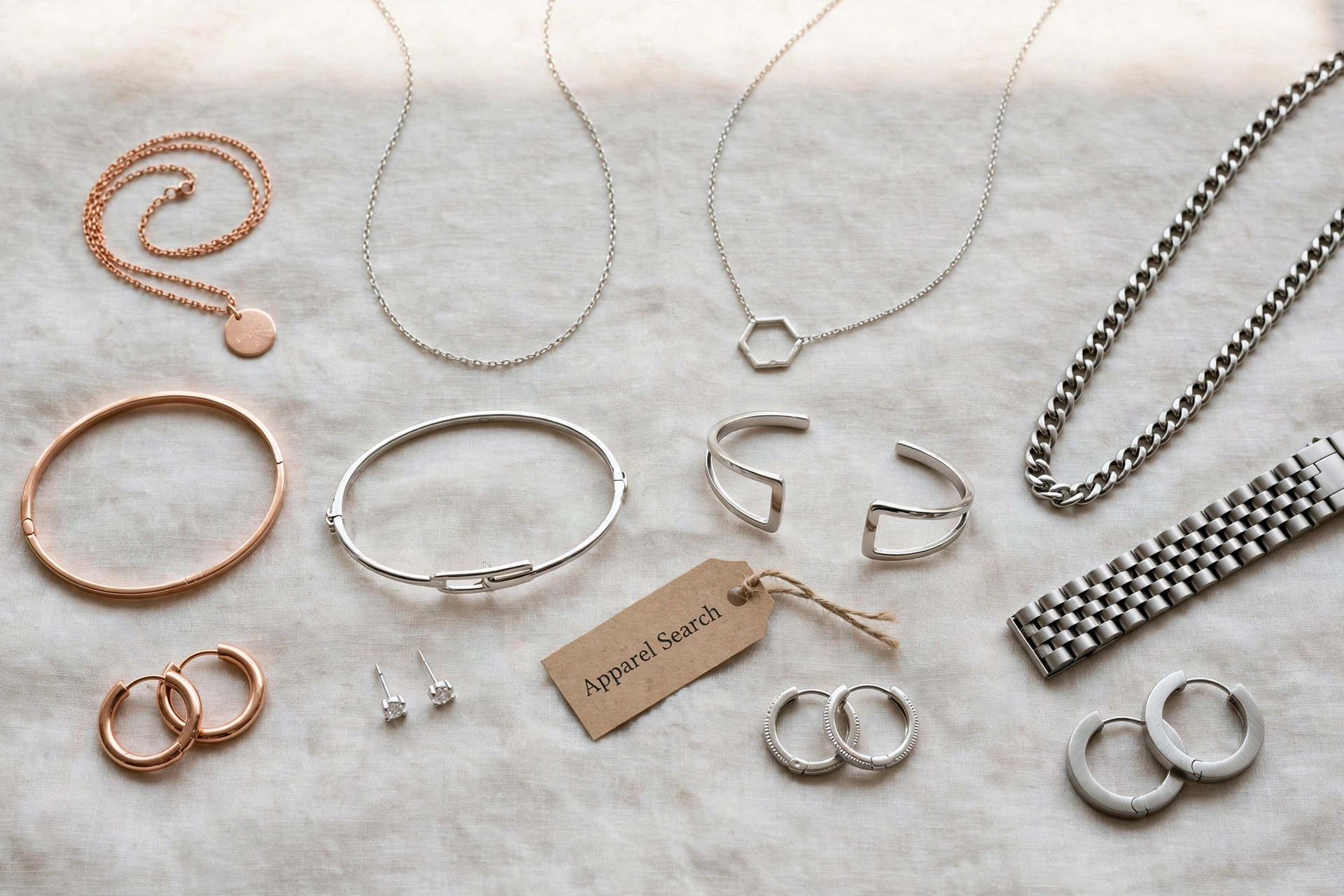
Welcome to the second page of the jewelry metal section of the Apparel Search Jewelry Guide. This area will help you locate information regarding jewelry based on the metal in which the item is produced.
Metals used in jewelry encompass a spectrum ranging from precious to non-precious categories. Precious metals, including gold, silver, platinum, and palladium, possess intrinsic value due to their rarity, beauty, and enduring appeal. Gold, revered for its timeless allure and versatility, comes in various hues like yellow, white, and rose. Silver, known for its brilliant luster, offers a more affordable option without compromising on elegance. Platinum and palladium, dense and naturally white, boast exceptional durability and hypoallergenic properties. On the other hand, non-precious metals like stainless steel, titanium, and tungsten are admired for their strength, durability, and affordability, making them popular choices for modern, fashion-forward designs. The distinction lies in their rarity, cost, and traditional valuation, but both categories contribute to the diverse and captivating world of jewelry.
Sterling Silver Jewelry
Sterling Silver Watches
- Learn about tranishing.
Titanium Jewelry
Titanium Watches
Tungsten Jewelry
Tungsten Watches
Two Tone Gold Jewelry
Two Tone Gold Watches
White Gold Jewelry
White Gold Watches
Yellow Gold Jewelry
Yellow Gold Watches
◊ Return to the Jewelry Metals Guide
You may find the following section of our fabulous & very trendy fashion directory to be of interest to you:
BraceletsFinishing the Metal Tour
Read together, the two metals pages trace the whole arc of jewelry materials: from sterling silver, a medieval alloy still at the center of everyday jewelry, to metals that entered jewelry only with modern industry. That range is the point of the section. A buyer choosing between a sterling necklace, a titanium one and a white gold one is not choosing between good and bad metals, but between different bundles of weight, color, maintenance and price, and the listings and background pages here exist to make those bundles explicit.
From any metal on this page, the type links lead to the pieces themselves: titanium earrings for a wearer who needs lightness, tungsten rings and studs for one who needs a finish that survives work, yellow gold bracelets for one who wants the classic metal in its classic color. The first metals page and the tarnishing guide complete the reference, and the Jewelry Guide hub returns the reader to jewelry organized by type, stone and design.
Common Questions
What metals are listed on this second metals page?
Sterling silver, titanium, tungsten, two tone gold, white gold and yellow gold, each with links to that metal's bracelets, earrings, necklaces and rings. The first metals page covers gold generally, gold plated, palladium, platinum, silver and stainless steel, together with the background guides to precious metals, non-precious metals, base metals and tarnishing. Together the two pages list every metal category in the Jewelry Guide.
How do titanium and tungsten differ as jewelry metals?
Titanium is exceptionally light, fully hypoallergenic and anodized into colors, suiting large earrings and sensitive skin. Tungsten, as tungsten carbide, is exceptionally hard and heavy, keeping a dark polished finish that resists scratches, suiting compact pieces such as studs and rings. Neither can be resized like gold, and tungsten can crack under a sharp impact. They are the two modern metals that most changed what everyday jewelry can be.
What is the difference between white, yellow and two tone gold?
All three are gold alloys of the same karat system. Yellow gold keeps gold's natural warm color, white gold is alloyed with white metals and usually rhodium plated for a bright white finish that flatters diamonds, and two tone gold combines two colors in one design so a piece coordinates with both yellow and white metal jewelry. The choice is visual and practical, plating upkeep for white gold, rather than a difference in gold content at the same karat.