Tungsten Rings
A hard, dark, scratch-resistant contemporary band
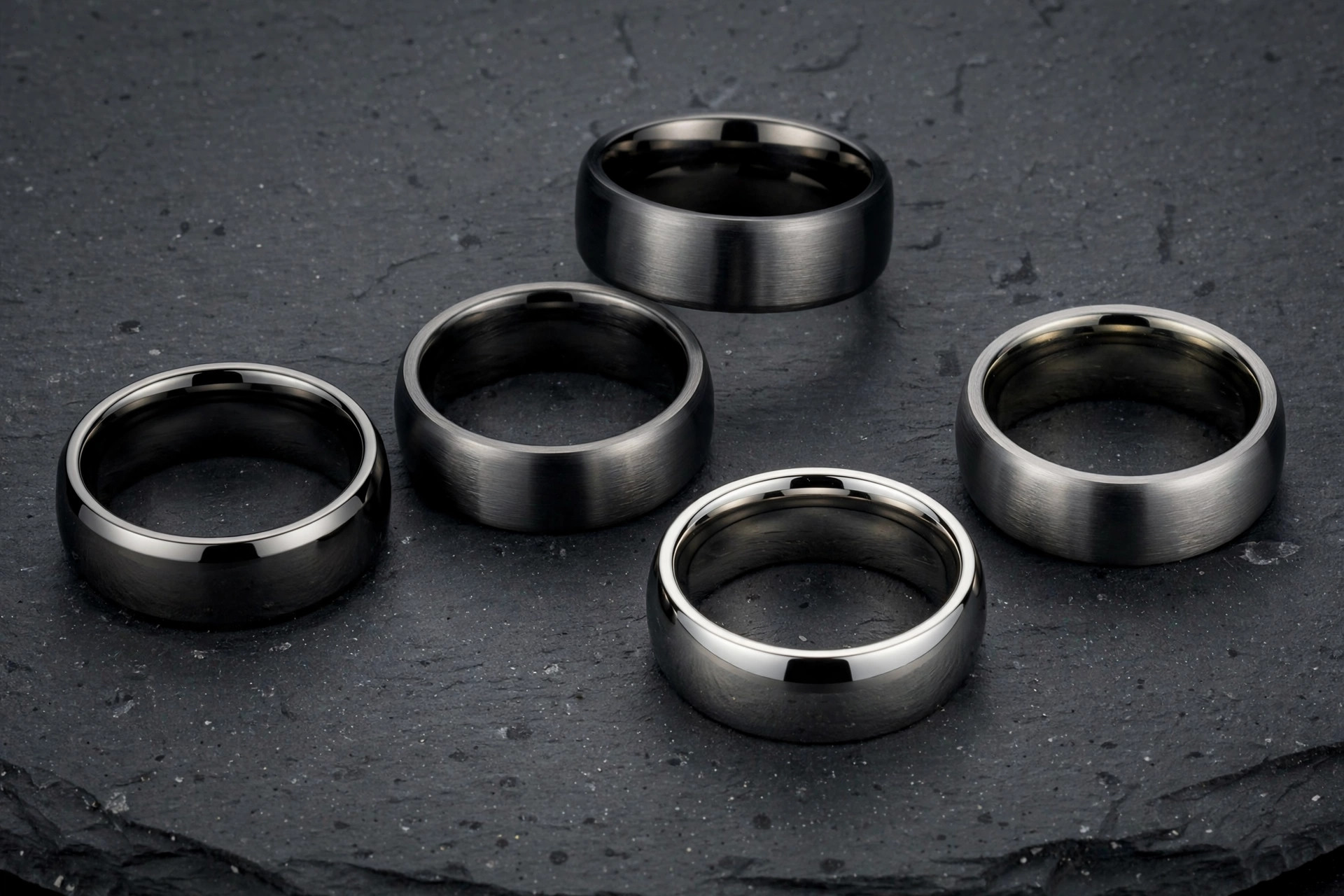
A tungsten ring is almost always a tungsten carbide ring, a band made by combining tungsten with carbon and other metals under high heat and pressure to form one of the hardest materials used in jewelry. Tungsten carbide scores about 8.5 to 9 on the Mohs scale, just below diamond, so a polished tungsten band resists the scratches and scuffs that quickly mark gold and silver, and it keeps its finish for years of daily wear. The natural color is a dark gunmetal grey, lighter or darker depending on the finish, and bands are sold polished, brushed, faceted and black-plated, often with an inlay of wood, carbon fiber, opal-look material or a contrasting metal stripe set into a channel. Tungsten feels noticeably heavy for its size, closer to gold than to titanium, which many wearers like in a wedding band. Two limits define the metal: it cannot be resized, because it cannot be cut and soldered like precious metal, and its hardness comes with brittleness, so a sharp blow can crack the band rather than bend it. That brittleness is also a safety feature, since a tungsten ring can be cracked off in an emergency instead of cut. This guide covers grades and finishes, sizing accuracy, inlay care and how tungsten compares with titanium, stainless steel and gold bands.
You may also want to learn about tungsten necklaces, tungsten bracelets and tungsten earrings.
Learn more about metals used for jewelry.
Finishes, Inlays and Daily Care
Plain tungsten bands come polished to a mirror shine, brushed for a softer grey, and stepped or faceted for extra light play at the edges. Inlay designs set a strip of material into a groove around the band: bent wood and koa for warmth, woven carbon fiber for a technical look, crushed opal-look and meteorite-look fillers for color, and thin gold or rose gold stripes for contrast with the grey metal. Check that an inlay sits flush and fully sealed, since the inlay material, not the tungsten, sets the limits on water and chemical exposure for that ring.
Care is simple for a plain band: wash with warm water and mild soap, dry with a soft cloth, and store it apart from diamonds and other very hard pieces that are the few things able to scratch it. Keep solvent cleaners and bleach away from inlays and plated finishes. If a tungsten wedding band is worn for manual work, remember that the same hardness that protects the finish means the ring will not bend out of the way, so removing it for heavy gripping, lifting and machinery work protects the finger as much as the ring.
Common Questions
Can a tungsten ring be resized?
No. Tungsten carbide cannot be stretched, cut down and soldered the way gold or platinum can, so the size ordered is the size the ring stays. Because of that, most sellers offer size exchanges rather than resizing. Have the finger measured with a comfort fit sizer in the same width as the band being ordered, and measure later in the day when fingers are at a typical size, before committing to a tungsten band.
Do tungsten rings scratch or lose their shine?
A tungsten carbide band is one of the most scratch-resistant rings sold: keys, coins and everyday abrasion that mark softer metals leave its polish largely untouched. What can mark it is another material of similar or greater hardness, and surface treatments are less durable than the metal itself, so a black-plated or gold-plated tungsten band can show wear in the plating even though the band underneath stays smooth. The plain polished and brushed finishes are the most durable choices.
How is a tungsten ring removed in an emergency?
Because tungsten is brittle, it is removed by cracking rather than cutting. A clinician or jeweler applies pressure at a weak point with a standard ring cracker or locking pliers so the band fractures into pieces and comes off without harming the finger. It cannot be cut with a normal ring saw. Tell medical staff the ring is tungsten carbide, since the cracking method is different from the cutting method used for gold and silver.