Sterling Silver Rings
The 925 standard that makes silver work as a ring
A sterling silver ring is made to the sterling standard of 92.5 percent pure silver alloyed with 7.5 percent other metals, usually copper, and is stamped 925 to certify that fineness. That small alloy share transforms silver as a ring metal: where pure fine silver at 999 is too soft for a normal band, sterling is hard enough to hold engraving, keep its round shape and grip gemstones securely through years of wear, while keeping silver bright white color and affordable price. Sterling is the silver of nearly all manufactured silver rings, from plain wedding-style bands to turquoise and marcasite designs. Its known weakness is tarnish, a surface reaction with sulfur that darkens the metal over time and is managed with wear, storage and gentle polishing. This guide details the 925 standard and its stamps, sterling durability and stone setting, tarnish prevention and removal, and how sterling compares with fine silver and plated rings. It also explains why sterling remains the default for a precious-metal ring at a modest price, and what thickness and finishing separate a lasting ring from one that disappoints.
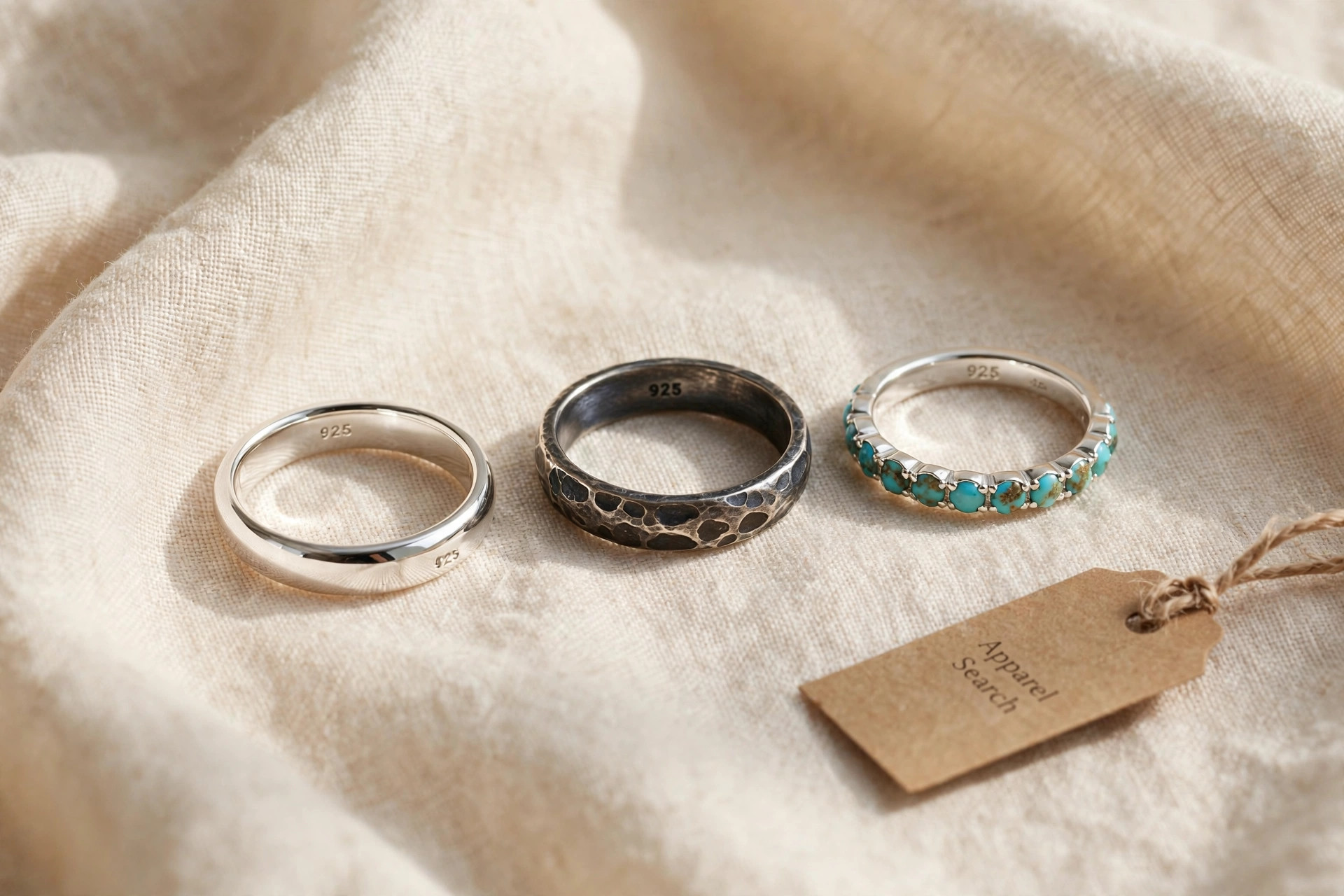
Sterling Silver Rings: A Timeless Classic
Sterling silver rings are a popular and enduring choice in the world of jewelry. Understanding the difference between sterling silver rings and regular silver rings is crucial in appreciating the value and qualities that make sterling silver highly sought after.
Composition:
Regular Silver Rings:
"Regular" or "pure" silver rings are made from 99.9% pure silver, often
referred to as fine silver. Fine silver is too soft for intricate jewelry
design or everyday wear and is primarily used for crafting bullion or coins.
Sterling Silver Rings:
Sterling silver rings, on the other hand, are made from an alloy containing 92.5% silver and 7.5% other metals, usually copper. This alloying process is crucial to enhance the durability and strength of the silver without compromising its overall beauty.
Durability:
Regular Silver Rings:
Fine silver rings are very soft and malleable, making them susceptible to
scratches, dents, and deformation over time, limiting their practicality for
jewelry that endures regular wear.
Sterling Silver Rings:
Sterling silver, with its alloy composition, offers significantly improved durability and strength, making it suitable for everyday jewelry like rings. It maintains its form and quality, enduring the rigors of daily use.
Tarnish Resistance:
Regular Silver Rings:
Fine silver tarnishes quickly when exposed to air and moisture, requiring frequent polishing to maintain its shine and appearance.
Sterling Silver Rings:
Sterling silver tarnishes at a slower rate than fine silver due to the copper content in the alloy. Regular cleaning and occasional polishing can help maintain its luster.
Affordability:
Regular Silver Rings:
Fine silver is more costly than sterling silver due to its high silver
content.
Sterling Silver Rings:
Sterling silver offers a more affordable option compared to fine silver while maintaining a high silver content and superior durability.
Popularity and Usage:
Regular Silver Rings:
Fine silver is rarely used for everyday jewelry and is more commonly used for investment purposes or creating limited-edition commemorative pieces.
Sterling Silver Rings:
Sterling silver is widely used in various types of jewelry, including rings, earrings, necklaces, and bracelets, making it a popular choice for both casual and formal wear.
Sterling silver rings strike a balance between beauty, durability, and cost-effectiveness. This makes them a preferred choice for those seeking timeless, elegant jewelry that can withstand the test of time and daily wear.
Learn about silver rings.
Learn about sterling silver earrings, sterling silver necklaces and sterling silver bracelets.
Styles Sterling Does Best
Sterling's price and workability make it the natural metal for wide and sculptural rings that would be prohibitively heavy in gold: Southwestern turquoise rings, Celtic knot bands, signet rings, spinner rings, marcasite vintage-style pieces and bold gemstone cocktail rings are all sterling traditions. Oxidation is used deliberately in many of these styles, darkening recessed pattern so the raised polished silver reads clearly, a finish that should be preserved rather than polished bright.
When buying, feel the shank thickness at the back of the band, where wear concentrates, and look for a closed back and clean finishing under the head. Rhodium-plated sterling resists tarnish and looks brighter when new, but the unplated metal is easier to maintain over a lifetime because it can be re-polished indefinitely. Store sterling rings dry and separate, wear them often, and they will hold a soft, bright luster that many wearers prefer to the harder shine of white gold.
Common Questions
What does the 925 stamp on a ring guarantee?
It is the maker's certification that the metal is sterling silver, 925 parts per thousand pure silver with the balance alloy metal, the legal sterling standard in most markets. The stamp is normally inside the shank, often beside a maker mark. It certifies the alloy at manufacture; it does not guarantee construction quality, so a thin or poorly set 925 ring can still wear badly, and counterfeit stamps exist on plated base metal.
Is sterling silver harder than fine silver, and does it last as a ring?
Yes, noticeably. The copper alloy in sterling raises hardness and spring, so a sterling band resists bending and keeps detail that fine silver would lose. A sterling ring of sensible thickness will last decades of daily wear, though it remains softer than gold alloys or steel and will gather fine scratches and can bend under a hard blow. Prongs in sterling wear faster than in gold, so check stone settings yearly.
What is the best way to remove tarnish without damaging a sterling ring?
For light tarnish, wash in warm water with mild soap, dry fully, then use a soft silver polishing cloth with gentle pressure; the cloth removes the dark silver sulfide layer without scratching. Avoid dipping solutions on rings with oxidized detailing, porous stones such as turquoise, opal or pearl, or glued elements, since dips strip intentional darkening and can harm stones. Heavy tarnish is a quick jeweler polish.