Two-Tone Gold Rings
Two gold colors, worked into a single design
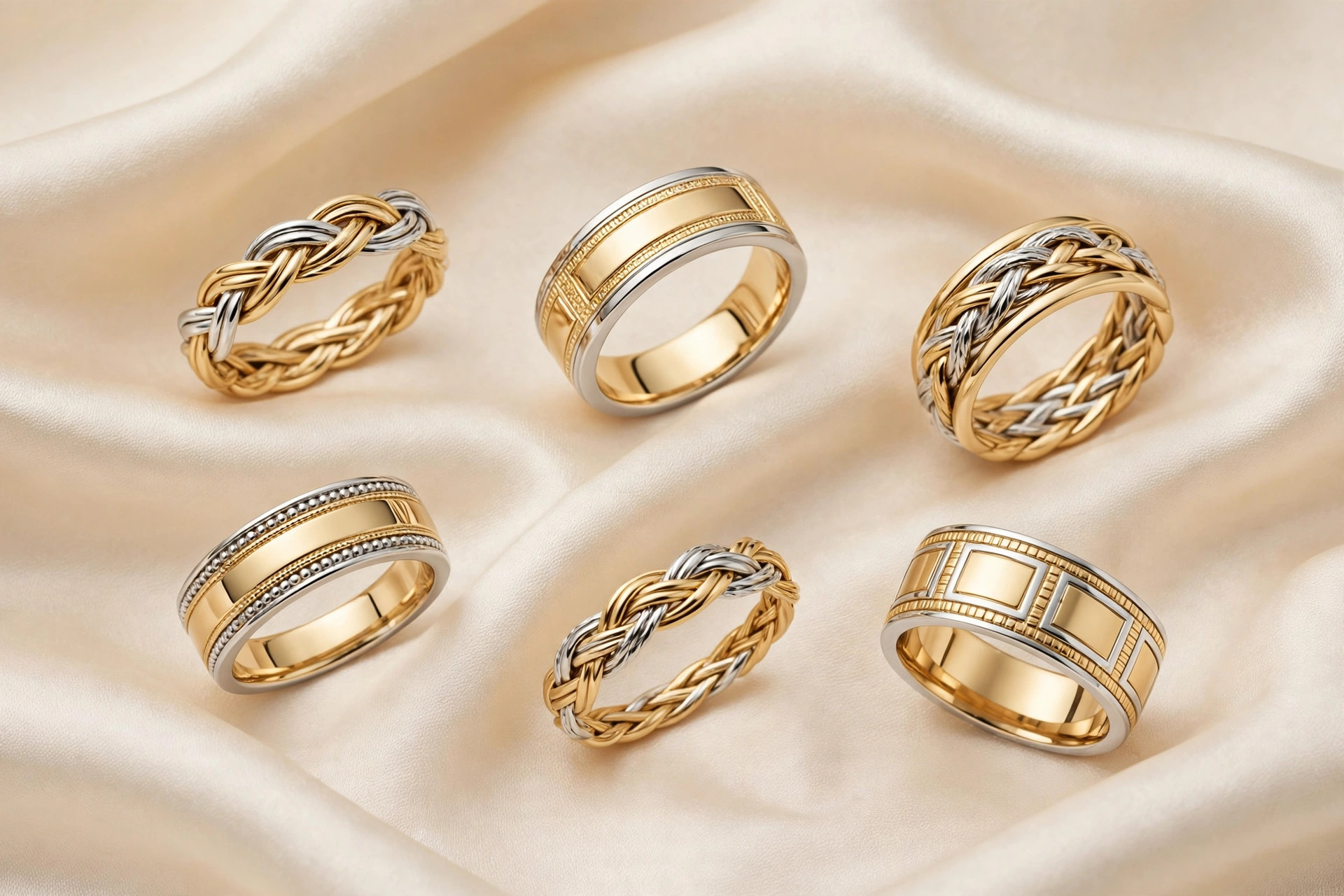
A two-tone gold ring blends two different gold colors in one piece, most often yellow gold with white gold, and sometimes rose gold as a second or third tone. The contrast is the design: a white gold center bordered by yellow gold edges, a yellow band crossed by a white gold braid, or a setting in white gold on a yellow shank so a pale stone sits in white metal while the band stays warm. Combining gold colors has centuries of history and came into its own in the Victorian era, then flourished in the Art Deco period of the early 20th century, when geometric patterns and strong contrasts defined jewelry design. The colors come from the alloys themselves: yellow gold is alloyed with copper and silver, while white gold is alloyed with nickel, palladium or silver to whiten it. Pieces are cast or fabricated separately in each color and soldered or welded together, then finished and polished as one ring, with rhodium plating often applied to the white gold parts. Couples also read a meaning into the form, two distinct metals joined in one band. This guide covers color combinations, how two-tone rings are made, their versatility with other jewelry, and the plating care the white gold sections need.
Two-Tone Gold Rings: A Fusion of Elegance
Two-tone gold rings are exquisite pieces of jewelry that seamlessly blend two different gold colors, typically white gold and yellow gold, into a single design. This combination creates a visually striking contrast and adds a touch of sophistication to traditional gold rings.
History of Two-Tone Gold Rings:
The practice of combining different gold colors in jewelry dates back centuries. It gained prominence during the Victorian era in Europe when jewelry designers began experimenting with various metals and colors.
Two-tone gold rings became particularly popular during the Art Deco era in the early 20th century. This design style emphasized geometric patterns and contrasting colors, making it a perfect fit for two-tone gold jewelry.
Manufacturing Process:
Alloy Composition: To create two-tone gold, jewelers use different gold alloys. Yellow gold is typically alloyed with copper and silver, while white gold is alloyed with metals like nickel, palladium, or silver. These alloys determine the color and properties of the gold.
Casting or Fabrication: The ring's design can be created through casting or fabrication. In casting, the two gold alloys are melted separately and poured into a mold. After cooling, the separate pieces are soldered or welded together to form the final ring. In fabrication, sheets of the two gold colors are meticulously worked to shape the ring.
Finishing: After the ring is assembled, it undergoes finishing processes like polishing and rhodium plating (for white gold) to enhance its luster and appearance.
Advantages of Two-Tone Gold Rings:
Visual Contrast: The combination of two gold colors creates an appealing visual contrast, making the ring stand out and adding depth to its design.
Versatility: Two-tone gold rings are versatile and can complement various jewelry styles and outfits. They pair well with both white gold and yellow gold jewelry.
Timeless Elegance: The elegance of two-tone gold rings transcends fashion trends, making them a timeless choice for engagement rings, wedding bands, and other special occasions.
Personalization: Couples often choose two-tone gold rings to represent their unique union by symbolizing the blending of two individuals into one.
Two-tone gold rings offer a beautiful fusion of tradition and modernity, making them a favored choice for those seeking elegance and sophistication in their jewelry. Whether as a symbol of love, a fashion statement, or a special gift, these rings continue to captivate with their timeless allure.
You will most likely also want to visit our two tone gold necklaces, two tone gold bracelet and two tone earring pages.
Learn more about metals used for jewelry. Most importantly learn about jewelry precious metals.
Construction: Where the Two Metals Meet
Judge a two-tone ring at the joins. The boundary between colors should be a clean, straight or deliberately curved line with no bleeding of one alloy into the other, no visible solder seam and no step where the two pieces meet. In a well-made band the join runs through the full thickness of the band rather than being a surface layer, so normal polishing and wear do not erase the two-tone effect. Surface-only two-tone finishes exist at lower prices, where one color is plated over the other, and those wear back to a single color at the edges.
Designs use the contrast in different ways: borders and rails frame a center color, braids and weaves alternate the colors along the band, and two-tone settings put white gold prongs or a white gold head on a yellow gold band so diamonds look whiter against white metal. Because the two alloys have slightly different hardness and wear rates, a jeweler who works in both colors is the right choice for resizing, which is done at a point that least disturbs the pattern.
Common Questions
Which two gold colors are most common in a two-tone ring?
Yellow gold with white gold is the classic pairing, used in wedding bands, engagement rings and signet styles because the contrast is clear but still traditional. Rose gold with white gold gives a softer, more romantic contrast, and rose with yellow is subtler and warmer. Three-tone designs add all three colors, often in braided, woven or Russian wedding ring styles of interlocking bands, one in each gold color.
Does the white gold part of a two-tone ring need replating?
Usually, yes, over time. The white gold sections of most two-tone rings are rhodium plated for a bright white finish, and that plating wears with daily wear, letting the slightly warmer tone of the white gold alloy show through and softening the contrast. A jeweler can mask the yellow gold and replate only the white sections. Palladium white gold holds a whiter natural color and reduces how noticeable plating wear becomes.
Can a two-tone ring be worn with single-color gold jewelry?
Yes, and that versatility is one of its main advantages. A two-tone ring bridges a jewelry collection, sitting naturally beside yellow gold pieces and white gold or platinum pieces at the same time. That makes two-tone bands a practical wedding choice for someone who wears both gold colors, and a useful single ring for matching a watch, bracelet or earrings in either metal color.