Yellow Gold Rings
Gold in its natural color, unchanged for millennia
Yellow gold is gold in its natural color, the warm yellow metal used for adornment since at least 4000 BC and treasured by Egyptian, Greek and Roman civilizations. Cultures have long associated it with prosperity, purity, warmth and permanence, and gold rings became enduring symbols of love, commitment and eternity. Pure gold, 24 karat, is too soft for a ring that is worn daily, so jewelry gold is alloyed with metals such as silver, copper and zinc for strength: 18 karat gold is 75 percent gold, and 14 karat is 58.5 percent, with the higher karat giving a richer, deeper yellow and the lower karat giving greater hardness at a lower price. Unlike white gold, yellow gold needs no plating to hold its color, which makes it the lowest-maintenance gold for rings. It suits traditional and contemporary designs alike, from plain bands and intricate filigree to vintage-inspired settings, and it flatters warm-toned gemstones such as ruby, citrine and topaz especially well. Yellow gold also forms one half of most two-tone designs when combined with white or rose gold. This guide covers karat choice for rings, design traditions, stone pairings, skin tone considerations and straightforward cleaning and polishing.
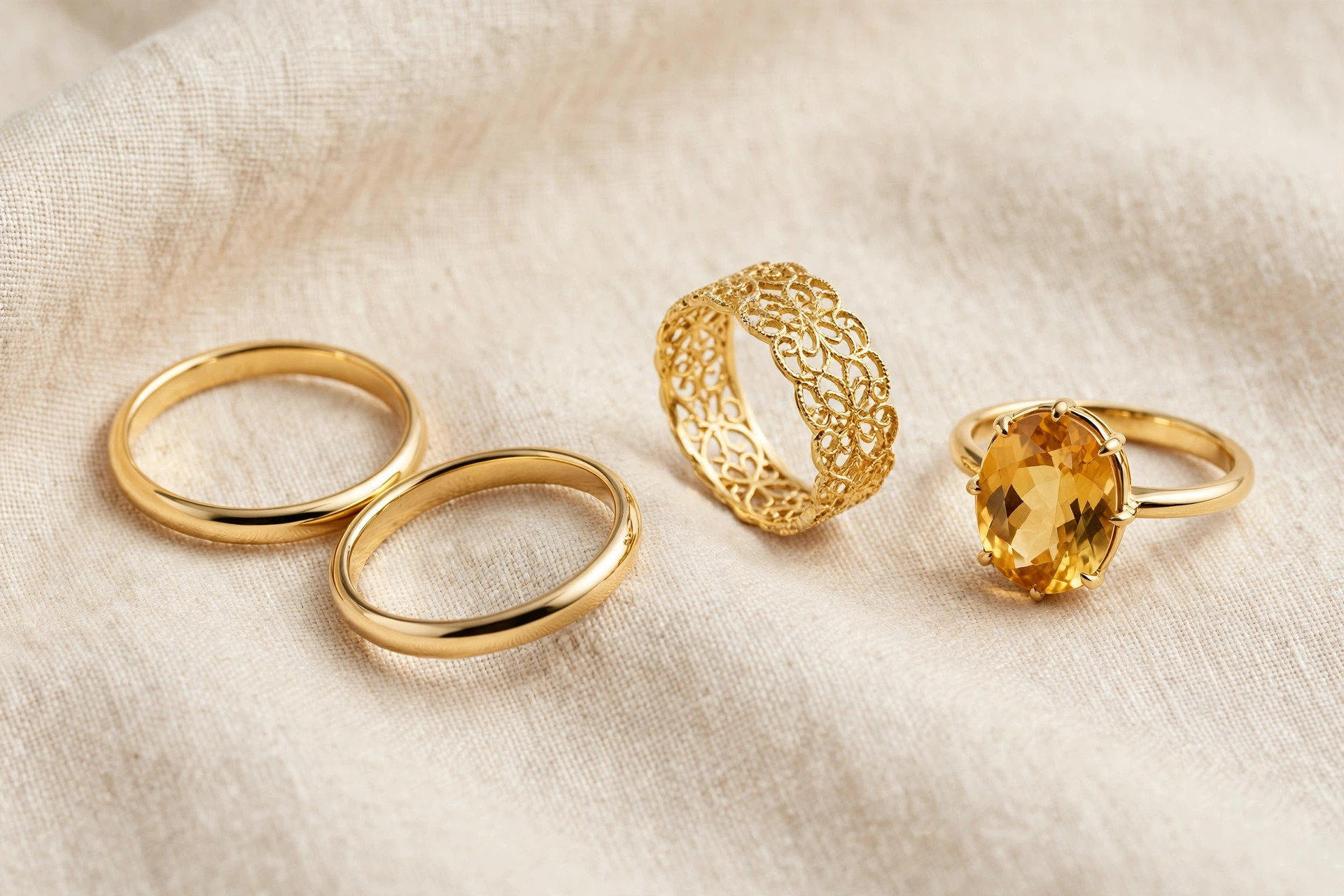
Yellow Gold Rings: Timeless Elegance and Classic Beauty
Yellow gold rings have captivated hearts and adorned fingers for millennia, boasting timeless elegance and unmatched beauty. Let's journey through the allure of yellow gold, its history, properties, design options, and why it remains a beloved choice for jewelry.
Historical Significance:
Ancient Origins: Yellow gold has an ancient and storied history. It's been used for adornment and jewelry since at least 4000 BC, cherished by civilizations like the Egyptians, Greeks, and Romans.
Cultural Symbolism: Different cultures have associated yellow gold with prosperity, purity, warmth, and even immortality. In many societies, gold rings have symbolized love, commitment, and eternity.
Properties and Composition:
Natural Warm Hue: Gold's inherent warm, yellow hue is a result of its properties. It's a soft, ductile metal that easily reflects light, contributing to its lustrous appearance.
Alloying for Strength: Pure gold (24 karat) is too soft for jewelry, so it's alloyed with other metals like silver, copper, or zinc to enhance its strength and durability. The karat system indicates the gold content, with 14K being 58.5% gold, 18K being 75%, and so on.
Design Options:
Classic Styles: Yellow gold is versatile and complements various designs, making it suitable for both contemporary and traditional styles. Classic designs, intricate filigree work, and vintage-inspired looks are often crafted in yellow gold.
Gemstone Pairing: Yellow gold beautifully accentuates gemstones, especially warm-toned stones like rubies, citrines, and topaz. The rich, golden backdrop enhances the gem's color and sparkle.
- Learn about gemstones.
Mixed Metal Designs: Yellow gold pairs exceptionally well with other metals, creating striking two-tone or three-tone designs. Combining yellow gold with white gold or rose gold offers a dynamic and eye-catching effect.
Eternal Appeal:
Timeless Aesthetic: The classic, warm hue of yellow gold has stood the test of time, making it a popular choice across generations. It exudes a sense of tradition and timeless beauty.
Versatility: Yellow gold complements a wide range of skin tones, making it universally flattering. It effortlessly blends with various outfits and other jewelry, from casual to formal wear.
Caring for Yellow Gold Rings:
Regular Cleaning: To maintain its shine, gently clean yellow gold rings with warm water and mild soap, using a soft brush. Avoid harsh chemicals and abrasive materials.
Periodic Polishing: Professional jewelry cleaning and polishing can rejuvenate the luster of yellow gold rings, especially if they've lost their shine.
Yellow gold rings continue to be a popular choice, reflecting grace, luxury, and tradition. Their enduring allure and adaptability ensure that they remain a cherished choice for both special occasions and daily wear.
Learn about yellow gold necklaces, yellow gold bracelets and yellow gold earrings.
Learn more about gold rings.
Design Traditions in Yellow Gold
Classic yellow gold ring design draws on long traditions: plain polished bands, engraved and milgrain-edged bands, filigree work of fine twisted wire, and signet rings with a broad head for initials or a crest. Vintage-inspired designs reuse these elements, while contemporary yellow gold rings simplify them into clean, heavy bands and minimal stone settings. Because the metal's color is itself the decoration, yellow gold carries both plain and ornate designs without help from plating or contrast metals.
Yellow gold's other practical strength is repairability. Any bench jeweler can resize, retip, solder and refinish it, and additions such as an inside engraving or a sizing bead are routine. Combined with its fit across skin tones and its ability to move between casual and formal wear, that ease of ownership is a large part of why the oldest ring metal remains a first choice for wedding bands and signets alike.
Common Questions
Should a yellow gold ring be 14 karat or 18 karat?
It depends on the balance of color, hardness and price. Eighteen karat yellow gold has a richer, more saturated yellow and a higher gold content, and it is the traditional fine jewelry choice in many countries. Fourteen karat is harder and more scratch resistant, costs less, and has a slightly paler color, which suits rings that will take daily knocks, including most wedding bands. Both are genuine gold, carry karat stamps, and can be resized and repaired by any jeweler.
Does yellow gold fade, tarnish or need replating?
Yellow gold does not fade or need replating, because its color runs through the metal rather than sitting on the surface. High karat gold barely tarnishes at all, while lower karat alloys can dull slightly from the copper and silver in the alloy, and any gold ring gradually picks up fine scratches and loses its brightest polish with wear. Warm soapy water, a soft brush and an occasional professional polish restore the shine, and a jeweler can refinish a band to look new.
Which gemstones look best in yellow gold rings?
Warm-toned stones are the natural partners: ruby, citrine, yellow topaz, garnet, fire opal and yellow sapphire all deepen against yellow gold, and emerald's green is a classic contrast. Diamonds look slightly warmer in yellow gold than in white metal, which suits stones with warm body color and vintage cuts. Pale blue and cool stones can still work, but a white gold or platinum setting keeps their color coolest, so the metal choice is partly a color decision.