Gold Rings
Solid karat gold, alloyed for a lifetime of wear
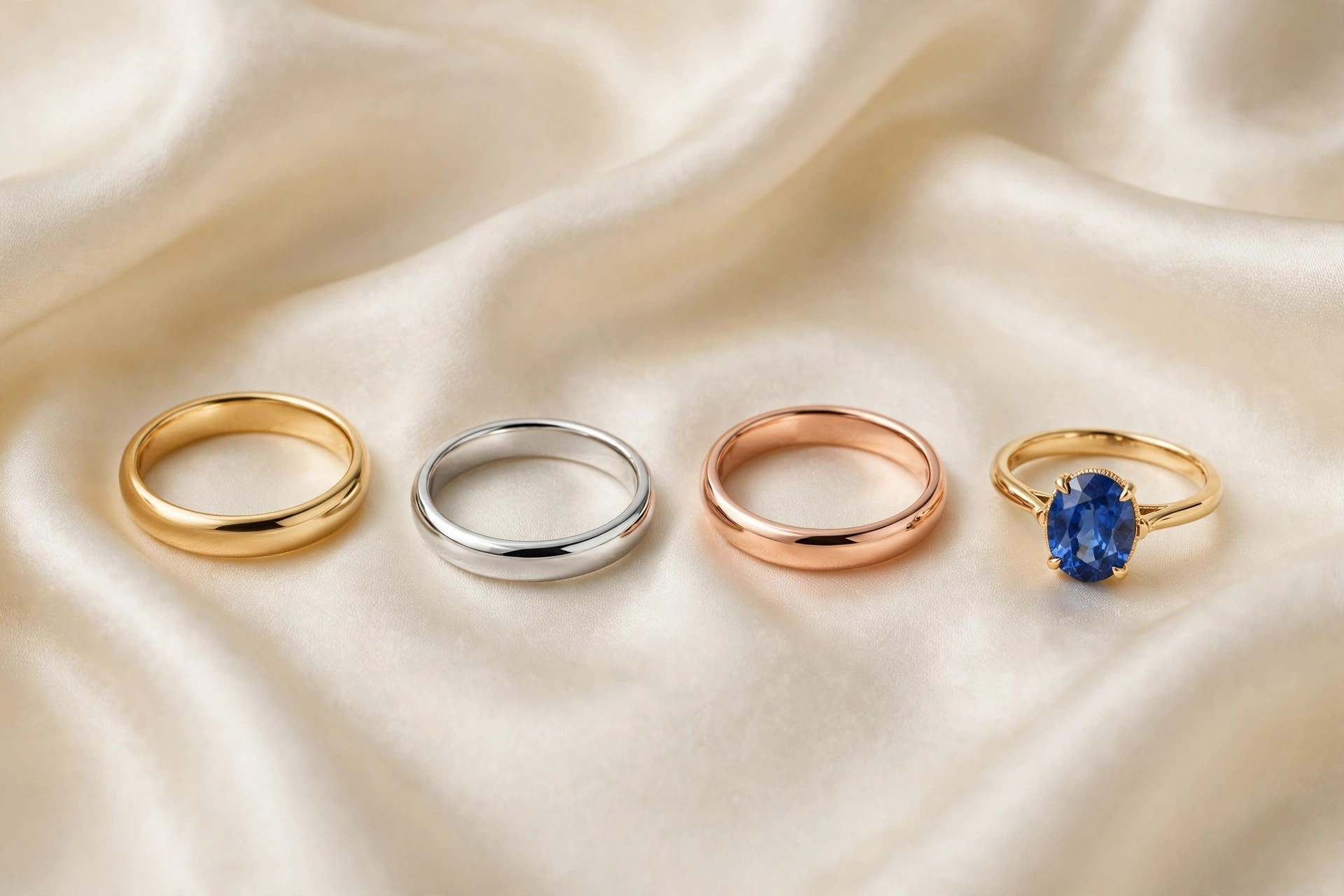
Gold rings meant for lasting wear are solid gold, an alloy of pure gold with other metals that gives the ring its karat, color and working strength. Pure 24 karat gold is too soft for a ring, so jewelers use 18 karat at 75 percent gold, 14 karat at 58.5 percent and 10 karat at 41.7 percent, balancing richness, durability and price. Copper, silver, palladium and other alloy metals create yellow, white and rose colors and change how a band resists scratches and bending. A solid gold ring can be polished, resized and repaired for decades, which is why gold remains the standard for wedding bands and engagement rings. This guide covers karats and stamps, alloy colors, durability by karat, and care and resizing, plus how to read hallmarks and choose a karat for daily wear.
Gold Rings: The Timeless Elegance and Cultural Symbolism
Importance in the Jewelry Industry:
Gold rings hold immense importance in the jewelry industry due to several factors. Gold is highly malleable, making it easy to craft intricate designs and details. It's also durable, tarnish-resistant, and retains its value over time. The versatility of gold allows for various styles, from classic to contemporary, making it a favorite for engagement rings, wedding bands, and fashion jewelry. Additionally, gold holds a universal appeal and is a symbol of luxury and prosperity, attracting jewelry enthusiasts globally.
The Appeal of Gold as a Primary Material:
Symbol of Luxury: Gold has been a symbol of luxury and wealth for centuries. It's associated with the divine, the sun, and immortality, making it highly sought after in the jewelry world.
Timeless Beauty: Gold's luster and enduring beauty have stood the test of time. Its warm, yellow hue complements a wide range of gemstones, enhancing their brilliance and appeal.
Durability and Longevity: Gold is a durable and long-lasting material, making it ideal for everyday wear. It can be passed down through generations, preserving its value and sentimental significance.
Skin-Friendly: Pure gold is hypoallergenic and gentle on the skin, making it a suitable choice for individuals with sensitive skin.
History of Gold Rings:
The history of gold rings can be traced back to ancient civilizations, including the Egyptians, Greeks, and Romans. In ancient Egypt, gold was considered the flesh of the gods, and it adorned the pharaohs and other nobility. The Greeks associated gold with the gods and viewed it as a symbol of immortality. The Romans, too, treasured gold and crafted elaborate gold rings as a symbol of status and wealth.
Cultural Significance:
Weddings and Engagements: Gold rings hold immense cultural significance in weddings and engagements across cultures. They symbolize love, commitment, and eternal bonds. In many cultures, exchanging gold rings during a wedding ceremony is a timeless tradition.
Religious and Spiritual Significance: Gold is revered in many religions as a symbol of purity, divinity, and spiritual illumination. It's often used in religious artifacts and jewelry worn during rituals and ceremonies.
Status and Prosperity: In numerous cultures, wearing gold rings signifies social status, wealth, and prosperity. It's a display of affluence and success.
Gold rings are cherished for their timeless beauty, cultural symbolism, and enduring value. As a universal symbol of luxury and love, gold remains an integral part of the jewelry industry, adorning fingers and symbolizing relationships and prosperity across generations and cultures.
Several gold rings have gained fame and recognition throughout history due to their historical, cultural, or artistic significance. Here are a few of the most famous gold rings:
The Great Famine Gold Ring:
Found in County Clare, Ireland, this ancient gold ring dates back to the 8th century. It is an exquisite example of early medieval Irish craftsmanship and is on display in the National Museum of Ireland.
The Ring of the Nibelung:
This mythical ring from Germanic and Norse legend, famously depicted in Richard Wagner's opera cycle, symbolized power and greed. It played a central role in a story of gods, heroes, and the curse of the ring.
The Ringlemere Cup Gold Ring:
Discovered in Kent, England, this Bronze Age gold ring is associated with the famous Ringlemere Cup. Dating to around 1700-1500 BC, it's a significant artifact revealing ancient craftsmanship and cultural practices.
The Ring of Silvianus:
This Roman gold ring from the 4th century AD was found in England. Its inscription is associated with a curse against a thief, making it a unique and intriguing historical piece.
The Irish Claddagh Ring:
A traditional Irish ring featuring a heart held by two hands with a crown on top, symbolizing love, friendship, and loyalty. It's a popular piece of Irish cultural jewelry.
The Lord of the Rings: The One Ring:
While fictional, the One Ring from J.R.R. Tolkien's "The Lord of the Rings" series is undoubtedly one of the most famous gold rings in popular culture. Apparel Search would like to make it clear that the One Ring is not actually made of traditional gold. It is Sauron's gold which is different.
- The One Ring was made from a fictional and malevolent material known as "Mithril" or "Sauron's gold."
The Nibelung Treasure Hoard:
A mythical treasure hoard in Germanic and Norse legends, which included a golden ring among other precious items.
These rings vary in their origin, historical context, and cultural significance, but each holds a unique place in the annals of history and folklore.
Antique Gold Rings:
Antique gold rings are cherished heirlooms with a historical age typically exceeding 100 years. These rings are a window into the craftsmanship, style, and cultural preferences of the past. The designs often reflect the fashion and societal influences of the era they were created in. Intricate detailing, filigree work, and the use of different colored gold alloys were common features. Antique gold rings hold a sense of nostalgia and are prized for their uniqueness, rarity, and the stories they carry through generations.
Vintage Gold Rings:
Vintage gold rings, on the other hand, are relatively younger, generally dating from the 1920s to the 1980s. They reflect the design trends and social influences of the 20th century. Vintage rings showcase a wide range of styles, including Art Deco, Retro, Mid-Century Modern, and more. The 20th century saw a shift in preferences, with a focus on geometric shapes, bold designs, and experimentation with gemstone settings. Vintage gold rings often hold a retro charm and can be more accessible for those seeking unique, older pieces with a blend of historical and modern design elements.
In summary, antique gold rings bear the hallmark of eras long gone, carrying the weight of history and timeless craftsmanship. Vintage gold rings, though younger, capture the essence of the 20th century's evolving styles and offer a bridge between the past and the present, presenting a diverse array of design choices for contemporary wearers. Both types of rings are treasured for their distinctiveness and the stories they convey.
Gold rings, revered across cultures and centuries, are iconic jewelry pieces known for their timeless elegance and cultural symbolism. Fashioned from the noble metal gold, they exude a warm, lustrous hue that captivates and complements a myriad of styles. As symbols of wealth, status, and enduring love, gold rings hold a significant place in both historical and contemporary contexts. Their versatility allows for a wide array of designs, from classic bands to intricate patterns adorned with gemstones. Whether passed down as family heirlooms or exchanged in heartfelt ceremonies, gold rings remain a universal symbol of connection, commitment, and everlasting beauty.
Learn about gold plated rings.
Yellow Gold Rings
White Gold Rings
Two Tone Gold Rings
If you enjoy golden jewelry, you may also want to learn more about gold necklaces, gold earrings and gold bracelets.
Color, Alloy and Skin
Yellow gold keeps closest to gold's natural color, alloyed mainly with silver and copper in balance. Rose gold raises the copper share for its pink to red tones and needs no plating, while white gold depends on its alloy: nickel white gold is hard and bright but nickel causes a contact allergy in a significant minority of wearers, so sensitive skin is better served by palladium white gold, platinum or yellow gold. Pure gold itself is hypoallergenic; reactions to a gold ring almost always trace to an alloy metal, most often nickel.
A solid gold ring is also the most repairable ring you can own. Jewelers can resize it, rebuild worn prongs, re-tip claws and polish out years of scratches because there is real metal throughout, not a surface to break through. That repairability, combined with gold's resistance to tarnish and corrosion, is why antique and vintage gold rings remain wearable after a century. When buying, weight is information: a solidly made band feels substantial, while a very light ring may be hollow-formed to reach a price.
Common Questions
Should I choose 14k or 18k gold for a ring worn daily?
Fourteen karat is the usual recommendation for daily wear: its larger share of alloy metals makes it harder, more scratch resistant and less easily bent than 18 karat, at a lower price. Eighteen karat has a richer yellow color and higher gold content, and suits rings worn with a little more care or wearers who value weight and color over hardness. Ten karat is the hardest and cheapest, with a paler color.
What do the stamps inside a gold ring mean?
The karat stamp, such as 10K, 14K, 18K or the European fineness numbers 417, 585 and 750, states the proportion of pure gold in the alloy and is the key mark to find. A maker's trademark often sits beside it. Letters such as GP, GF or HGE after the number mean plated or electroplated rather than solid, so a ring stamped 14K GP is a plated ring, not a solid 14 karat ring.
Why is white gold sometimes plated, and does it need upkeep?
White gold is gold alloyed with white metals such as palladium or nickel, and even then it keeps a faint warm tint, so most white gold rings are finished with rhodium plating for a bright white surface. That plating wears gradually, especially on the underside, and jewelers renew it during a polish and inspection, typically every year or two for a daily-worn ring. Palladium white gold needs the plating less than nickel white gold.