Stainless Steel Rings
A hard, modern metal that shrugs off daily wear
Stainless steel rings are a contemporary metal choice built around durability and low upkeep rather than precious metal value. Jewelry stainless is usually grade 316L, a low-carbon, molybdenum-bearing steel also used for surgical implants and body jewelry, chosen because it resists rust, sweat, seawater and household chemicals that would attack silver or plated metals. Steel is considerably harder than gold or silver, so a stainless band keeps its edges, brushed texture and polish through work, sport and manual jobs that would quickly mark a softer ring, and it costs far less than precious metal equivalents. The same hardness creates the main limits: most jewelers cannot resize a steel ring, and cutting one off in an emergency needs proper tools. This guide covers steel grades, finishes including black ion plating, inlays and stone settings, hypoallergenic claims, and buying the correct size first time. It also compares steel directly with titanium and tungsten, the other common contemporary ring metals, so a buyer can weigh weight, hardness, emergency removal and long-term finish before choosing between them for a wedding or everyday band.
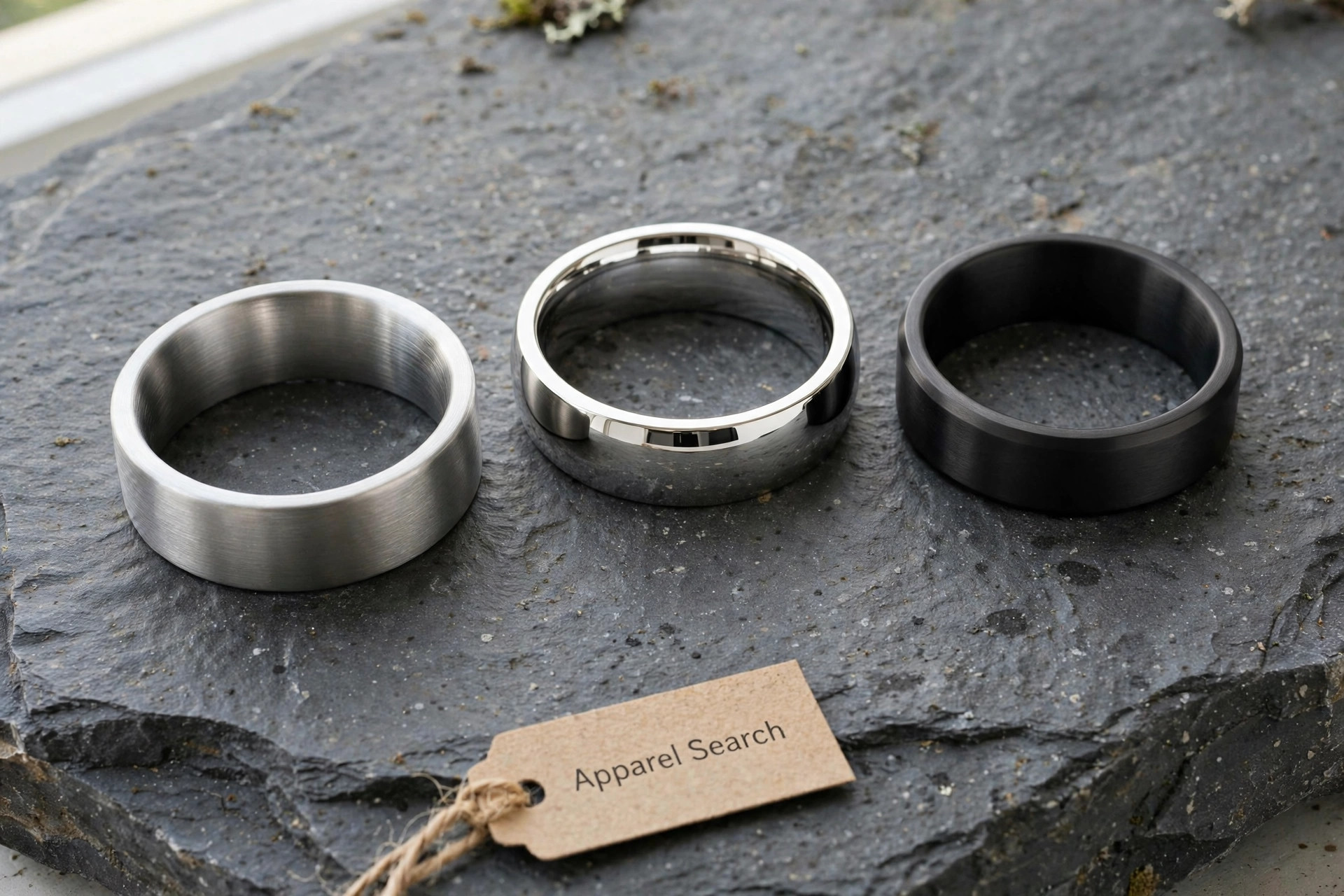
Stainless Steel Rings: A Durable and Stylish Choice
Stainless steel rings have gained popularity in the realm of contemporary jewelry due to their durability, versatility, and modern aesthetic. While stainless steel is technically a base metal, its properties and advantages make it a sought-after material for crafting rings.
Stainless Steel as a Base Metal:
Stainless steel is considered a base metal in jewelry-making. Base metals are non-precious metals used as the foundation or primary component of a piece. Stainless steel, while not a precious metal like gold or silver, is valued for its attributes, making it a significant choice in jewelry design.
Pros of Using Stainless Steel for Rings:
Durability and Strength:
- Stainless steel is incredibly strong and resilient, making it perfect for everyday wear. It resists scratches, dents, and damage, ensuring the longevity of the ring.
Corrosion Resistance:
- The name "stainless" steel reflects its resistance to corrosion and tarnish, keeping the ring looking new and polished over time.
Hypoallergenic:
- Stainless steel is hypoallergenic, making it an excellent choice for individuals with sensitive skin or metal allergies.
Affordability:
- Stainless steel is more affordable compared to precious metals like gold or platinum, offering an attractive option for those on a budget.
Versatility:
- Stainless steel can be easily manipulated and shaped into various designs, providing jewelry designers with the flexibility to create diverse styles and intricate patterns.
Low Maintenance:
- Stainless steel requires minimal maintenance, usually needing only a quick polish to retain its shine.
Environmentally Friendly:
- Stainless steel is a sustainable and eco-friendly choice, as it is recyclable and can be repurposed.
Cons of Using Stainless Steel for Rings:
Limited Preciousness:
Stainless steel lacks the perceived preciousness associated with gold, silver, or platinum.
Weight:
Stainless steel rings can be heavier compared to other materials, which might not suit everyone's preferences.
Cannot Be Resized Easily:
Unlike some precious metals that can be resized, resizing stainless steel rings is more challenging due to its hardness and durability.
Lack of Resale Value:
Stainless steel does not hold significant resale value compared to precious metals.
Stainless steel rings offer a compelling choice for individuals seeking a durable, low-maintenance, and affordable ring option. While it may not possess the same preciousness as gold or silver, its advantages make it a desirable choice in contemporary jewelry design, allowing for the creation of stylish and long-lasting pieces.
Time to learn about stainless steel earrings, stainless steel bracelets and stainless steel necklaces.
Designs, Inlays and Stone Settings
Steel suits the designs precious metals struggle with: wide bands with machined grooves, spinner rings, gear and tire-tread patterns, and crisp faceted edges that stay crisp. It is frequently combined with inlays of carbon fiber, wood, silicone or precious metal strip, and with black diamonds or cubic zirconia in tension-style or flush settings, since stones must be set with equipment that can work the hard metal. Two-tone designs plate part of the band in gold or rose tones; those plated areas follow plating wear rules even though the base does not.
Weight surprises many buyers: steel is lighter than gold or platinum but heavier and colder-feeling than titanium, giving a substantial feel without a precious price. Comfort-fit interiors, with a domed inner surface, matter in wide steel bands because the unforgiving metal will not adapt to the finger. Order a half size with care, wear a sizing band for a full day if possible, and remember knuckle size, since a hard ring must pass the knuckle every time.
Common Questions
Is stainless steel safe for sensitive skin and nickel allergy?
Grade 316L contains nickel in its alloy, but the nickel is tightly bound and released at very low rates, which is why the grade is widely used for initial body piercings and tolerated by most nickel-sensitive wearers. It is not nickel-free, however, so someone with a confirmed severe nickel allergy should patch-test a steel ring or choose titanium or niobium, which contain no nickel at all.
Can a stainless steel ring be resized or engraved?
Resizing is generally not practical: steel's hardness and spring make stretching or soldering with ordinary jewelry equipment difficult, and most retailers exchange sizes instead of altering the ring, so buy the size carefully and try a comfort-fit equivalent first. Engraving is possible with laser or carbide equipment and is commonly offered at purchase, but hand engraving afterwards is limited by the hard surface.
Will a stainless steel ring rust, tarnish or lose its black finish?
Proper 316L steel does not rust or tarnish in normal wear, including showers and swimming, and needs only soap and water to clean. Black and colored finishes are different: they are thin ion plating or PVD coatings over the steel, and while durable, they will eventually wear at edges and the underside with years of abrasion, revealing bright steel beneath. The plain polished and brushed finishes have nothing to wear off.