Gold Watches
Solid gold cases and bracelets, the lasting form
A gold watch in the full sense is a watch whose case, and often its bracelet and sometimes its dial, are made of solid gold, typically 18 karat for Swiss luxury pieces and 14 karat in some markets, rather than a base metal carrying a gold surface. Solid construction gives a gold watch its weight, its warm depth of color and its intrinsic metal value, and wear polishes the gold instead of eventually breaking through it, which is the dividing line from a gold-plated watch, where a micron-thin layer sits over steel or brass and can wear away at edges. Gold watches span every style: slim dress watches with minimalist dials for formal wear, gold sports watches that combine precious metal with water resistance, fashion-led designs with bold dials, and vintage gold watches whose engraved cases and period designs carry the charm of their eras. The houses most associated with gold watches include Rolex, whose Day-Date in gold is nicknamed the President, Patek Philippe with the Calatrava and Nautilus, Audemars Piguet with the Royal Oak, and Cartier with the Tank and Santos. This guide covers solid gold construction and karats, the main styles, and the care a soft precious metal needs.
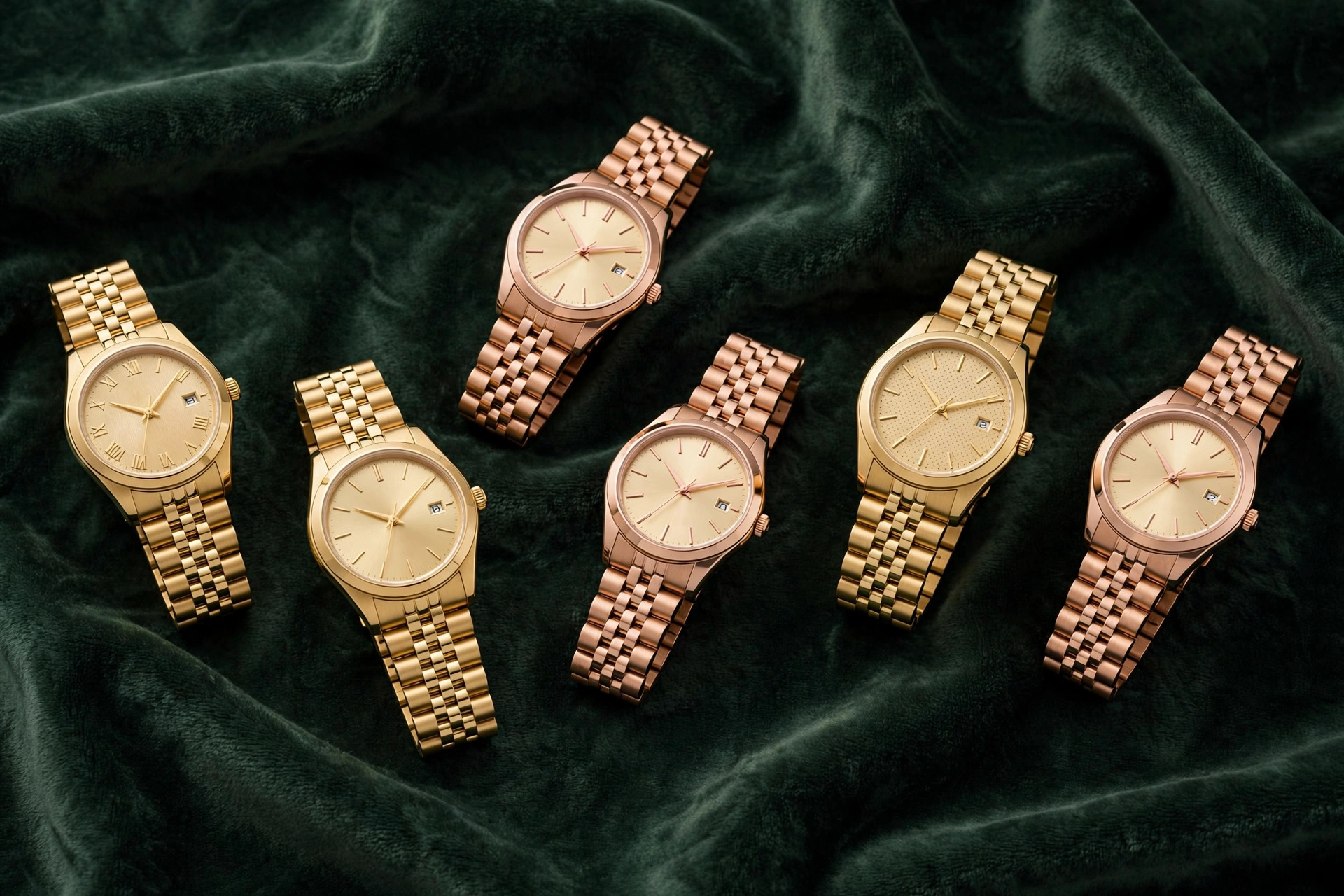
Gold Watches: Elegance and Luxury on Your Wrist
Gold Watches: Crafting and Styles
Gold watches are a symbol of timeless elegance and luxury. These exquisite timepieces are crafted to perfection using various techniques and styles. There are two primary methods of making gold watches: solid gold and gold plating.
Solid Gold Watches:
Solid gold watches are crafted entirely from high-quality gold, typically
18K or 14K gold. The watch case, bracelet, and sometimes even the dial are
made of solid gold. This results in a watch that is not only stunning in
appearance but also durable and valuable due to the precious metal used.
Gold-Plated Watches:
Gold-plated watches, on the other hand, feature a base metal watch case and bracelet, often made of stainless steel or brass. A layer of gold is electroplated onto the surface, providing the watch with the appearance of solid gold. While these watches are more affordable than solid gold ones, the gold plating can wear off over time, revealing the base metal beneath.
Styles of Gold Watches:
Gold watches come in a wide range of styles to cater to diverse tastes and occasions. Some common styles include:
Dress Watches: These gold watches feature a sleek and minimalist design, making them suitable for formal events and business attire.
Sports Watches: Gold sports watches combine luxury with functionality. They are often water-resistant and designed for active lifestyles.
Fashion Watches: Fashion-forward gold watches often feature unique designs, bold dials, and trendy details, making them a statement piece for everyday wear.
Vintage Watches: Vintage gold watches have a classic charm, often featuring intricate engravings and unique designs from bygone eras.
Popular Gold Watch Brands and Retailers:
Several renowned watch brands specialize in crafting gold watches. Some of the most popular ones include:
Rolex: Rolex is synonymous with luxury and is known for its iconic gold watches, including the Rolex Day-Date, also called the "President."
Patek Philippe: Patek Philippe is celebrated for its exquisite and intricately crafted gold watches, such as the Calatrava and Nautilus models.
Audemars Piguet: The Royal Oak collection by Audemars Piguet features luxurious gold watches with a sporty yet elegant design.
Cartier: Cartier offers a range of gold watches, including the Tank and Santos models, known for their sophistication and style.
Omega: Omega's Constellation and Seamaster collections include stunning gold watches that blend precision with opulence.
The Appeal of Gold Watches:
Gold watches hold enduring appeal for several reasons:
Symbol of Status: Gold has long been associated with wealth and luxury, making gold watches a status symbol.
Timeless Elegance: The luster and warmth of gold never go out of style, ensuring that gold watches remain fashionable through the years.
Craftsmanship: Craftsmen devote meticulous attention to detail when creating gold watches, resulting in exceptional craftsmanship.
Pros and Cons of Owning a Gold Watch:
Pros:
Luxury and Prestige: Gold watches convey an aura of luxury and prestige, making them a statement piece for special occasions.
Durability (Solid Gold): Solid gold watches are incredibly durable and resistant to corrosion.
Investment Value (Solid Gold): Solid gold watches can appreciate in value over time due to the intrinsic value of the gold.
Cons:
Cost: Solid gold watches can be prohibitively expensive, and even gold-plated watches can have a significant price tag.
Maintenance (Gold Plating): Gold-plated watches may require re-plating over time to maintain their appearance.
Weight (Solid Gold): Solid gold watches can be heavy on the wrist, which may not be comfortable for everyone.
The History of Gold Watches: A Journey through Time
The history of gold watches is a fascinating journey that spans centuries, reflecting both advancements in timekeeping technology and shifts in fashion and style. Gold, with its inherent beauty and rarity, has been a prized material for watches throughout history.
Early Watches and Pocket Watches:
The earliest portable timekeeping devices were pocket watches, emerging in the 16th century. Initially, these watches were considered a luxury and a status symbol, with the cases often made of precious metals, including gold.
Pocket watches were intricately designed and meticulously crafted, featuring engravings, gemstones, and detailed dials. Gold pocket watches were especially popular among the elite and aristocracy.
The Rise of Wristwatches:
Wristwatches gained prominence in the late 19th and early 20th centuries,
primarily driven by the practical need for soldiers in war to quickly access
the time. Initially, wristwatches were considered feminine and were worn
mainly by women. However, they soon gained popularity among men, especially
during World War I.
Gold wristwatches became fashionable and a sign of
elegance. Designers and manufacturers began incorporating gold into
wristwatch cases and bracelets, adding a touch of luxury to the evolving
wristwatch designs.
Mid-20th Century and Modern Era:
The mid-20th century saw a significant evolution in watch design and technology. Gold continued to be a dominant material for watch cases and bracelets, showcasing various styles like dress watches, sports watches, and chronographs.
Prominent watchmakers like Rolex, Patek Philippe, and Omega began producing iconic gold watches that gained worldwide acclaim and set trends in luxury timepieces.
The Antique and Vintage Gold Watch Market:
The antique and vintage gold watch market is a vibrant sector of the collectible and luxury goods industry. Collectors and enthusiasts seek these watches for their historical significance, craftsmanship, and aesthetic appeal.
Vintage gold pocket watches, especially those from renowned manufacturers or with unique complications, often command high prices at auctions and among collectors.
Antique gold wristwatches, especially from the early 20th century and the mid-century era, are highly sought after. Rare or limited-edition models and those with original features and intact condition often fetch premium prices.
Learn about antique jewelry.
Learn about vintage jewelry.
Key Factors Influencing the Market:
Brand and Rarity: Watches from prestigious brands such as Patek Philippe, Rolex, Vacheron Constantin, and Cartier are highly sought after. Rarity, limited editions, or historical significance contribute to their value.
Condition: The overall condition, including the state of the case, movement, dial, and any restoration or modifications, significantly impacts the value of a vintage or antique gold watch.
Provenance: The watch's history, ownership, or any notable events associated with it can enhance its value and desirability in the market.
Gold watches have a rich history dating back centuries, evolving from luxurious pocket watches to elegant wristwatches. Antique and vintage gold watches hold a special place in the hearts of collectors and enthusiasts, showcasing the timeless allure of gold in horology. The market for these timepieces continues to thrive, driven by a passion for history, craftsmanship, and the enduring beauty of gold.
Gold watches are timeless symbols of luxury and elegance, available in various styles to suit individual preferences. Whether crafted from solid gold or featuring gold plating, these timepieces continue to captivate watch enthusiasts and aficionados worldwide, offering a blend of opulence and functionality.
Learn more about watches. Actually, if you like gold watches you may want to learn about designer watches.
Styles in Gold
The dress watch is gold's home ground: a slim case, a plain or lightly textured dial, and a leather strap or gold bracelet, made to sit under a cuff and mark formal occasions. Gold sports watches invert the logic, putting a diver's or chronograph's working case and bracelet in a precious metal, a combination prized precisely because it is impractical luxury. Vintage gold watches, from mid-century dress pieces to early waterproof models, add engraved case backs, unusual lug shapes and dial patinas that new watches cannot copy.
White and rose gold widen the category. White gold gives the precious-metal weight and value with a platinum-like color, finished in rhodium on many models, while rose gold's copper warmth suits both vintage revivals and modern designs. Whichever color, the checks are the same: karat hallmarks on the case, a bracelet of solid links rather than hollow where the price implies it, and papers that match the reference, since solid gold is where a watch's documentation carries the most money.
Common Questions
Is a solid gold watch a better buy than a gold-plated watch?
They serve different budgets and purposes. A solid gold watch costs far more, weighs more, holds intrinsic metal value, and its finish cannot wear through, so it is the choice for a lifetime or heirloom piece and for the luxury models of the major houses. A gold-plated watch gives a similar look when new for everyday and fashion wear at a small fraction of the price, accepting that the finish will wear. Between them sit gold-capped and gold-filled constructions on some older watches, with a thicker bonded gold layer than plating.
Why are gold watches usually 18 karat rather than pure gold?
Pure gold, 24 karat, is too soft for a watch case that must protect a movement, hold its shape and resist daily knocks, so it is alloyed with other metals for hardness. Eighteen karat gold is 75 percent gold, hard enough for cases and bracelets while keeping a rich color, and it is the standard for Swiss luxury watches. Fourteen karat, at 58.5 percent gold, is harder and slightly paler and appears in some markets. The alloy partners also set the color: copper for rose gold, palladium or nickel for white gold.
How should a gold watch be cared for?
Gold is a soft metal, so a gold watch gathers fine scratches and can dent on a hard knock, and that soft patina is part of owning one. Keep it in a lined watch box away from harder objects, clean it with a soft cloth and mild soapy water if the water resistance allows, and avoid abrasive polishes. Professional polishing restores brightness but removes a small amount of metal each time, so it should be occasional rather than routine, and vintage gold watches are best left with their surfaces lightly aged rather than polished sharp.