01 — Start With the Number
The Thermometer Is the First Styling Decision
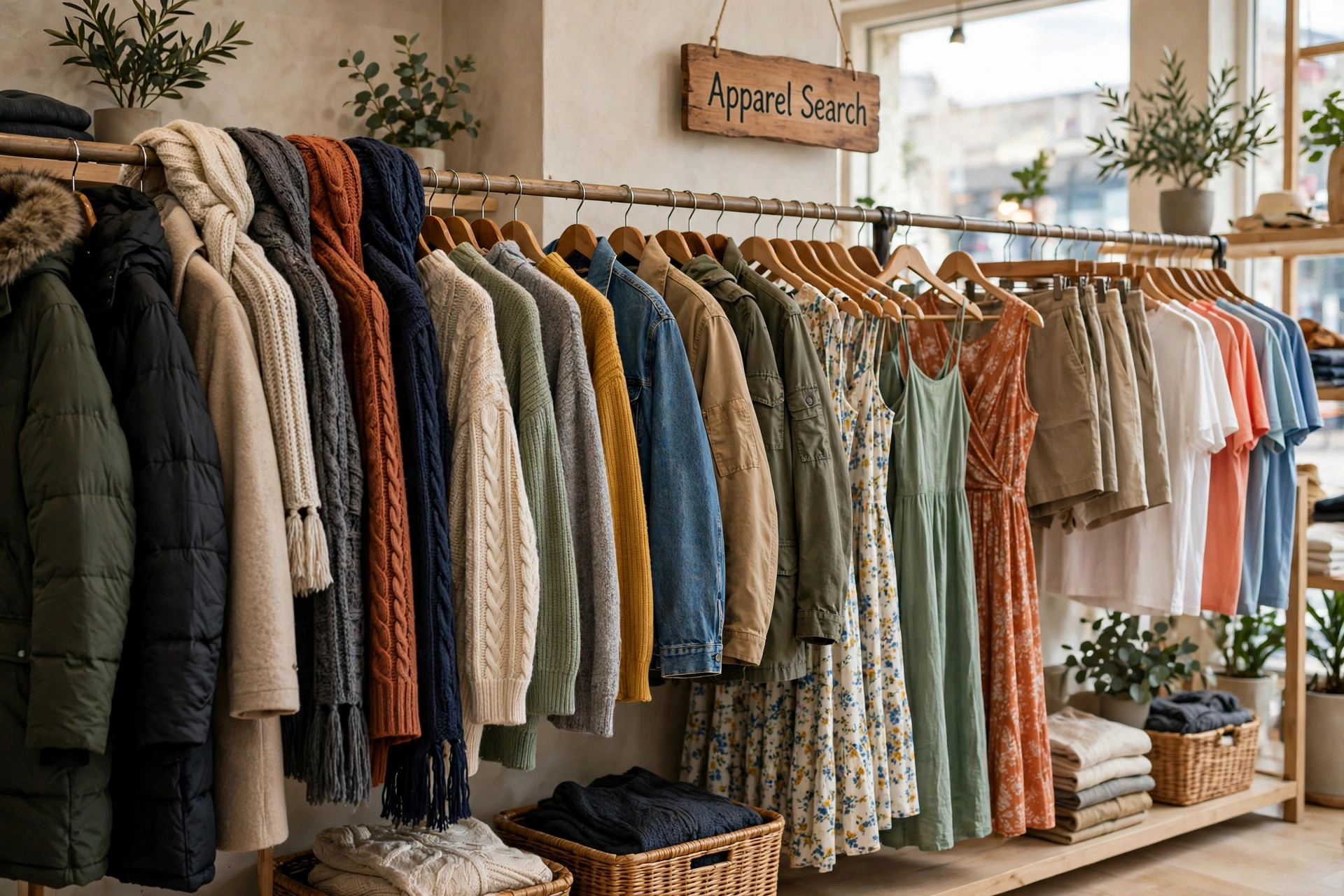
Most outfits that feel wrong were chosen for the wrong temperature. A good sweater at 70°F is a mistake; the same sweater at 45°F is the whole point. Dressing by temperature turns getting dressed into answerable questions: What is the number? How long will I be outside? Is wind or rain moving it? This hub works through the five bands people actually live in — the 40s, 50s, 60s, 70s, and 80°F and above — with a guide for each, because useful advice lives at band level: which layers, which fabrics, and which pieces to leave behind.
Two cautions before the chart. First, the bands describe a person walking and going about a normal day — not exercising, which generates its own heat, and not sitting still outside for hours, which needs a band colder. Second, everyone runs a few degrees personal: if you are always cold, dress for the band below yours; if you run warm, dress for the band above.
Search Apparel Search
02 — The Chart
What to Wear by Temperature, at a Glance
| Temperature | The working outfit | The guide |
|---|---|---|
| 40s °F (4–9°C) | Warm coat over a sweater, long trousers, closed shoes; hat and gloves within reach | What to Wear in 40 Degree Weather |
| 50s °F (10–15°C) | Mid-weight jacket over a sweater or layered top, long trousers, optional scarf | What to Wear in 50 Degree Weather |
| 60s °F (16–21°C) | Light jacket, cardigan or overshirt over a tee or blouse; the most flexible band of the year | What to Wear in 60 Degree Weather |
| 70s °F (21–26°C) | Short sleeves or sleeveless tops, light trousers, skirts or dresses; one evening layer at most | What to Wear in 70 Degree Weather |
| 80°F and above (27°C+) | The lightest breathable clothing you own: linen, lawn and loose fits, shade and sun protection | What to Wear in 80 Degree Weather |
Read the chart with the day, not just the morning. A day that starts at 48°F and ends at 66°F is a layering day, dressed for the warm end with the cold end carried or worn open. That skill is a system of its own, set out in the Layering Pieces Guide: base, mid and outer layers each doing one job, so the outfit can be adjusted a few degrees at a time instead of rebuilt.
03 — The Modifiers
Wind, Rain and Humidity Move the Number
The thermometer is only the starting figure. Wind strips the warm air your clothing traps, and a strong wind makes any band feel roughly ten degrees colder — the answer is a wind-blocking outer layer, not more insulation. Rain matters most in the cold bands, where wet fabric pulls heat away; in warm rain it is mostly a comfort question. Humidity works the other way, making warm bands feel hotter by slowing evaporation — the full treatment is in What to Wear in Humid Weather. And activity shifts everything: runners dress ten to fifteen degrees lighter than the chart, band by band, in What to Wear Running by Temperature.
04 — Using the Guides
How to Use This Series
Start with the band you are dressing for today, not the season you think it is — a 52°F morning in April and a 52°F morning in October call for the same outfit, whatever the calendar says. Each band guide gives the core outfit first, then the fabrics that make it work, then the adjustments for wind, rain and evenings, and finally the mistakes that band is famous for. Below freezing, the 40-degree guide hands over to the cold-weather guides in More to Explore; at the top end, the 80-degree guide covers heat strategy in full.
Keep one personal note: your own offset. If the 50s guide says a mid-weight jacket and you were cold in exactly that last autumn, your offset is one band — dress for the 40s column in the 50s. Two or three outings are enough to learn it, and once learned, the chart becomes your chart.
Questions
Common Questions
How accurate are temperature dressing guides?
They are a starting point, not a rule. The bands assume an adult walking and going about a normal day, indoors and out. Your own warmth, the wind, and how long you will be outside each shift the answer by several degrees — dress for the band, then adjust for the day you actually have.
What is the hardest temperature range to dress for?
The 50s and low 60s — too warm for a winter coat, too cool for short sleeves, and swinging ten degrees between morning and afternoon. The answer is a removable mid layer over a complete base outfit, so the outfit works with the layer on, open, or carried.
Should I dress for the morning temperature or the afternoon?
Dress for the warmer part of the day and carry the layer for the colder part. An outfit right at the warm end, plus a removable coat or sweater, stays right all day; one built for the cold morning has nowhere to go except making you hot.
Does the same advice work in Celsius?
Yes — the bands convert directly: the 40s Fahrenheit are roughly 4–9°C, the 50s are 10–15°C, the 60s are 16–21°C, the 70s are 21–26°C, and 80°F and above is 27°C and up. Each band guide gives both scales.