01 — The Band
What 70 Degree Weather Actually Feels Like
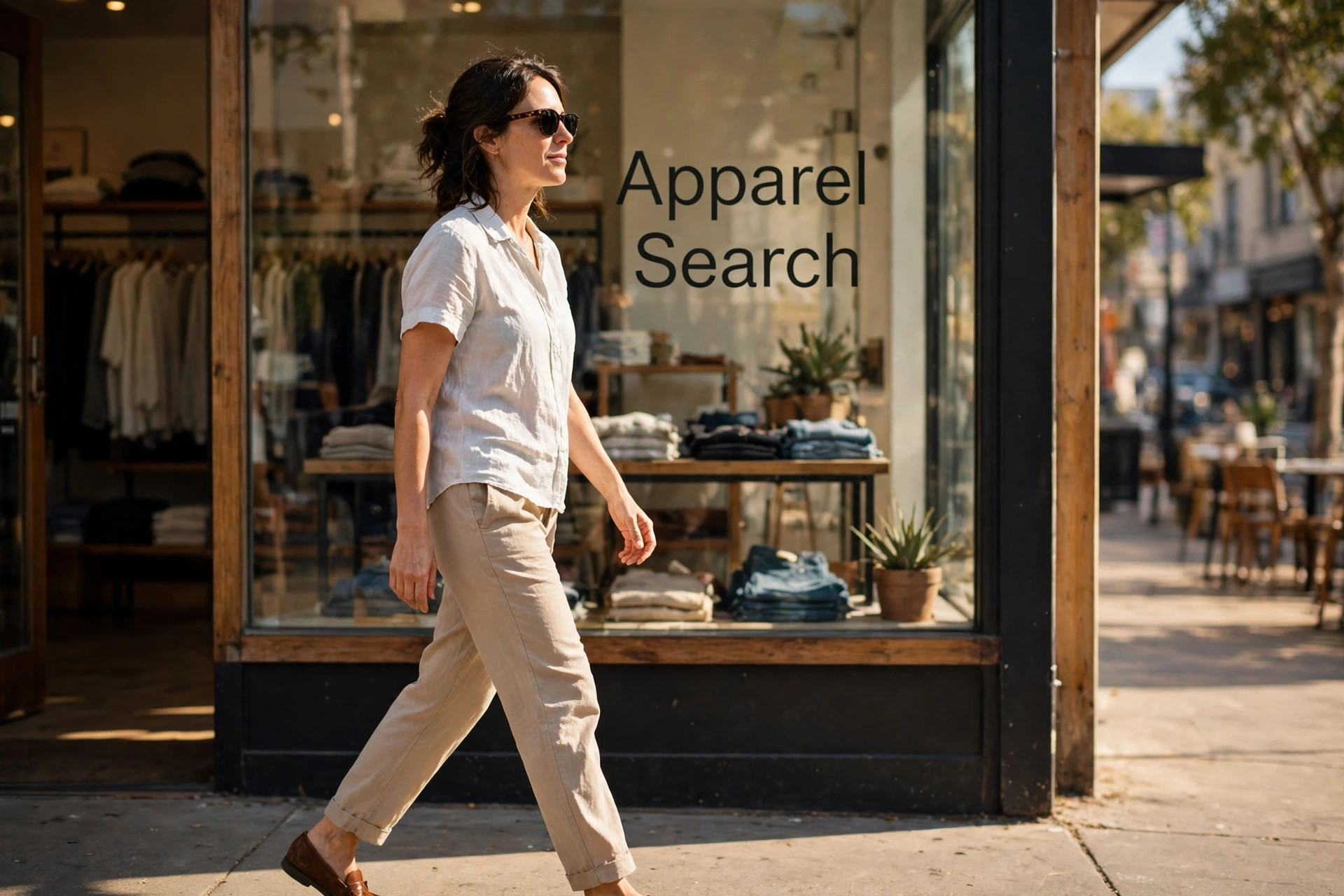
Seventy-something Fahrenheit — roughly 21 to 26°C — is the band where warm-weather clothing comes into its own. Short sleeves stop being optimistic and become correct. Sweaters, jackets and boots retire, and the dressing questions change completely: no longer how to add warmth, but how to stay neat, comfortable and sun-aware in clothes light enough for a warm day.
The band still has edges. The low 70s in shade, wind or evening can feel like the 60s; the high 70s in direct sun feel like summer outright. But the adjustments are now small ones — a sleeve length, a fabric weight, a layer for after dark — rather than the rebuilds the cold bands demand. Dress for the warm middle of the day and handle the edges with details.
02 — The Outfit
The Outfit, Piece by Piece
The core 70s outfit is a short-sleeved or sleeveless top in a breathable fabric, with light trousers, a skirt, shorts or a dress. The pieces that carry the band:
- Tops — t-shirts, polos, short-sleeved shirts and blouses, sleeveless tops where the setting allows. Long sleeves survive only in the lightest fabrics, worn pushed up.
- Bottoms — light trousers and chinos, skirts, shorts at the warm end and for leisure, and the full range of summer dresses.
- Fabrics — this is where fabric starts to matter more than garment count: cotton, linen blends, chambray, rayon and light jersey all breathe; heavy synthetics and lined anything do not.
- Shoes — sandals, canvas trainers, loafers and light shoes. Socks become optional and then disappear; boots are finished until autumn.
- The evening layer — one light cardigan, overshirt or scarf, carried only if you will be out after sunset or in strong air conditioning.
03 — Fabrics & Layers
Fabric Does the Work Now
In the cold bands, warmth comes from structure — layers trapping air. In the 70s, comfort comes from cloth itself, and the Lightweight Fabrics Guide is the band's key reference: how weight, weave openness and fiber choice decide whether a garment breathes or clings. A linen-blend shirt and a polyester one can look identical on a rail and behave like different seasons on the body.
Humidity is the band's hidden variable. A dry 74°F and a humid 74°F are different dressing problems, because humid air slows the evaporation that cools you. In humid conditions choose the loosest fits and most open weaves you own, and follow the fuller strategy in What to Wear in Humid Weather.
04 — Adjustments
Sun, Shade and the Evening Edge
Sun versus shade is the 70s' version of the temperature swing: in direct sun the band feels like summer; in shade with a breeze, like spring. If your day is mostly outdoors and moving between the two, mid-length sleeves and light trousers are the diplomatic outfit — never overdressed in either. Sun protection enters the plan here: bare arms and shoulders at midday in the high 70s will burn, and a light, long-sleeved sun layer is often smarter than sleeveless plus regret.
The band's mistakes are holdovers from colder weather: the jacket worn from habit and carried all day, the dark heavy denim that was fine in April, the lined dress that behaves like a coat. The opposite error is dressing for the high 70s on a low-70s day and spending the evening underdressed. Check which end of the band your day occupies — in the 70s, that ten-degree spread is the whole decision.
Questions
Common Questions
Is 70 degrees warm enough for shorts?
Yes — the 70s are shorts weather for most people, especially from the mid-70s up and for active days. At the bottom of the band, in shade or wind, light trousers are the more comfortable all-day choice, but shorts with a proper top are a standard, correct outfit throughout the band.
Do I need a jacket in 70 degree weather?
During the day, no. After dark, or in strong air conditioning, a single light layer — cardigan, overshirt or light scarf — covers the drop. The jacket question in the 70s is purely about evenings: if you will be home before sunset, leave it; if not, carry the light layer.
What fabrics are best for the 70s?
Breathable, light ones: cotton, linen and linen blends, chambray, rayon and fine jersey. Fabric matters more in this band than in any colder one, because there are too few layers to adjust — the cloth itself has to do the cooling. Avoid lined garments and heavy, tight-weave synthetics.
Can I wear jeans in 70 degree weather?
Yes, in lighter weights. Standard heavy denim can feel warm at the top of the band in sun, while lighter denim, chambray trousers and chinos stay comfortable through it. If the forecast is high 70s and humid, treat jeans as the bottom of your options and reach for linen or cotton trousers first.
More to Explore
Search Apparel Search