01 — The Band
What 60 Degree Weather Actually Feels Like
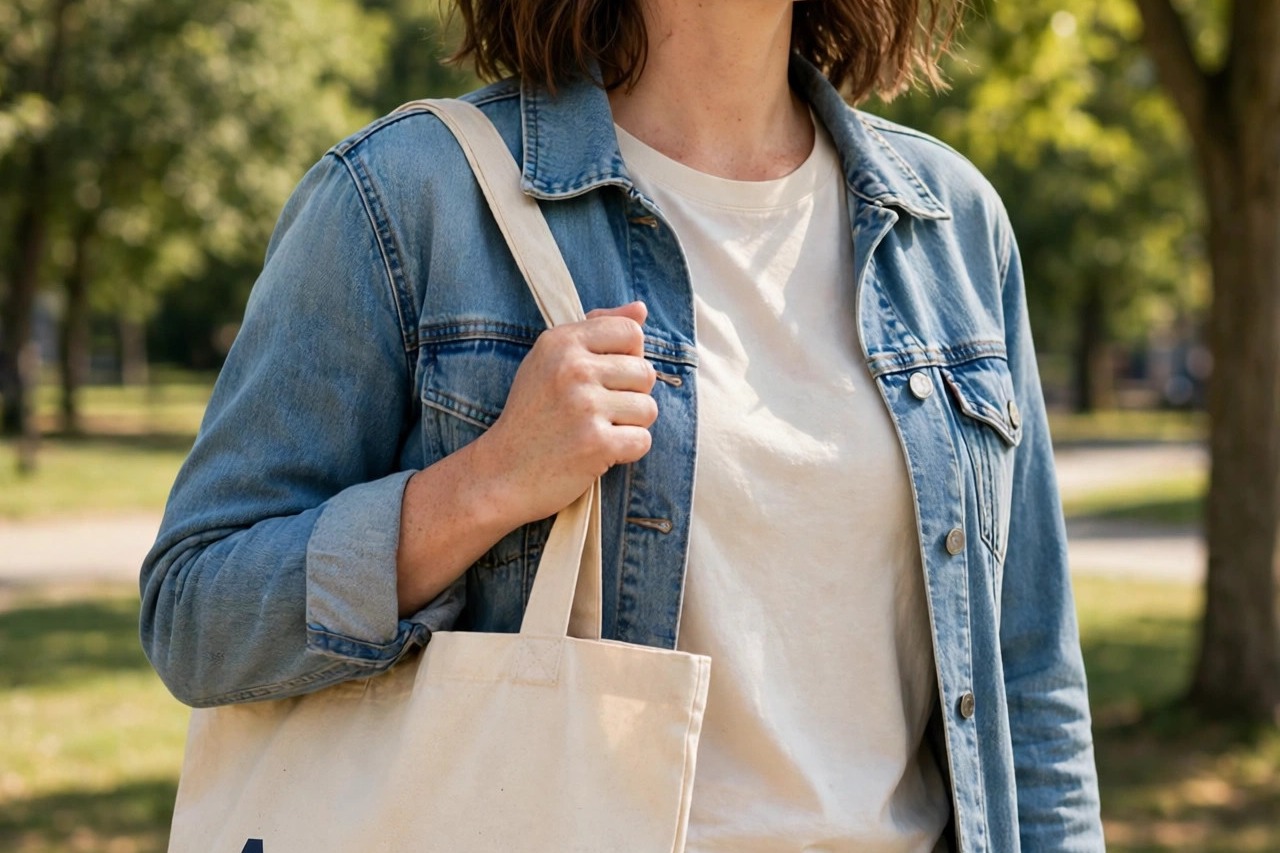
Sixty-something Fahrenheit — roughly 16 to 21°C — is the band most people would choose if the weather took requests. It is warm enough that heavy clothing feels absurd and cool enough that a bare t-shirt is only right in direct sun at midday. Nearly every climate gets its best dressing days here, in spring and autumn, and the band's secret is that the outfit is easy: a complete light outfit, plus one layer.
That one layer is the whole strategy. Mornings and evenings lean cool; afternoons lean warm; air conditioning can feel colder than the street. A jacket, cardigan or overshirt that you wear, open, carry and wear again converts those swings into nothing at all. Choose the layer first, then build the outfit under it.
02 — The Outfit
The Outfit, Piece by Piece
The core 60s outfit is a light layer over a tee, blouse or light shirt, with trousers, a skirt or a dress beneath. The working pieces:
- The layer — a denim jacket, light bomber, unlined blazer, cardigan, overshirt or light knit. It should look like clothing, not luggage: you will be seen in it as often as not.
- The top — a t-shirt, blouse, polo or light long-sleeved shirt, complete on its own, because by afternoon it may be the whole top half of the outfit.
- Bottoms — jeans, chinos, light trousers, skirts and dresses all sit comfortably in this band; shorts appear at the sunny top of it, especially for active days.
- Shoes — trainers, loafers, ballet flats, ankle boots on the cool end, sandals on the warm end. The 60s are the last band where almost any shoe is defensible.
- The optional extra — a light scarf only for early starts and late finishes; most of the band needs nothing more.
03 — Fabrics & Layers
One Layer, Worn Four Ways
The 60s reward the lightest version of the system in the Layering Pieces Guide: not insulation strategy, just adjustability. The layer is worn closed in the morning, open by late morning, off and carried at noon, and back on when the sun drops. Pick it with that working day in mind — light enough to carry without resentment, structured enough to lift a plain tee and jeans into an outfit, and in a fabric that does not crease from being draped over an arm or a chair.
Fabric choice is relaxed in this band: mid-weight cotton, denim, light wool blends, jersey and chambray all behave. The 60s ask only that the layer and the top differ enough in weight that wearing both, and wearing one, are genuinely different amounts of warm.
04 — Adjustments
Mornings, Evenings and Air Conditioning
The evening drop is the band's one trap: a 68°F afternoon can become a 58°F evening, and the layer you left at home because the afternoon was lovely is the difference between a pleasant walk home and a brisk one. If you will be out after dark, the layer travels with you, full stop. Air conditioning runs the same trick indoors in late spring, when buildings are still cooling for summer that has not arrived: office workers in the 60s often need the layer more at their desks than on the street.
Mistakes in the 60s are gentle ones. Dressing for the season instead of the day — sandals and shorts for an April 61°F that behaves like March, or a winter sweater for an October 64°F that behaves like June. And the layer that is too heavy to carry, abandoned by noon and cursed by seven. The band forgives almost everything except having no adjustment at all.
Questions
Common Questions
Is 60 degrees too cold for shorts?
For most people, at the bottom of the band, yes as an all-day choice — and at the sunny top of the band, no. Shorts with a sweatshirt or light jacket is a legitimate 60s outfit for active days. If you will be sitting still outdoors, in shade, or out into the evening, long trousers are the safer build.
What jacket should I wear in 60 degree weather?
A light one: denim, an unlined blazer, a bomber, a cardigan or an overshirt. The jacket's job in the 60s is adjustability rather than insulation, so choose one that looks finished worn open, carries easily, and fits over your top without strain. Heavy coats and insulated jackets belong to colder bands.
Can I wear a dress in 60 degree weather?
Yes — the 60s are prime dress weather. Wear the dress with the band's standard layer over it for mornings and evenings; tights are optional, needed by most people only at the cool, windy bottom of the band or for evenings outdoors. Closed shoes or boots anchor the outfit when the day leans cool.
Why do I feel colder indoors than outside in the 60s?
Air conditioning and still air. Outdoors you are moving and often in sun, both of which add warmth; indoors you sit still in cooled air, which subtracts it. Keeping your light layer with you indoors — rather than checking it or leaving it in the car — is the standard fix.
More to Explore
Search Apparel Search